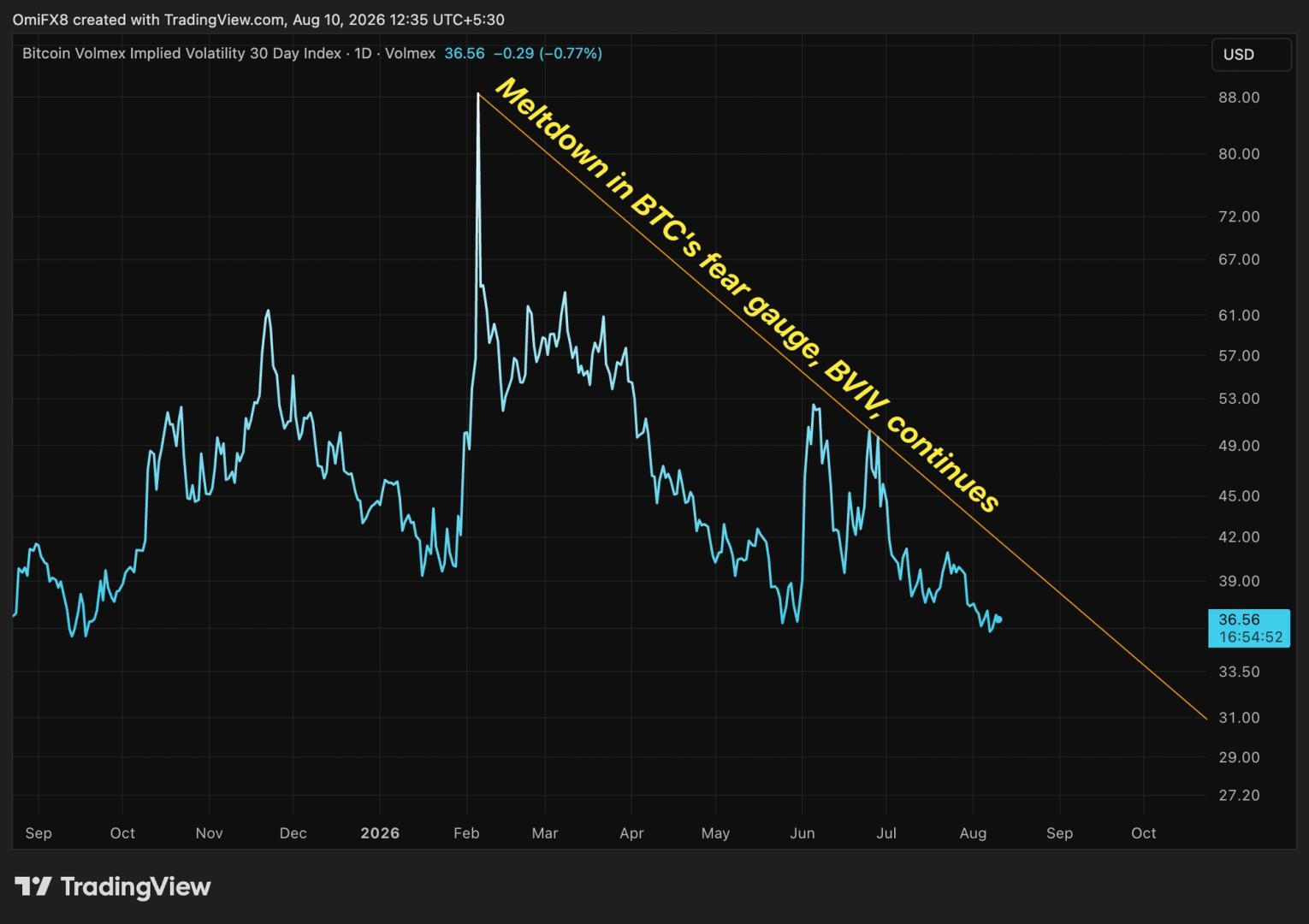
Bitcoin's implied volatility has entered a significant 'meltdown' phase, with the BVIV index retreating to its lowest levels in years. This shift indicates a period of price consolidation and a temporary lack of aggressive catalysts driving massive price swings. As option demand for immediate directional moves cools, the market is entering a phase of relative quiet that often precedes a major structural shift.
Market participants are currently pivoting toward income-generation strategies, evidenced by a surge in call overwriting. In this environment, traders sell upside calls to capture premium in a range-bound market, which further dampens price spikes. For US-based institutional desks, this reflects a strategic transition from speculative betting to yield preservation as they navigate the current macro uncertainty.
Despite the decline in broad volatility, the cost of downside protection—specifically put options—remains surprisingly expensive. This 'skew' suggests that while the market looks peaceful, investors are unwilling to let their guard down. The persistence of pricey puts indicates that the 'fear of a crash' has not dissipated, even as actual price action remains muted.
Traders should watch for a potential volatility squeeze in the coming weeks. Historically, when volatility indices hit these extreme lows, it serves as a coiled spring for a sharp breakout. Investors should monitor the put/call ratio and upcoming Federal Reserve commentary, as any unexpected macro shock could trigger a rapid repricing of risk in this low-liquidity environment.