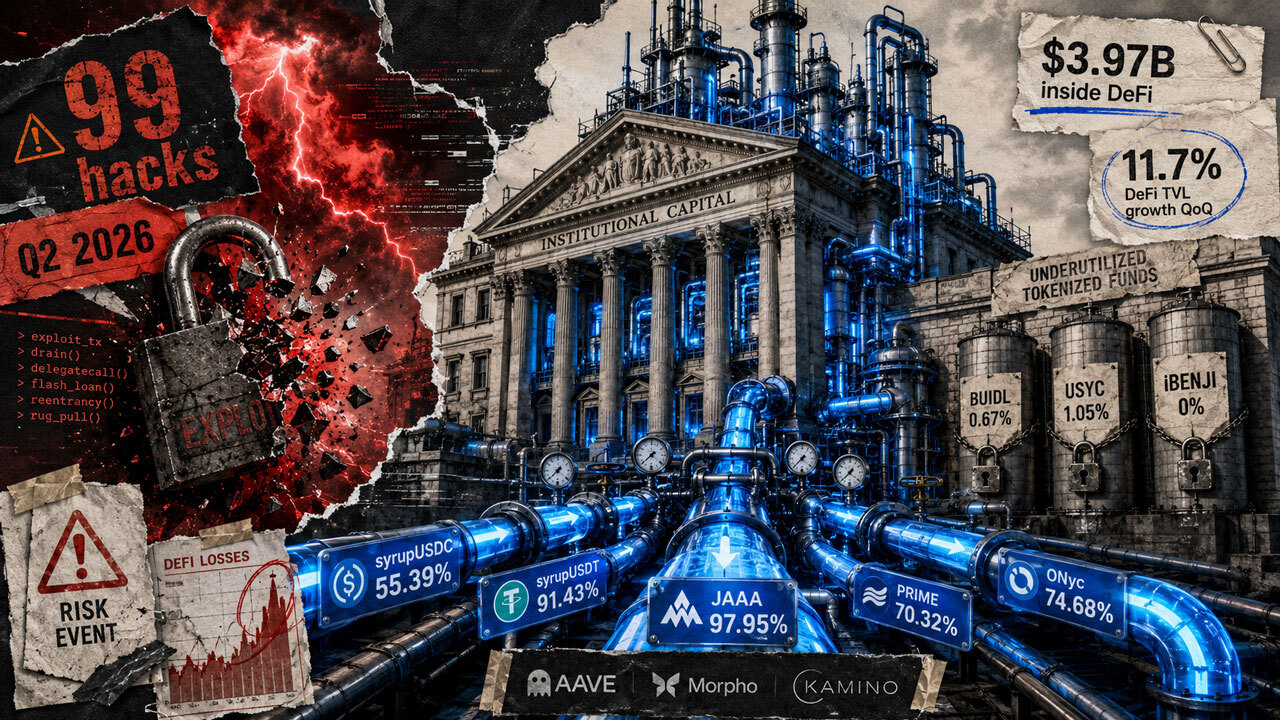
The narrative of Real-World Asset (RWA) tokenization is reaching a fever pitch as Wall Street firms commit $7 billion to the sector. However, a significant disconnect has emerged: less than 1% of these tokenized funds are actively participating in the DeFi ecosystem. While tokenization aims to increase capital efficiency, the majority of institutional funds are currently being held in custody rather than being deployed as collateral or lending liquidity. This 'wait-and-see' approach reflects a cautious institutional stance toward decentralized protocols.
Security concerns are the primary headwind for this transition. The recent surge in exploits, including a record 99 hacks in a single quarter, has created a high-risk environment that traditional finance (TradFi) players are not yet willing to navigate. For US-based investors, the lack of robust security standards and clear regulatory frameworks for active DeFi participation remains a hurdle, even as the total value of RWAs actually in use hits a record $3.97 billion.
Market participants should view the $7 billion figure as a massive reservoir of sidelined liquidity. The transition of these funds from passive storage to active DeFi components could represent the next major leg up for the ecosystem. Traders should watch for the development of 'institutional-grade' DeFi layers and improved smart contract auditing, which would allow this Wall Street capital to finally enter the yield-generating market.