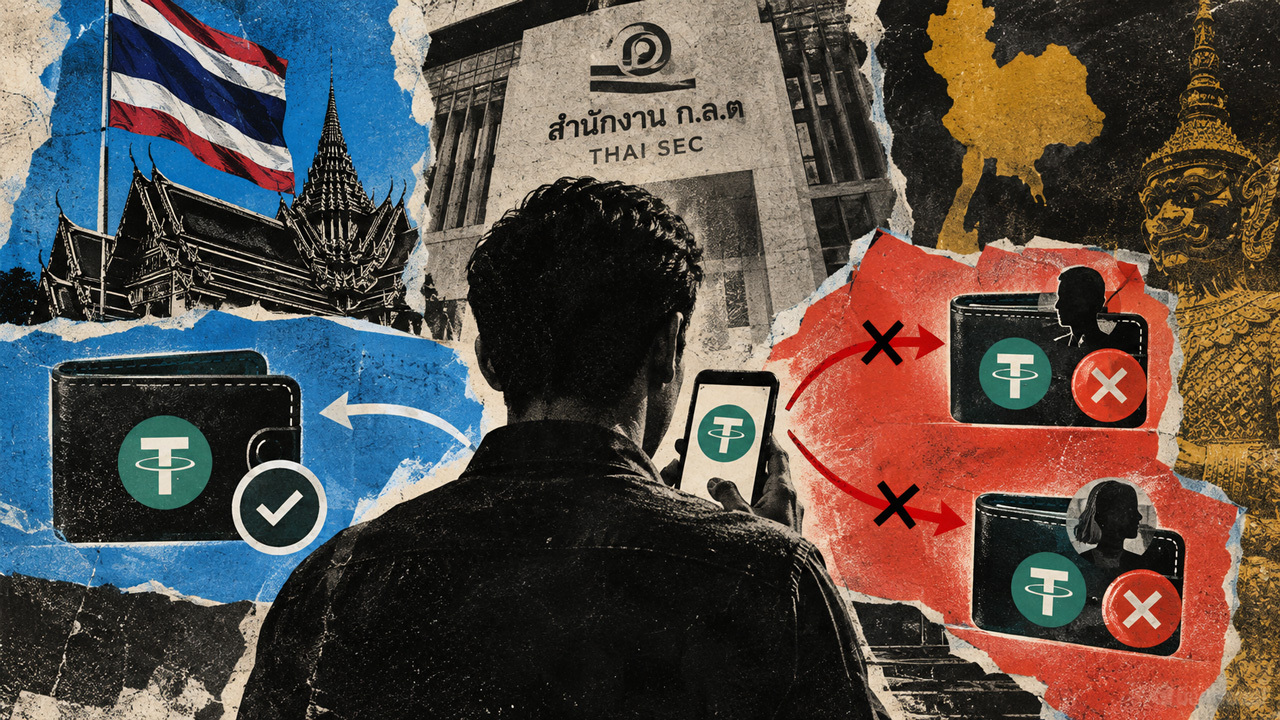
Thailand’s Securities and Exchange Commission has introduced a proposal that would restrict stablecoin transfers to only those accounts verified as the customer's own identity. Under these 2026 regulatory guidelines, licensed digital asset service providers (DASPs) would be prohibited from allowing users to withdraw stablecoins to any wallet not explicitly linked to their verified profile, or to accept deposits from accounts held by other individuals. This "closed-loop" system aims to eliminate the anonymity of digital asset flows and ensure every transaction remains within a strictly monitored environment.
The regulatory shift comes as part of a broader push by Thai authorities to integrate digital assets into the formal financial system while minimizing the risks of money laundering and illicit capital flight. By enforcing strict identity matching for every transaction, the proposal ensures that stablecoins behave more like traditional bank transfers rather than decentralized assets. This eliminates the standard utility of non-custodial wallets for P2P payments, as every entry and exit point must be tied to a Know Your Customer (KYC) verified account.
For US-based firms and global crypto investors operating in Southeast Asia, this represents a significant pivot toward a more restricted regulatory model. While the move could increase institutional trust in the Thai market by providing a "clean" environment, it creates massive friction for retail users who rely on stablecoins for payments or decentralized finance (DeFi). The restriction effectively silos the Thai crypto ecosystem, making it difficult for users to interact with global DeFi protocols that require transfers to smart contracts or third-party liquidity pools.
Moving forward, market participants should watch for the final implementation date and whether the SEC will provide any exemptions for whitelisted smart contracts or institutional liquidity providers. If this proposal becomes law without amendments, it could set a precedent for other nations in the region to adopt similar capital controls, potentially stalling the adoption of decentralized payment solutions in favor of state-sanctioned digital frameworks.