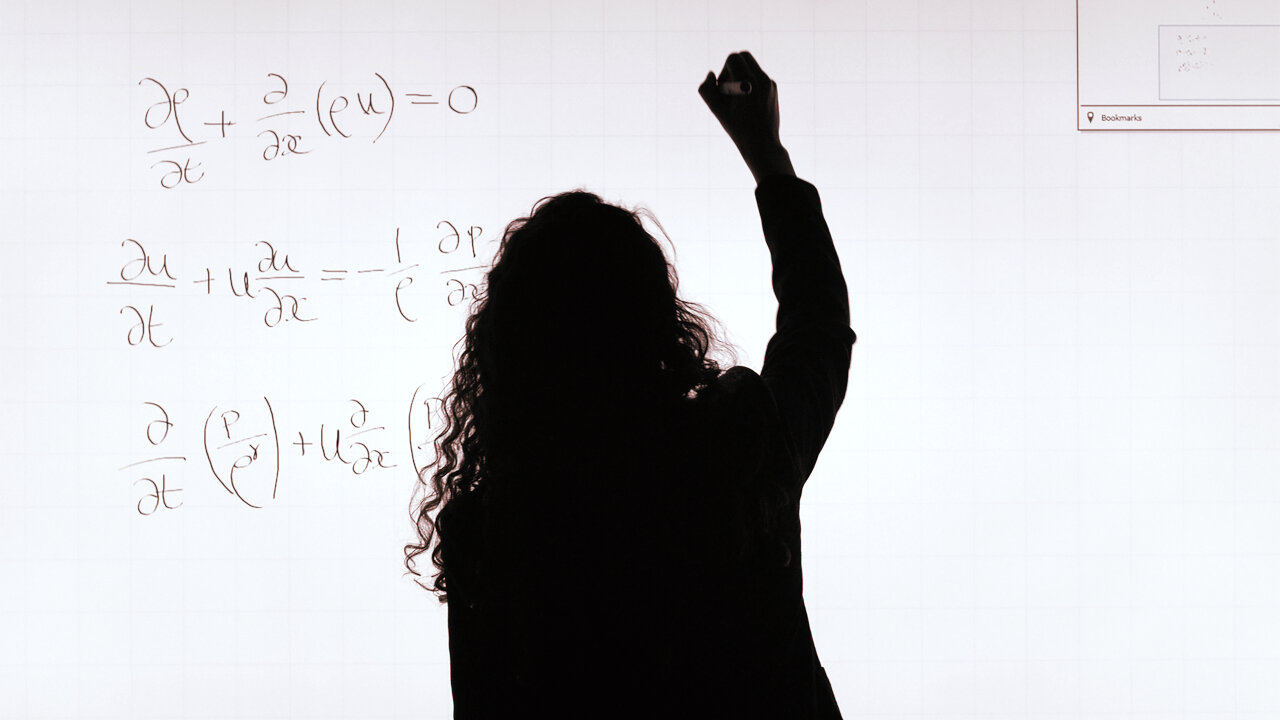
The intense competition between OpenAI and Anthropic in 2026 is fundamentally altering the timeline for cryptographic protocol development by automating the solution of high-level mathematical problems. As highlighted by Fields medalist Terence Tao, modern AI models can now 'flatten' difficult mathematical hurdles the moment researchers identify them. For the blockchain sector, this means that the formal verification of smart contracts and the optimization of Zero-Knowledge (ZK) circuits—tasks that previously took months of manual labor—are being solved by AI agents in near real-time.
This rapid advancement is creating a dual-track environment for the crypto market. On one hand, infrastructure projects building on Ethereum and other L2 scaling solutions are seeing a surge in efficiency, as AI-driven math solving allows for more compact and secure ZK-proofs. On the other hand, the sheer speed at which these 'hard' problems are being solved has caught regulators' attention. The US Department of Commerce and NIST are now under pressure to accelerate the transition to post-quantum cryptography, fearing that AI-enabled mathematical breakthroughs could eventually compromise traditional elliptic curve cryptography used by older networks.
From a market perspective, this shift places a premium on protocols that are 'AI-agile,' or capable of upgrading their underlying mathematical primitives without massive hard forks. Investors are increasingly looking at modular blockchains that can integrate new, AI-optimized cryptographic libraries quickly. The ability of OpenAI’s latest reasoning models to solve these problems faster than they can be replaced suggests that the bottleneck in crypto is no longer the math itself, but how quickly protocols can implement the solutions provided by AI.
Moving forward, the industry should monitor the upcoming 'Reasoning Benchmarks' expected from Anthropic in mid-2026, which are predicted to focus specifically on formal proofs. As these models become more adept at identifying vulnerabilities in cryptographic code, the gap between secure, AI-verified protocols and legacy systems will likely widen, potentially triggering a significant rotation of capital toward newer, more technologically resilient ecosystems.