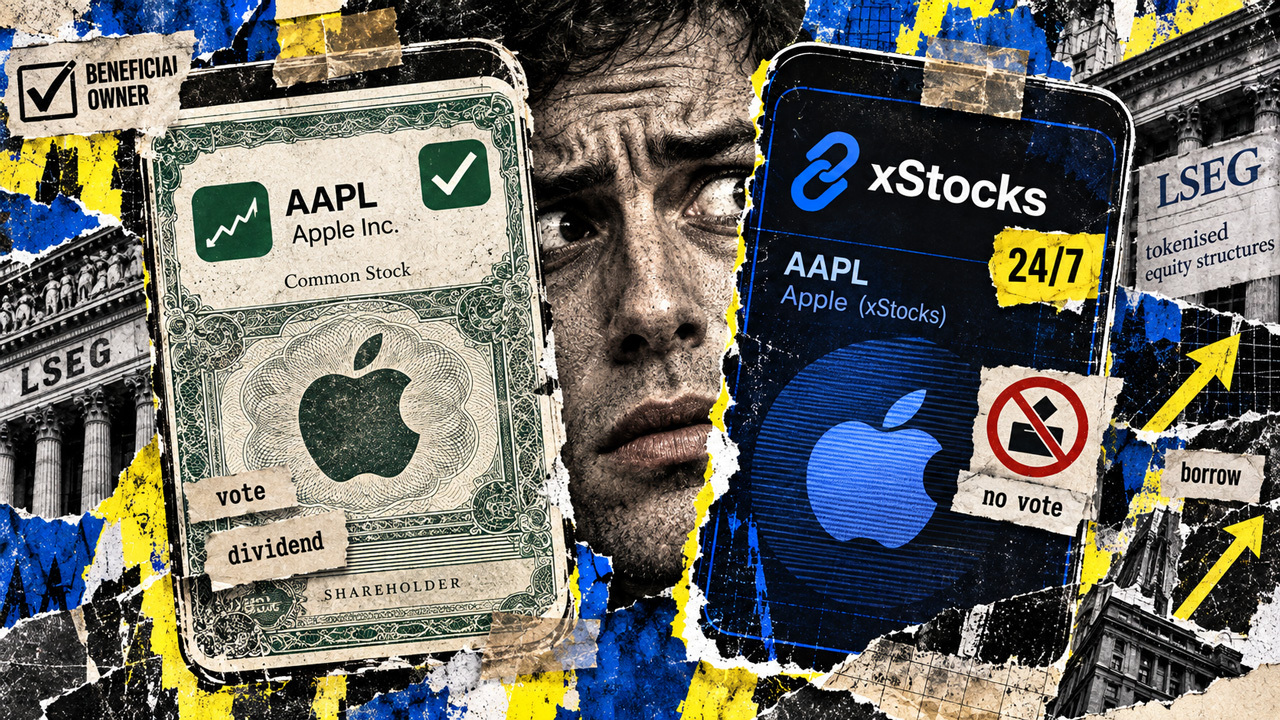
In 2026, the primary difference between tokenized stocks and traditional shares lies in the legal nature of ownership and the associated shareholder rights. While traditional shares represent direct equity in a corporation—granting the holder voting rights and legally mandated dividends—many tokenized stocks are synthetic derivatives. These tokens are designed to track the price movement of an underlying asset via smart contracts, but they do not necessarily grant the holder a seat at the table in corporate governance or a direct claim on the company's physical assets.
The surge in the Real World Asset (RWA) sector throughout early 2026 has created a market where two investors can appear to hold the same company in their portfolios while possessing fundamentally different legal instruments. One may hold a brokerage-verified share held in a central depository, while the other holds a tokenized wrapper issued by a DeFi protocol or a private custodian. This distinction has become a major point of contention for US regulators, who are currently enforcing stricter disclosure labels to ensure retail traders understand when they are speculating on price versus owning a piece of a company.
From a regulatory standpoint, 2026 has seen the SEC move toward a two-tiered classification system. 'Asset-Backed Equity Tokens' are now required to demonstrate a one-to-one backing with physical shares held in escrow, providing pass-through dividends and voting power. Conversely, 'Synthetic Tracking Tokens' are classified as security-based swaps, which carry different tax implications and lack SIPC insurance protections. This shift follows several high-profile disputes in early 2026 where token holders were excluded from corporate actions during major tech mergers.
Market participants should watch for the continued integration of these tokenized assets into decentralized lending markets. As of mid-2026, the ability to use tokenized blue-chip stocks as collateral for stablecoin loans has reached record volumes. However, the risk profiles of these loans vary wildly depending on whether the collateral is a direct equity token or a synthetic derivative. Investors are advised to verify the underlying 'wrapper' of their RWA holdings to ensure they are prepared for upcoming tax filings and potential corporate restructuring events.