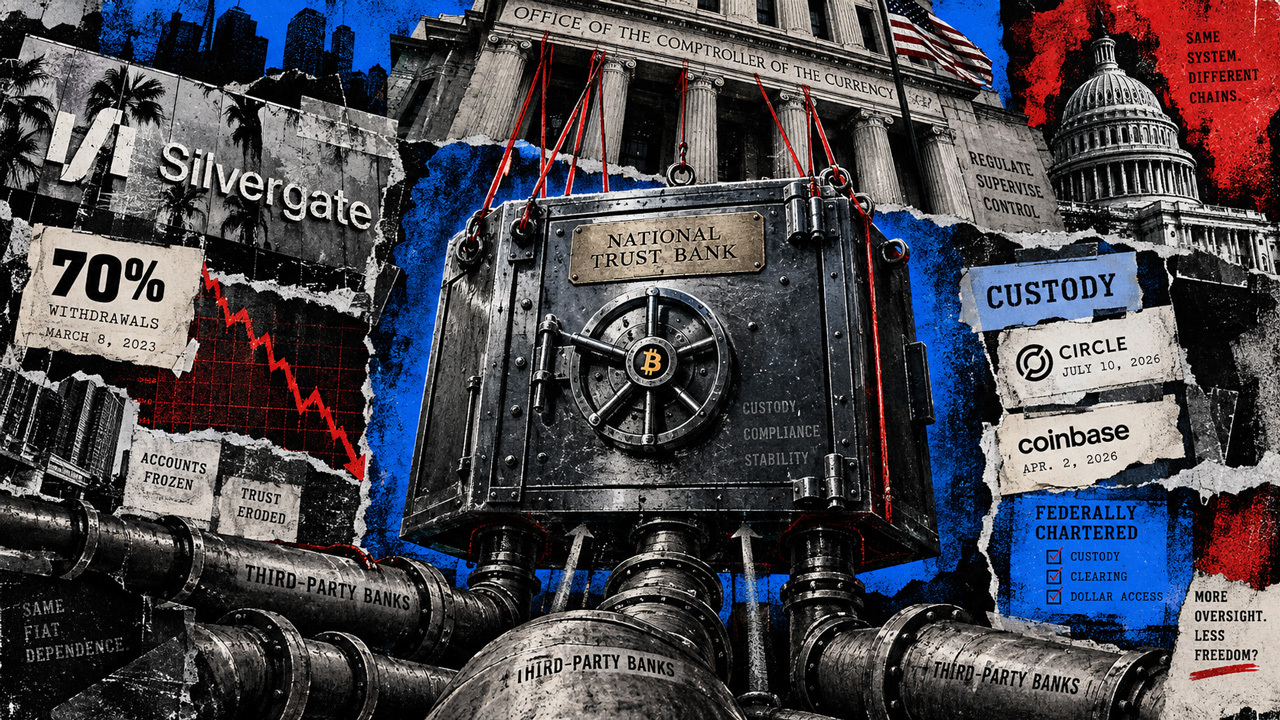
Alan Lane’s opening of a new account at Silvergate in early 2026 signals a pivotal shift in the relationship between crypto-native institutions and federal regulators, suggesting that federal status now invites more control from Washington rather than protecting firms from it. The move highlights a growing trend where crypto trust banks must trade off state-level flexibility for the perceived stability of federal supervision, which often comes with more stringent reporting requirements and tighter capital controls. For the industry, this indicates that 'becoming a bank' is no longer a way to bypass regulatory pressure but is instead a path toward full integration into the traditional financial oversight system.
The context of this development is rooted in the 2026 regulatory environment, where the Office of the Comptroller of the Currency (OCC) has updated its guidelines for special-purpose national bank charters. Alan Lane, as a prominent figure in the crypto-banking space, is essentially stress-testing whether the protections afforded by a federal supervisor can survive sudden shifts in political sentiment in Washington. By utilizing a Silvergate-linked structure, Lane is navigating a landscape where the distinction between 'crypto-friendly' banking and 'federally-compliant' banking is rapidly disappearing.
Politically, this represents a consolidation of power by federal agencies over the crypto sector. While some industry advocates argue that federal charters prevent fragmented state-by-state enforcement, the reality in 2026 shows that the Federal Reserve is using these charters to exert more granular control over liquidity flows between digital assets and the USD. This has significant implications for how crypto firms manage their reserves and execute large-scale institutional trades, as every move is now under a federal microscope.
For the broader market, the outcome of this account structure will determine the future of institutional crypto liquidity in the U.S. If Lane’s strategy succeeds in providing a stable bridge to the federal banking system without stifling innovation, it could pave the way for a new wave of crypto-native banks. However, if Washington uses this as a mechanism for increased restriction, we may see a further exodus of crypto capital to offshore jurisdictions that offer less centralized oversight.
Investors and bank founders should closely watch the upcoming OCC audit of crypto-linked accounts scheduled for late 2026. This audit will likely clarify whether federal bank charters will continue to be granted to firms with significant digital asset exposure or if the requirements will become so burdensome that the charter loses its value for the crypto industry.