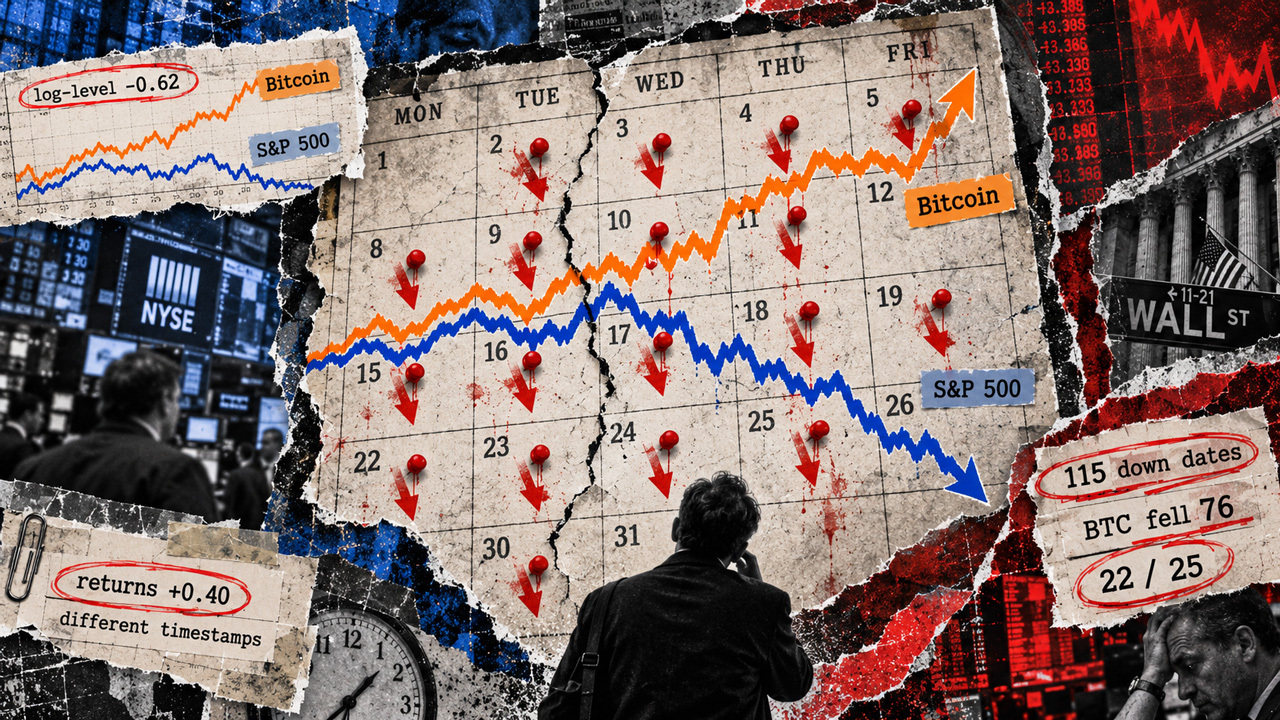
Bitcoin's long-term correlation with the S&P 500 has plummeted to a decade-low as of mid-2026, marking a significant milestone in its evolution as a distinct asset class. According to recent Bitwise analysis, the negative trend in correlation measures suggests that Bitcoin is increasingly behaving independently of the broader U.S. stock market over monthly and yearly lookbacks. This decoupling provides a strong argument for institutional investors seeking to use Bitcoin as a tool for portfolio diversification rather than just a high-beta proxy for tech stocks.
However, the data presents a dual reality for traders. While long-term trends show independence, daily data proxies—such as those tracked by Federal Reserve Economic Data (FRED)—reveal that Bitcoin still maintains a positive correlation with equities on a short-term basis. This discrepancy is largely driven by algorithmic trading and high-frequency firms that continue to group BTC with other risk assets during periods of immediate market volatility or macroeconomic announcements, such as CPI releases or Fed interest rate decisions.
From a regulatory and political perspective, the stabilizing US crypto framework in 2026 has encouraged more 'sticky' institutional capital to enter the market. As these entities hold BTC for the long term, the asset's price action is becoming less sensitive to the daily fluctuations of the S&P 500. This shift is crucial for US-based financial advisors who have previously been hesitant to recommend crypto due to its tendency to crash alongside the stock market. The current decade-low correlation suggests that Bitcoin is maturing into the 'digital gold' narrative that many proponents have long predicted.
Market participants should watch for upcoming Q3 2026 economic reports to see if the daily correlation also begins to break down. If Bitcoin can maintain its independence during a period of stock market turbulence, it will likely see a surge in inflows from traditional hedge funds. Conversely, if the daily correlation remains high, short-term traders should expect continued volatility whenever the S&P 500 experiences a significant sell-off. For now, the decade-low macro trend is a bullish signal for Bitcoin's unique value proposition in a diversified 2026 portfolio.