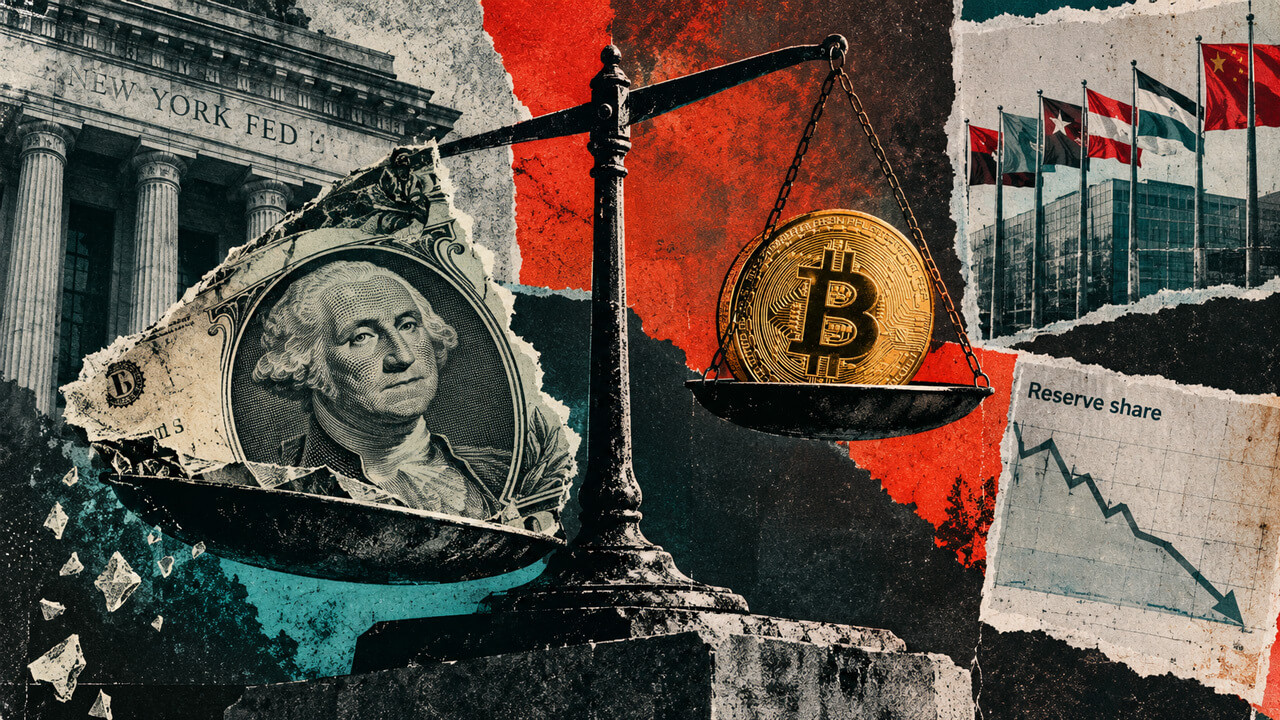
A shrinking US dollar share in global reserves does not serve as proof that central banks are buying Bitcoin, according to a New York Fed analysis released on September 2, 2026. The report clarifies that currency reserve fluctuations are often the result of exchange rate volatility and changes in total reserve sizes rather than a deliberate pivot toward cryptocurrency. While Bitcoin proponents often cite the dollar's declining dominance as a bullish catalyst, the Fed’s data suggests that sovereign Bitcoin demand remains unproven on a macro scale.
The NY Fed’s research emphasizes the need to separate currency choice from reserve-size changes. When the dollar weakens against other major fiat currencies, its percentage share of global reserves naturally decreases even if central banks have not sold a single greenback. The analysis suggests that the current shift is largely internal to the traditional financial system, with central banks rebalancing into other fiat assets or gold rather than digital assets like BTC.
From a geopolitical perspective, the narrative of 'de-dollarization' has gained traction in 2026, yet the regulatory and volatility barriers for central banks remain high. Most monetary authorities still view Bitcoin as too volatile for primary reserve status, preferring the liquidity and stability of traditional debt instruments. This report serves as a reality check for the 'Bitcoin as a reserve asset' thesis, which has fueled much of the market sentiment throughout the year.
Investors and analysts should watch for official IMF 'Currency Composition of Official Foreign Exchange Reserves' (COFER) updates and direct disclosures from central banks for more concrete evidence. Until a major economy outside of existing early adopters officially integrates BTC into its balance sheet, the shrinking dollar share should be viewed as a fiat-to-fiat rebalancing. The focus for market participants should remain on institutional ETF flows and retail adoption rather than speculative sovereign shifts.