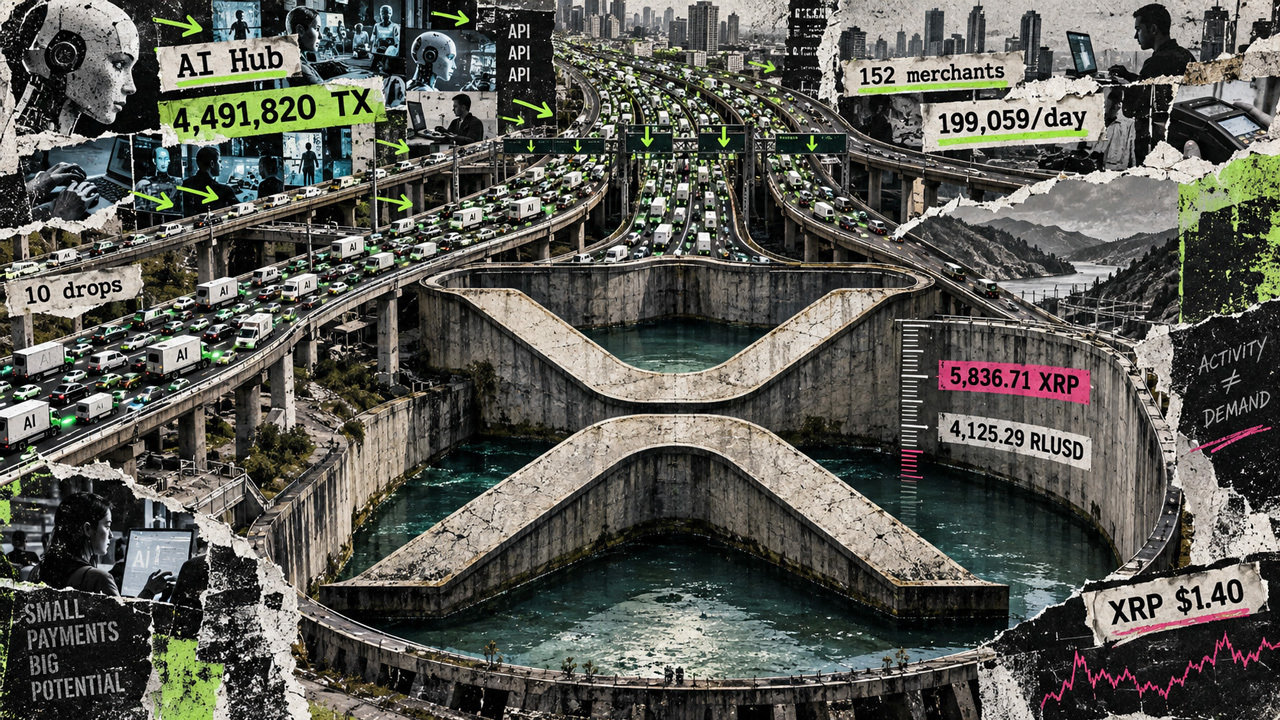
The massive surge in AI-driven micro-payments on the XRP Ledger (XRPL) is failing to spark a corresponding rally in XRP token demand because these automated agents are prioritizing efficiency and stable value over speculative assets. While transaction counts have reached record highs in September 2026, the volume is largely comprised of tiny, automated settlements that utilize the ledger's speed without requiring agents to hold or purchase significant amounts of the native XRP token. Furthermore, the integration of Ripple’s stablecoin, RLUSD, allows these agents to settle debts in a dollar-pegged format, bypassing XRP's price volatility entirely.
Data from recent network dashboards shows a significant disconnect between 'activity' and 'capital inflow.' For instance, on September 8, 2026, millions of transactions were recorded, yet only 4,125 RLUSD were settled in key tracked corridors. This indicates that AI agents are performing high-frequency, low-value tasks—such as data verification or API access payments—where the transaction fee (paid in burnt XRP) is so negligible that it fails to create any meaningful upward pressure on the token's market price.
This shift reflects a broader 2026 market trend where 'utility' no longer guarantees 'scarcity.' As the U.S. regulatory environment has stabilized, institutional focus has moved toward stablecoin-denominated settlements on public ledgers. For XRP investors, this means that the historical narrative of 'high volume equals high price' is being challenged by the reality of AI-driven efficiency. The network is busier than ever, but it is operating as a lean utility layer rather than a store of value.
Moving forward, traders should monitor the 'burn rate' of XRP to see if the sheer scale of AI micro-payments eventually reaches a threshold that impacts circulating supply. Additionally, the adoption rate of RLUSD versus XRP for cross-border settlements will be a critical indicator of whether the native token can regain its status as the preferred medium of exchange on its own ledger. For now, the rise of the machines on XRPL is a win for technology, but a neutral signal for token holders.