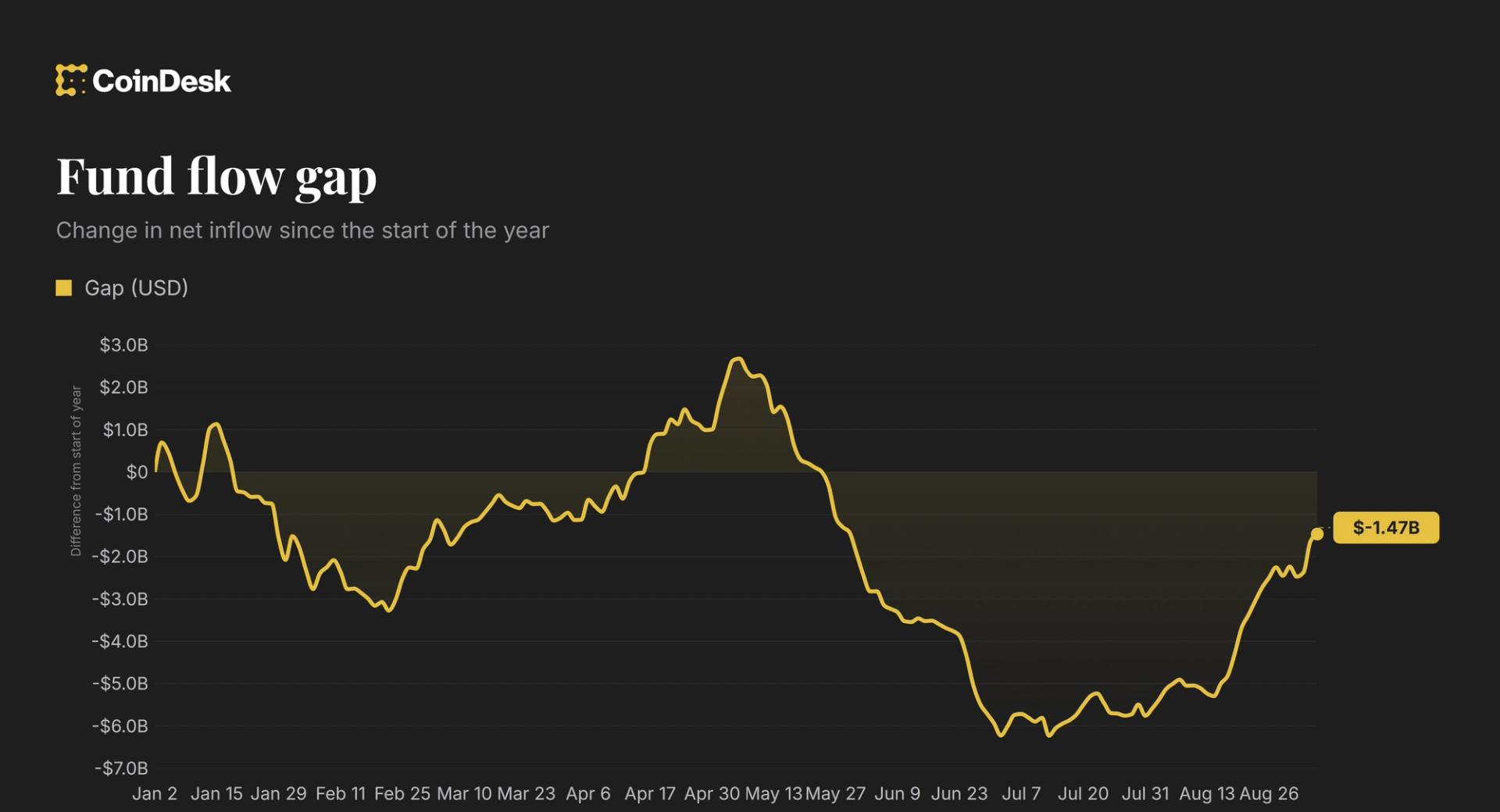
As of September 8, 2026, US Spot Bitcoin ETFs remain $1 billion shy of breaking even for the 2026 calendar year, following a period of sustained outflows that began in the spring. While recent weeks have shown a steady return of institutional interest, the cumulative net flow for the year remains in the red. Reaching the break-even point is viewed by analysts as the definitive signal that the market has moved past the 'mid-cycle' correction that characterized early 2026.
The current $1 billion deficit is largely a result of macroeconomic headwinds faced earlier this year, including persistent inflation data that delayed anticipated Federal Reserve rate cuts. These conditions led to significant divestment from risk assets, including digital asset ETFs. However, the narrowing of this gap in late Q3 suggests that institutional investors are once again finding value in Bitcoin as a hedge against global fiscal instability.
From a regulatory standpoint, the market is closely watching the US SEC’s stance on potential ETF expansions, such as the integration of staking features, which could provide the necessary catalyst to bridge the remaining $1 billion gap. Furthermore, the political landscape leading into the final months of 2026 is creating a 'wait-and-see' approach among larger hedge funds, who are weighing the impact of potential administration changes on crypto market structure.
For the broader market, crossing the break-even threshold would likely trigger a psychological shift from defensive to offensive positioning. A move into positive net-flow territory for 2026 would validate the long-term thesis of Bitcoin as a staple institutional asset, potentially inviting retail capital that has been sidelined during the year's volatility.
Investors should monitor the weekly flow reports from major providers like BlackRock and Fidelity throughout September. Any significant deviation in US Treasury yields or upcoming jobs data could either accelerate the path to the $1 billion goal or widen the gap, setting the tone for the final quarter of the year.