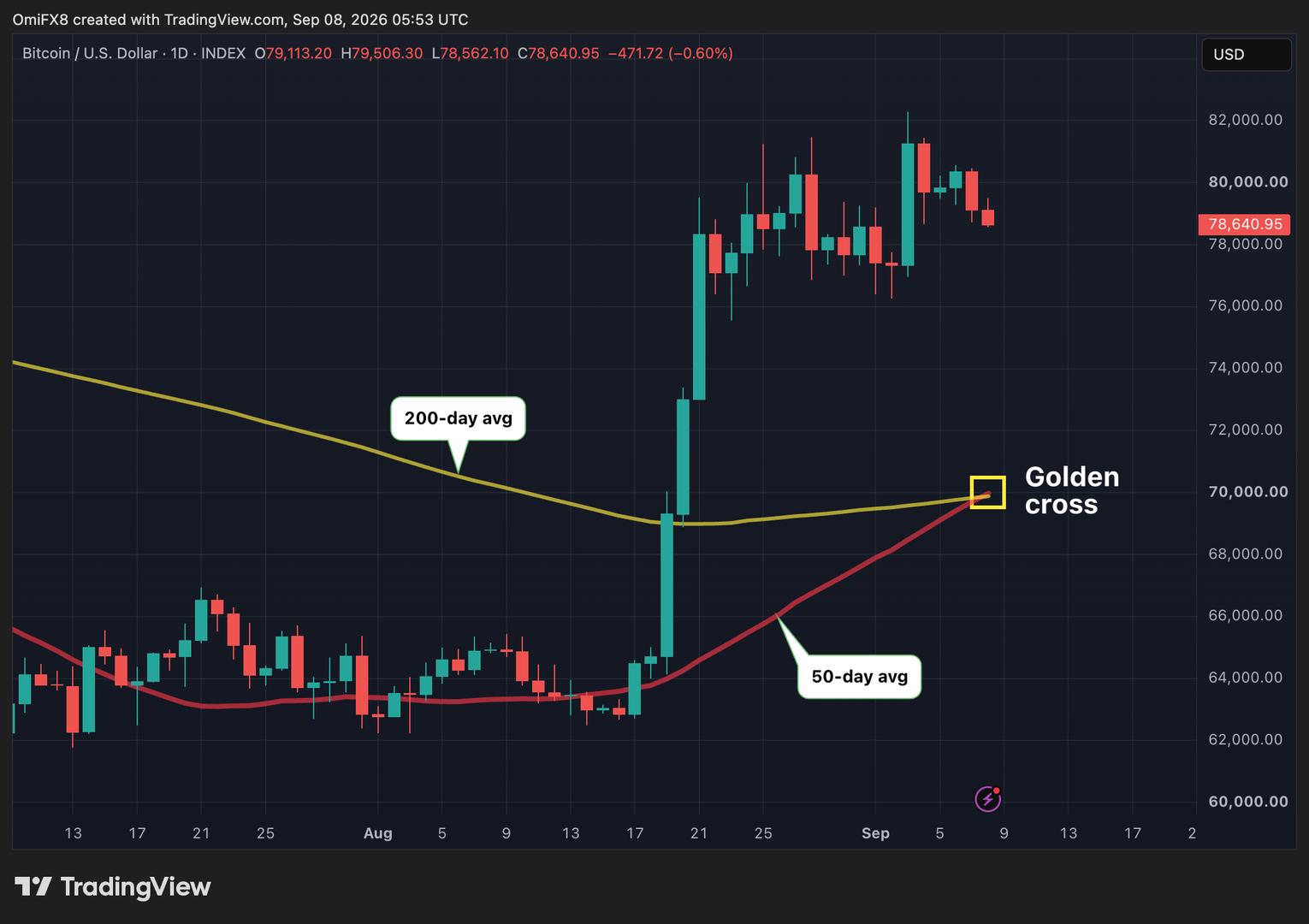
Bitcoin has officially triggered a 'golden cross' on its daily price chart in early 2026, a technical event where the short-term 50-day moving average crosses above the long-term 200-day moving average. This specific formation is widely regarded by technical analysts as a lagging but potent indicator of a shift into a multi-month bullish cycle. For US market participants, this signal suggests that the consolidation phase observed throughout the start of the year has concluded, potentially clearing the path for Bitcoin to challenge previous psychological resistance levels.
In the current 2026 market landscape, this technical milestone is supported by more than just chart patterns. Institutional inflows into US-regulated spot Bitcoin ETFs have shown renewed strength, providing the liquidity necessary to sustain a trend reversal. Unlike previous years, the current golden cross is occurring in a environment where American institutional desks are increasingly using long-term moving averages to confirm entry points for large-scale allocations, adding fundamental weight to the technical breakout.
The timing of this golden cross is particularly significant given the current macroeconomic backdrop in the United States. With the Federal Reserve signaling a stable interest rate environment and inflation metrics remaining within target ranges, Bitcoin is regaining its appeal as a primary risk-on asset. Furthermore, recent clarity in US market structure regulations has reduced the 'regulatory overhang' that previously dampened the impact of such technical signals, allowing retail and institutional sentiment to align more closely.
Investors should now watch for a successful retest of the 200-day moving average, which should act as new support if the bullish trend is to hold. While the golden cross is a high-conviction signal, it is common for the price to experience a short-term 'throwback' to the breakout point before a more aggressive move upward. Traders should also monitor daily trading volumes on major US exchanges like Coinbase and Kraken to ensure the move is backed by significant market participation rather than low-liquidity volatility.