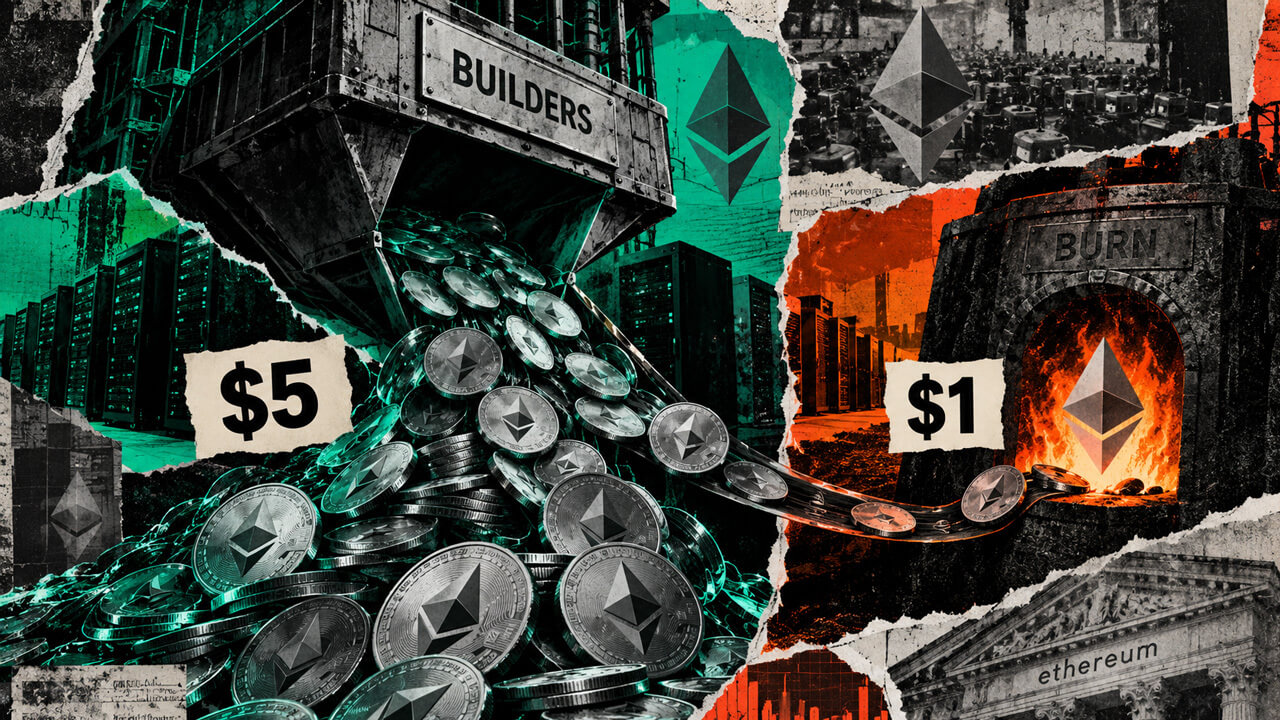
A comprehensive 2026 study by Bitquery has revealed a stark imbalance in Ethereum’s value capture, showing that block builders currently earn $5 in arbitrage proceeds for every $1 of ETH burned by the protocol. This data, pulled from a recent 30-day sample, confirms that despite the deflationary intentions of EIP-1559, the majority of value generated by arbitrage activity is flowing to private builders rather than being removed from the circulating supply. The study clarifies that while the burn mechanism functions as intended, the sheer efficiency of modern arbitrage bots allows builders to extract five times more value than what is permanently destroyed.
The research separates trading proceeds from the raw reduction in ETH supply, uncovering that builders' onward payments to other actors in the supply chain leave final profit shares somewhat unresolved. However, the top-line figure remains clear: the network's burn rate is significantly lagging behind the revenue generation of the block-building layer. This suggests that the 'ultrasound money' narrative, which relies heavily on high burn rates during market volatility, may be facing structural headwinds as MEV extraction becomes more sophisticated.
For US-based crypto participants, these findings are particularly relevant as regulators and industry leaders debate the fairness of the MEV supply chain. If builders continue to capture a disproportionate share of network value, it could lead to increased centralization risks, as only the most efficient builders—many of whom are based in specific jurisdictions—can remain competitive. This could trigger renewed interest from the SEC or CFTC in how block construction and transaction ordering are governed within decentralized networks.
Investors should watch for upcoming Ethereum protocol upgrades designed to refine how MEV is shared with the network. Proposals such as MEV-burn, which aims to direct a portion of these arbitrage proceeds into the protocol's burn mechanism rather than to builders, are likely to gain renewed traction in light of Bitquery's 2026 findings. In the near term, this data may dampen some expectations for ETH’s deflationary pressure unless network activity increases enough to tip the scales back toward the burn mechanism.