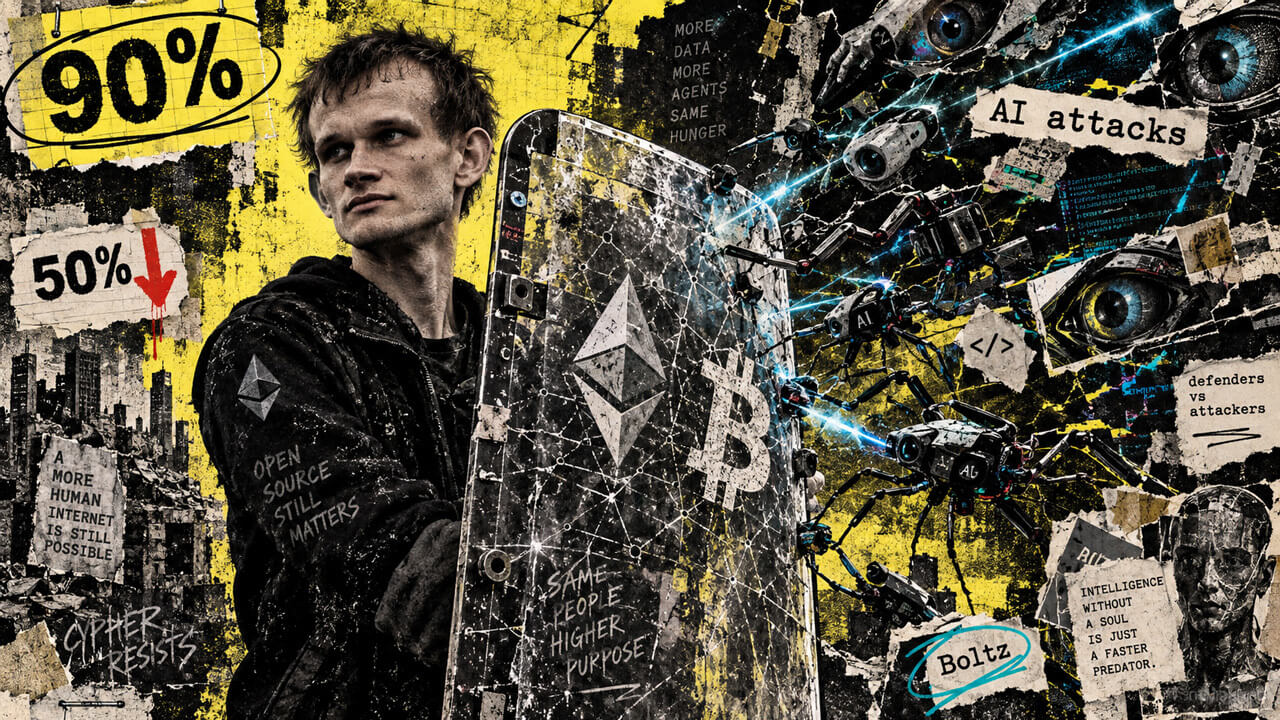
Ethereum co-founder Vitalik Buterin has publicly pushed back against predictions that artificial intelligence (AI) will trigger a catastrophic 50% crash in Bitcoin prices over the next two years. Responding to Silicon Valley investor Liron Shapiro, who suggested a high probability of an AI-led market collapse, Buterin argues that the underlying cryptography of decentralized networks is far more resilient than skeptics realize. He believes that while AI can be used to search for vulnerabilities, its primary role in the crypto ecosystem will be to serve as a powerful defensive tool for auditing code and hardening protocols.
The debate comes at a time when the intersection of AI and blockchain is a primary focus for US financial regulators. Shapiro’s bearish outlook is built on the fear that AI-driven exploits could break the economic assumptions of proof-of-work or identify zero-day vulnerabilities in Bitcoin’s core protocol faster than humans can patch them. Buterin countered this "doomsday" scenario by highlighting his own skin in the game, confirming that roughly 90% of his net worth remains in crypto assets, signaling that he views AI as a technological evolution rather than an existential threat to digital scarcity.
For US-based investors and institutional players, this disagreement underscores a major shift in 2026 market sentiment regarding technological risk. The focus is no longer just on interest rates or ETFs, but on whether blockchain can survive the era of autonomous agents. Buterin’s stance suggests that the market is moving toward a "defensive AI" model, where decentralized networks use machine learning to proactively protect against malicious actors, potentially making Bitcoin and Ethereum even more secure than traditional centralized financial systems.
Moving forward, the industry will be watching for the deployment of new AI-integrated auditing frameworks within the Ethereum ecosystem. If these tools successfully prevent high-profile exploits throughout 2026, it will likely validate Buterin’s confidence and stabilize market volatility. Investors should monitor how Bitcoin’s hash rate reacts to AI-optimized mining hardware, as this will be the first real-world test of whether AI strengthens or centralizes the world’s largest cryptocurrency.