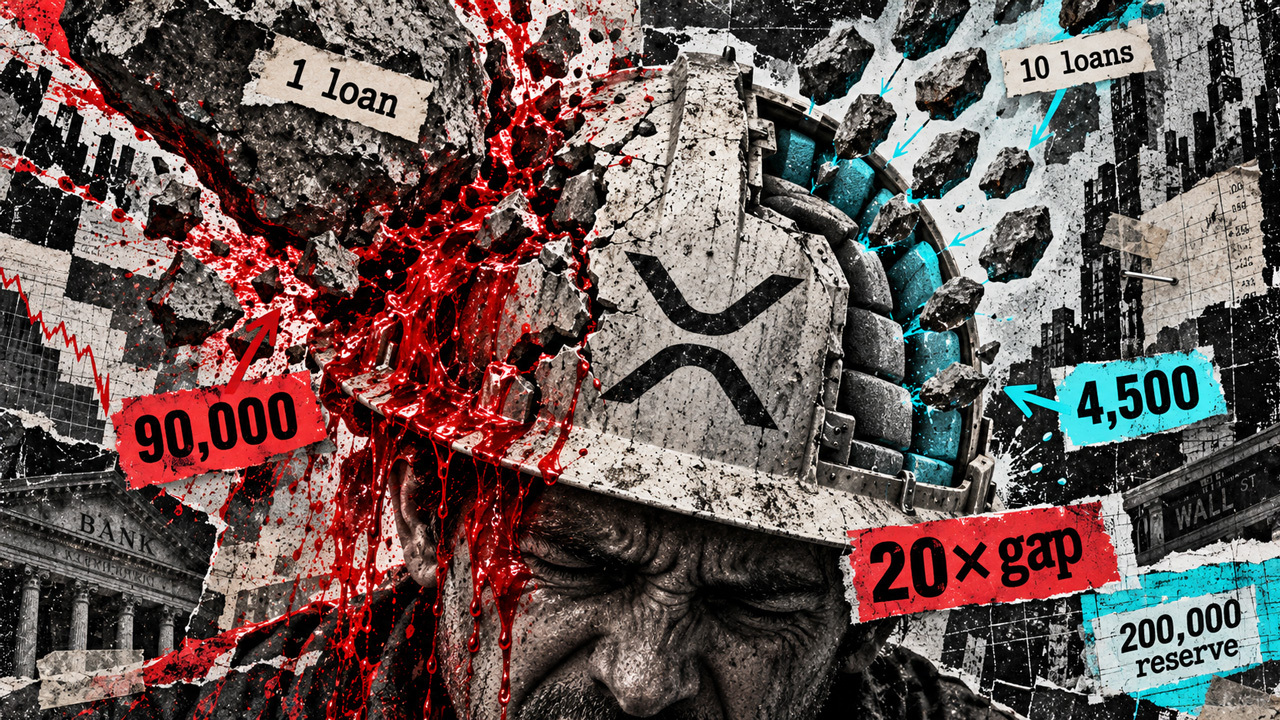
The XRP lending model exposes depositors to significant losses because its algorithmic risk mitigation is designed for a diversified loan book rather than concentrated debt. According to new 2026 protocol modeling, a single large default can result in a 90,000 token loss for a vault—representing 90% of the collateral—whereas ten smaller loans totaling the same amount would only cause a 4,500 token loss. This disparity reveals that current reserve and cover rates provide a false sense of security when dealing with institutional-scale borrowers or 'whale' accounts.
Why does the XRP lending model expose depositors to 90% losses during single-loan defaults?
The XRP lending protocol's risk mitigation strategy is optimized for volume rather than debt concentration, leaving depositors vulnerable to massive losses from individual large defaults. Even with reserves twice the size of a loan, a single bad debt can wipe out 90% of a vault's assets, highlighting a critical structural flaw for liquidity providers.
Editorial method
This report is based on the linked source and is labeled with its publication date, provider, category and market-impact assessment. Market interpretation is informational, not investment advice.