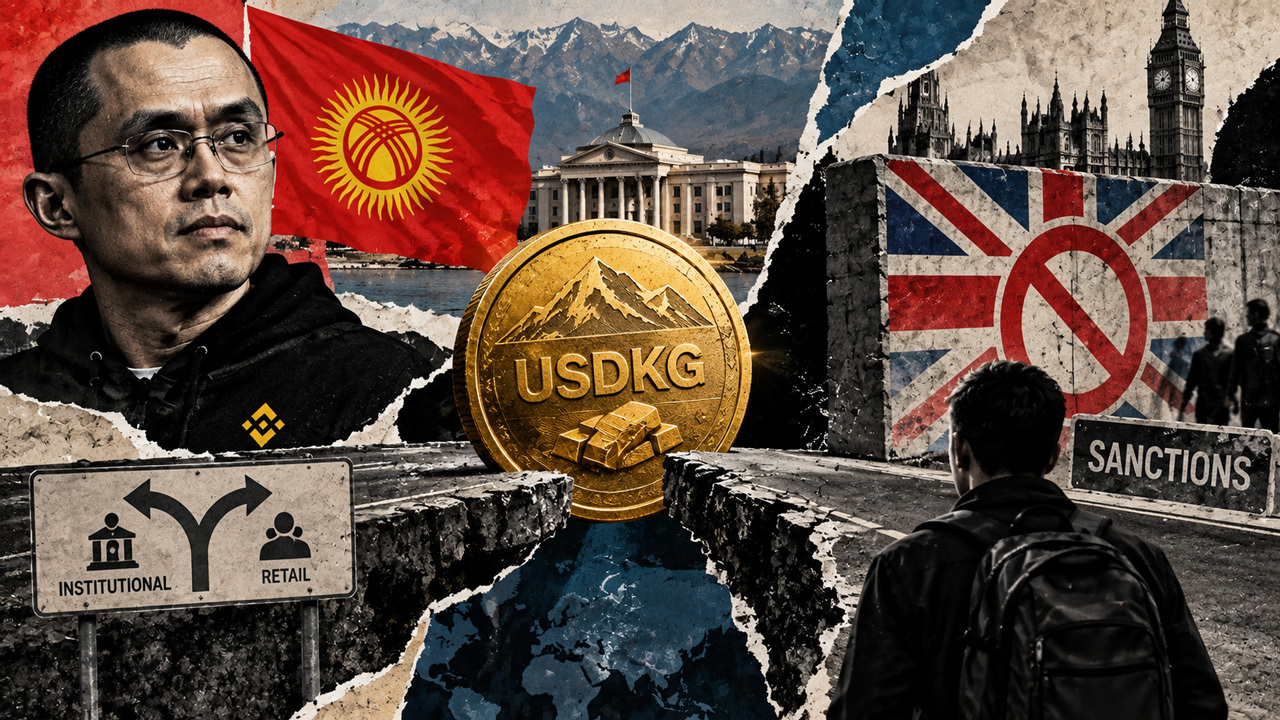
The UK sanctions imposed in May 2026 on the issuer of USDKG, combined with a policy that limits direct redemptions strictly to institutional players, have created a significant bottleneck for Kyrgyzstan’s stablecoin ecosystem. This means that despite government endorsement, retail users cannot easily swap USDKG for fiat, undermining the project's promise of a stable 'exit' or entry point for the broader market. The disconnect between state support and actual market accessibility highlights a growing trend where geopolitical friction overrides local regulatory approval.
On September 5, 2026, Changpeng Zhao (CZ) visited Kyrgyzstan and publicly praised the KGST project, a separate stablecoin initiative. While his visit provided a momentary boost to the region's crypto profile, it also brought renewed scrutiny to the country's multi-stablecoin strategy. The USDKG project, which operates alongside KGST, remains the primary point of concern for analysts due to its restrictive redemption architecture that favors large-scale entities over the general public.
The geopolitical context is crucial here: the UK sanctions target the infrastructure behind the USDKG issuer, effectively isolating the token from Western financial corridors. For Kyrgyzstan, a nation attempting to position itself as a Central Asian crypto hub, this creates a 'walled garden' effect. State backing often suggests safety, but as this case proves, if the issuing entity is blacklisted by major global regulators, the token’s utility is confined to a very narrow, high-risk niche.
Market implications are currently localized but serve as a warning for other emerging markets seeking to launch sovereign stablecoins. Investors should note that 'state-backed' does not equate to 'inflation-proof' or 'globally liquid' if the underlying issuer faces international legal challenges. The lack of a retail redemption bridge for USDKG further complicates the local DeFi landscape, as it forces users into secondary markets where slippage can be high.
Moving forward, crypto participants should watch for any response from the Kyrgyzstan central bank regarding the restructuring of USDKG’s issuer to bypass UK sanctions. Additionally, the progress of KGST will be a litmus test for whether CZ’s endorsement can translate into a more transparent and accessible stablecoin model that avoids the institutional-only pitfalls of its predecessor.