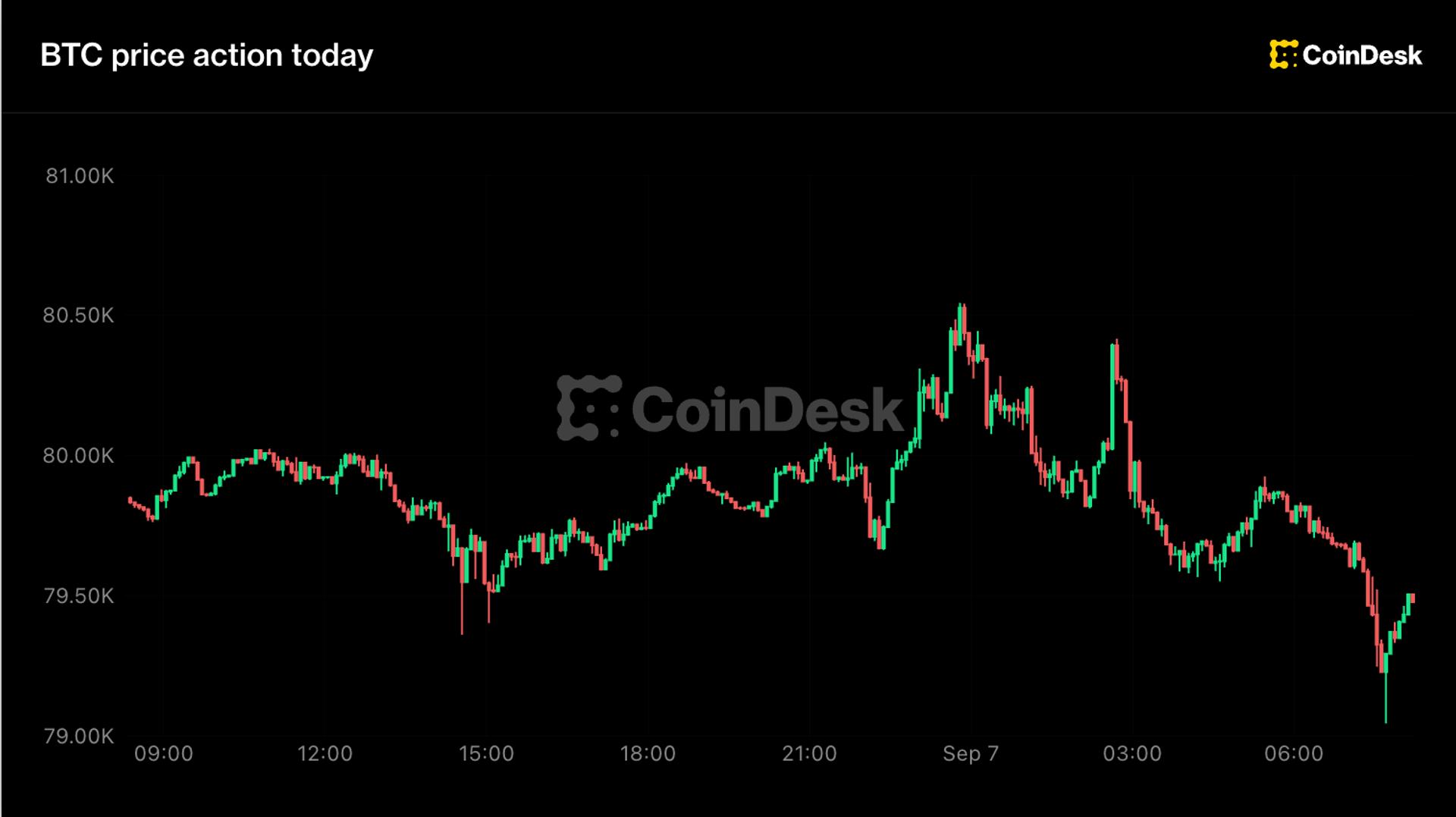
Bitcoin decoupled from traditional equities in mid-August 2026 by holding firm at $79,000, despite a U.S. payroll report that tripled forecasts. This economic strength pushed the odds of a September interest rate hike to 58%, triggering a sell-off in the S&P 500 and Nasdaq. Crypto's refusal to follow stocks indicates a shift in market sentiment, where digital assets are increasingly viewed as distinct from risk-on equity plays during periods of labor market volatility.
The August jobs data arrived as a shock to macro analysts, signaling that the U.S. economy remains overheated despite previous tightening cycles. While high employment usually spells trouble for growth stocks sensitive to rate hikes, the crypto sector—specifically Zcash (ZEC)—has outperformed significantly, posting a 45% gain over the last seven days. This suggests that capital is rotating into specific privacy-focused projects and established stores of value like Bitcoin even as the broader financial landscape tightens.
This divergence comes at a critical time for U.S. monetary policy. The Federal Reserve's likely pivot toward a hike in September aims to cool the persistent labor demand, yet Bitcoin’s current support at $79,000 suggests that institutional holders are less reactive to short-term rate fluctuations than in previous years. The relative stability of the crypto market indicates a growing belief that crypto can serve as a hedge against the inflationary pressures reflected in the payroll numbers.
Investors should closely monitor the upcoming Federal Open Market Committee (FOMC) minutes to confirm the hawkish sentiment. If Bitcoin breaks above the $80,000 resistance despite the hike certainty, it would solidify a new era of crypto independence from the S&P 500. Additionally, the momentum of Zcash will be a key indicator for whether the privacy-coin narrative is sustainable or if this was a localized liquidity event driven by specific network developments.