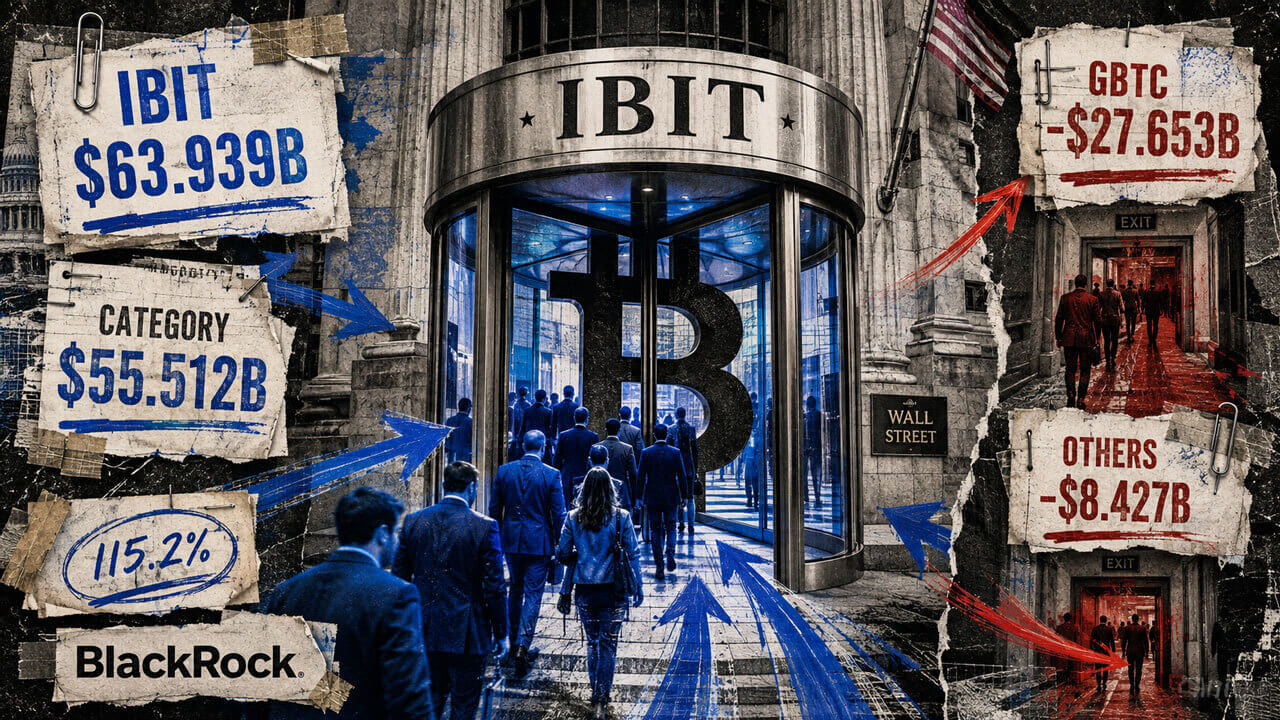
On August 27, the US Bitcoin ETF market was characterized by a massive $277.6 million inflow into BlackRock’s iShares Bitcoin Trust (IBIT), which effectively carried the entire sector as other competing funds saw minimal or negative movement. This surge in capital highlights the 'faceless' yet potent institutional demand that has pushed the total US spot Bitcoin ETF market to a valuation of approximately $63 billion. While retail sentiment may waver, these end-of-day entries suggest that programmatic and wealth management allocations are providing a steady stream of liquidity into the space.
The term 'revolving door' describes the automated nature of these institutional flows, which often bypass the emotional decision-making typical of retail committees. BlackRock has emerged as the clear leader in this environment, capturing the lion's share of new capital while smaller issuers struggle to maintain similar momentum. This concentration of liquidity suggests that Bitcoin’s price discovery is becoming increasingly dependent on a few major players who execute large-scale trades near the US market close.
From a market perspective, this dominance by IBIT signifies a maturing ecosystem where institutional rails are becoming the primary driver of Bitcoin's valuation. While the broader crypto market faced headwinds, the steady accumulation by ETF participants provides a buffer against volatility. However, it also raises questions about market concentration and the influence of a single asset manager over the benchmark cryptocurrency’s liquidity.
Investors and analysts should now monitor whether this 'faceless' buying remains consistent during potential macroeconomic shifts or Federal Reserve interest rate decisions. The sustainability of the $63 billion AUM (Assets Under Management) figure will depend on whether other funds like Fidelity's FBTC or the Grayscale Bitcoin Trust (GBTC) can stem their outflows or if BlackRock will continue to act as the sole engine for the US market.