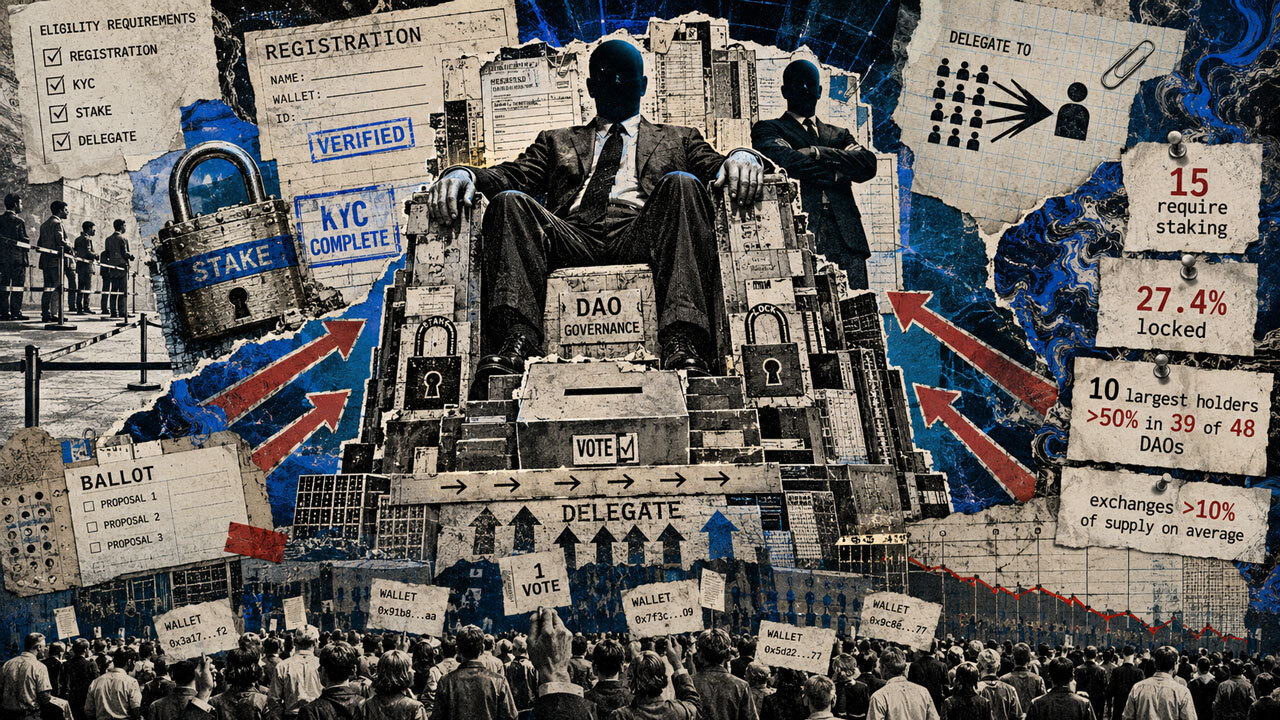
The July 2024 governance incident at Compound protocol, where a small group nearly diverted $24 million worth of COMP tokens to a private vault, forced a critical rethink of DeFi security and 'emergency brakes.' The attack highlighted that when 'code is law,' software will faithfully execute a malicious proposal if the attackers can acquire enough voting power. To prevent similar exploits, protocols are now debating the implementation of veto powers, delay timers, and multisig overrides—security layers that essentially act as manual overrides for supposedly autonomous systems.
The incident involved a group known as the 'Golden Boys,' who accumulated enough COMP tokens to influence governance votes and push through a proposal to transfer funds into their own yield-bearing product. Because Compound operates as a decentralized autonomous organization (DAO), the result was meant to be executed automatically by the protocol's smart contracts. The community was forced into a last-minute scramble to organize a counter-vote, exposing the inherent slow-footedness of pure on-chain democracy when facing well-funded adversaries.
For US-based users and developers, this shift toward 'guarded decentralization' creates a complex regulatory dilemma. If a protocol introduces a centralized committee or a 'veto' mechanism to stop attacks, it may lose its status as a truly decentralized entity in the eyes of the SEC or CFTC, potentially falling under stricter financial service regulations. However, failing to protect user-owned treasuries from theft invites intense pressure from consumer protection advocates and lawmakers who view DAO vulnerabilities as a systemic risk to the broader crypto market.
Market participants should expect a new wave of governance proposals across major DeFi protocols like Aave and Uniswap as they seek to balance immutability with safety. Investors should watch for the adoption of 'Governance Security Modules' (GSMs) which allow for temporary pauses in protocol changes. While these measures increase security, they also represent a departure from the original vision of trustless, human-free financial systems, potentially impacting the long-term value proposition of governance tokens.