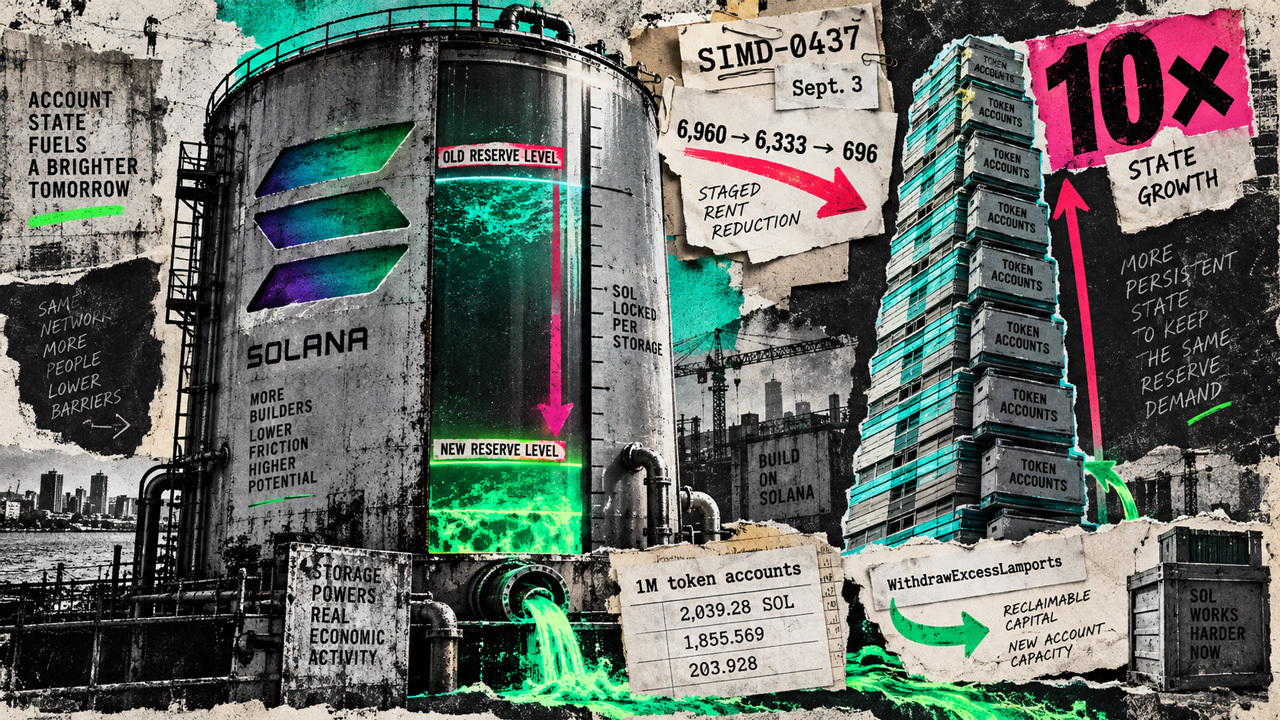
Solana is moving forward with a protocol update designed to reduce the minimum SOL deposit required for accounts to remain "rent-exempt" by 90%. By lowering the financial barrier to entry, the network aims to become more accessible for developers building high-frequency applications and for individual users managing multiple on-chain accounts. However, this change directly challenges a long-standing economic driver for the SOL token: the structural necessity for users to lock up capital to maintain an active presence on the blockchain.
The implementation is a multi-stage process, with the initial phase already live. To reach the full 90% reduction, the network must achieve a tenfold increase in persistent account state capacity to ensure the lower reserves can still sustain the hardware costs of storing ledger data. Historically, these deposits acted as a supply sink, effectively removing millions of SOL from the circulating market. With the lower threshold, existing users may soon have the option to withdraw the excess SOL from their accounts, potentially leading to a localized increase in sell-side liquidity.
From a regulatory and market perspective in the United States, this transition highlights the tension between a blockchain's utility and its tokenomics. While many crypto-economic models rely on "lock-up" mechanisms to support price floors, Solana Labs is signaling that long-term sustainability depends on throughput and developer adoption rather than forced scarcity. This move aligns with a broader industry trend toward reducing "gas" and storage friction to compete with traditional financial systems.
Investors and analysts should watch the rate of new account creation following the full implementation. If the lower costs lead to a significant surge in decentralized application (dApp) deployments and user activity, the increased demand for transaction fees could eventually offset the loss of locked-up deposits. In the near term, however, look for data on how much SOL is being reclaimed from existing accounts, as this will provide a clearer picture of the immediate impact on circulating supply.