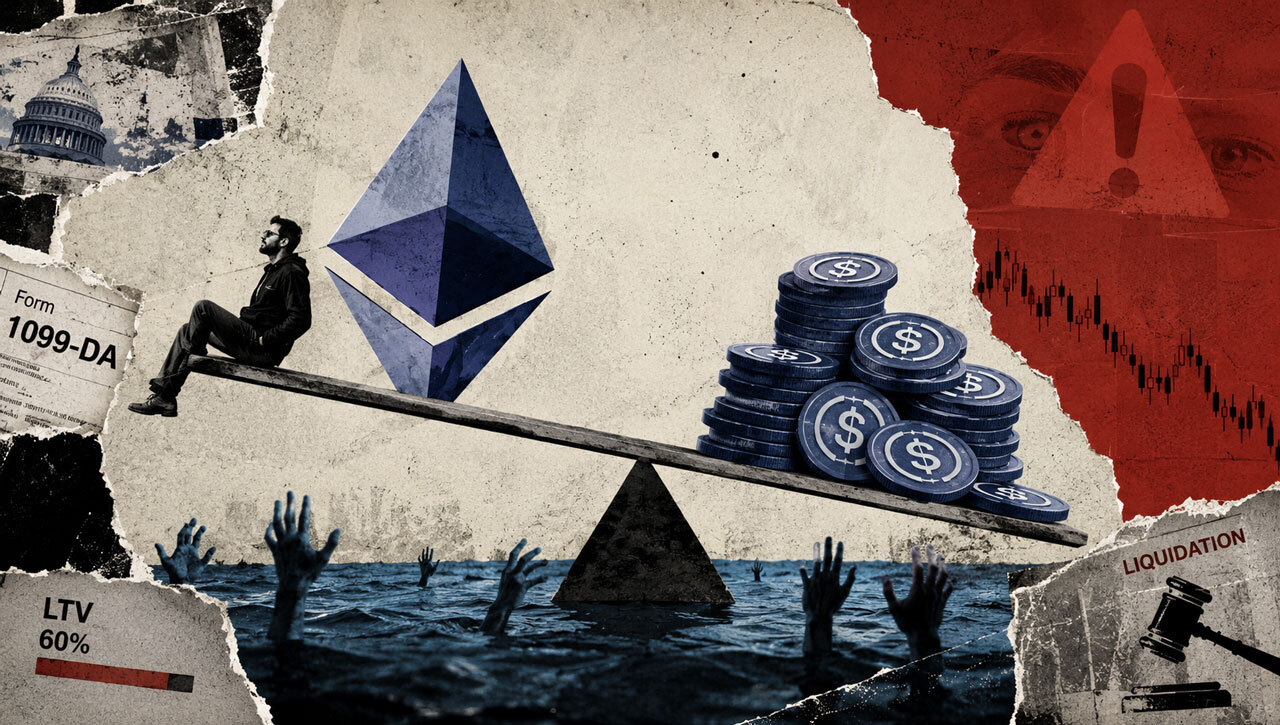
The 'buy, borrow, die' tax strategy introduces hidden credit risk into Decentralized Finance (DeFi) by incentivizing investors to maintain high levels of leverage to avoid taxable events. By depositing assets like Ethereum (ETH) into lending protocols as collateral to borrow stablecoins, investors can access liquidity without selling their holdings and realizing capital gains. While this is a common wealth management tactic, it creates a 'sticky' layer of debt within DeFi pools that may not react to market signals as quickly as speculative trades, increasing the potential for systemic instability during periods of extreme volatility.
Under current US tax treatment, selling ETH that has appreciated significantly—for example, from $1,000 to $4,000—would trigger a substantial capital gains tax liability. DeFi protocols offer a workaround: by borrowing against the asset, the owner receives cash without a 'realization event' for tax purposes. This allows the investor to benefit from the asset's price appreciation while deferring taxes indefinitely, or until the collateral is eventually transferred to heirs at a stepped-up basis, effectively neutralizing the tax bill.
However, this behavior creates significant market implications. Because these borrowers are motivated by tax avoidance rather than market timing, they are less likely to deleverage voluntarily when prices soften. This results in large pools of collateral that are highly sensitive to liquidation thresholds. If ETH prices drop sharply, automated liquidation bots must sell massive amounts of collateral to cover these tax-motivated loans, which can lead to excessive slippage, price crashes, and the accumulation of bad debt within the protocols themselves.
Market participants and regulators are now closely watching how these lending pools handle stress. As the IRS considers tighter reporting requirements for digital assets, any change in the tax treatment of crypto-backed loans could lead to a massive unwinding of these positions. Investors should monitor the health of Loan-to-Value (LTV) ratios on major platforms like Aave and Compound, as a high concentration of tax-deferred borrowing could serve as a catalyst for the next major market correction.