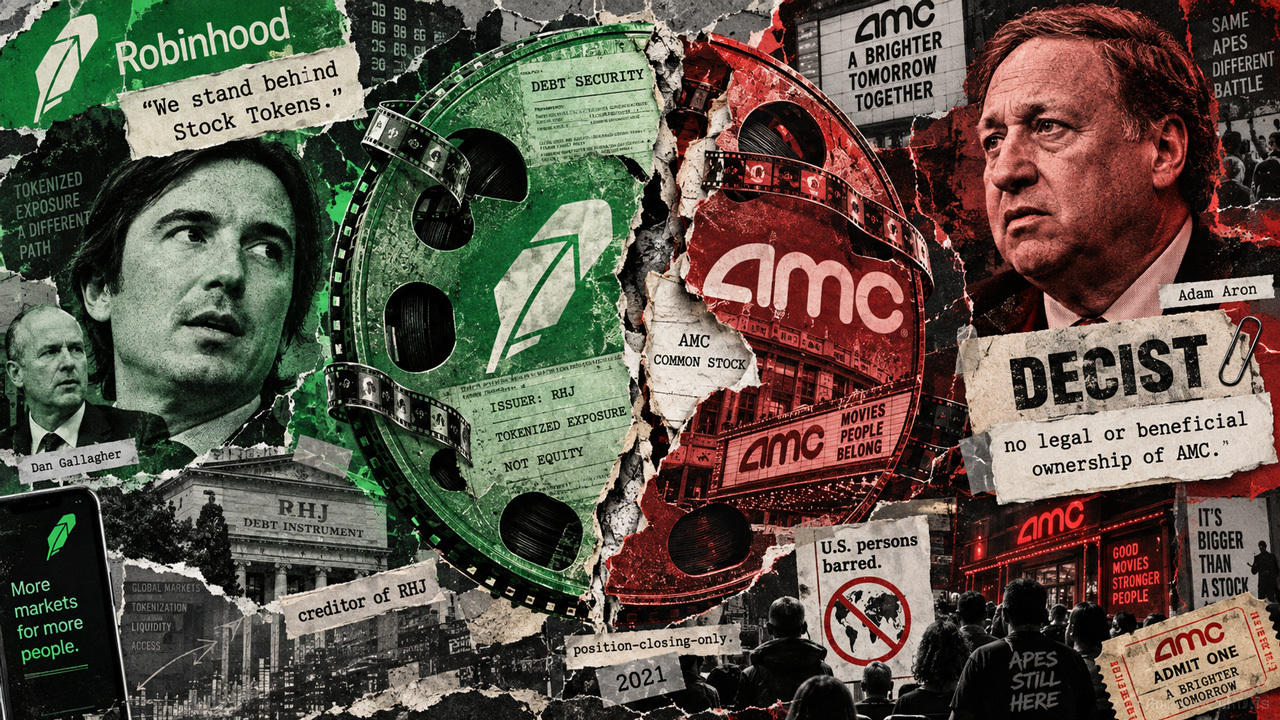
Robinhood is refusing to halt the trading of tokenized AMC Entertainment holdings because its legal department classifies the asset as a legitimate debt product issued out of Jersey, rather than an unauthorized equity offering. AMC CEO Adam Aron recently demanded the removal of these tokens, threatening legal action and SEC intervention by arguing that the products are fraudulent and offer no actual shareholder rights. Robinhood’s legal chief has signaled that the platform will not comply, maintaining that the product functions within its existing legal framework despite the issuer's objections.
The conflict centers on the nature of "tokenized stocks," which are synthetic digital assets designed to mirror the price of a specific company’s shares. Unlike traditional shares, these tokens do not provide investors with voting power, dividends, or direct ownership of the underlying company. Adam Aron has been vocal in distancing AMC from these crypto-linked products, concerned that they mislead retail investors—particularly the "ape" community of meme-stock enthusiasts—who may not realize they are buying a Jersey-issued debt instrument rather than AMC common stock.
From a regulatory perspective, this standoff puts the spotlight on the SEC’s stance toward synthetic assets and offshore issuances. If the SEC determines that these products are being used to circumvent U.S. securities laws or that Robinhood is facilitating the sale of unregistered securities, the brokerage could face significant enforcement pressure. However, Robinhood’s defiance suggests it believes these products are sufficiently insulated by their international issuance structure, setting a bold precedent for how brokerages handle controversial crypto-equity derivatives.
For the broader market, this development is a critical test case for the "Real World Asset" (RWA) and tokenization sector. If other major corporations follow AMC's lead in challenging synthetic versions of their shares, it could stifle the growth of tokenized equity platforms. Investors should closely monitor whether the SEC initiates a formal probe or if AMC pursues a lawsuit in U.S. courts, as the outcome will likely dictate whether synthetic stock tokens remain a viable feature of the American crypto landscape.