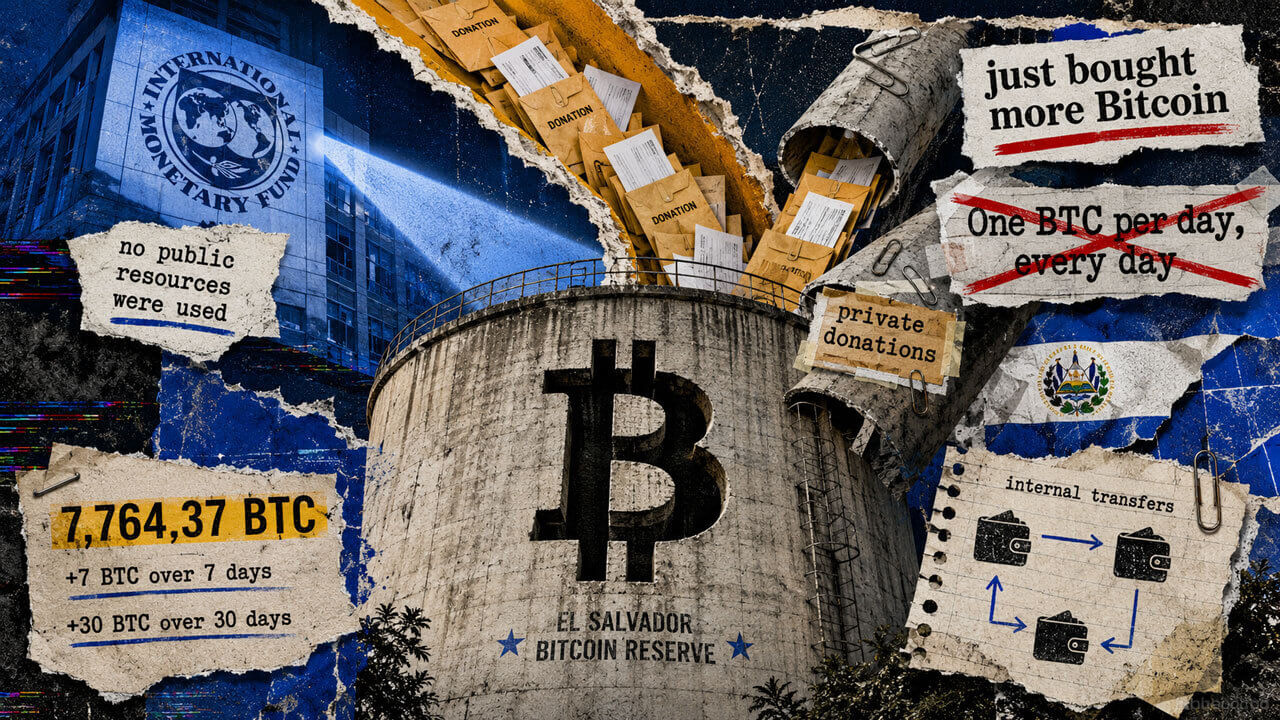
The International Monetary Fund (IMF) has reported that El Salvador’s recent accumulation of 1,540 Bitcoin was not funded by public resources, despite the government's public commitment to purchasing one Bitcoin every day. While the coins have been added to the national portfolio, the IMF’s disclosure indicates that no taxpayer money or official budgetary allocations were used to facilitate these specific transactions since the fund's first review. This discrepancy suggests that the assets may have originated from private donations, alternative revenue streams, or off-balance-sheet transfers that bypass traditional fiscal oversight.
This finding introduces fresh political tension between President Nayib Bukele’s administration and international financial institutions. The IMF has long criticized El Salvador’s 2021 decision to adopt Bitcoin as legal tender, citing risks to financial integrity and consumer protection. By pointing out the lack of public funding for these recent acquisitions, the IMF is highlighting a critical lack of transparency in how the nation manages its digital assets, which remains a primary hurdle in El Salvador’s attempts to secure a multi-billion dollar credit facility from the lender.
For the broader crypto market and US-based investors, this news serves as a reminder of the governance challenges inherent in nation-state Bitcoin adoption. While the continued accumulation of BTC by a sovereign state is generally viewed as a long-term supply constraint, the 'black box' nature of El Salvador's purchases creates reputational risks for the asset class. If a nation-state cannot clearly account for the source of its funds, it may trigger increased scrutiny from global anti-money laundering (AML) regulators, potentially complicating institutional entries into the space.
Moving forward, market participants should watch for a formal response from the Bukele administration regarding the source of these 1,540 Bitcoins. Clarity on whether these were sourced via geothermal mining profits, private sector partnerships, or other means will be essential for restoring confidence in the country's fiscal reporting. Furthermore, any breakdown in IMF negotiations due to these transparency issues could lead to increased volatility for El Salvador’s sovereign bonds, which have recently traded in high correlation with Bitcoin’s market performance.