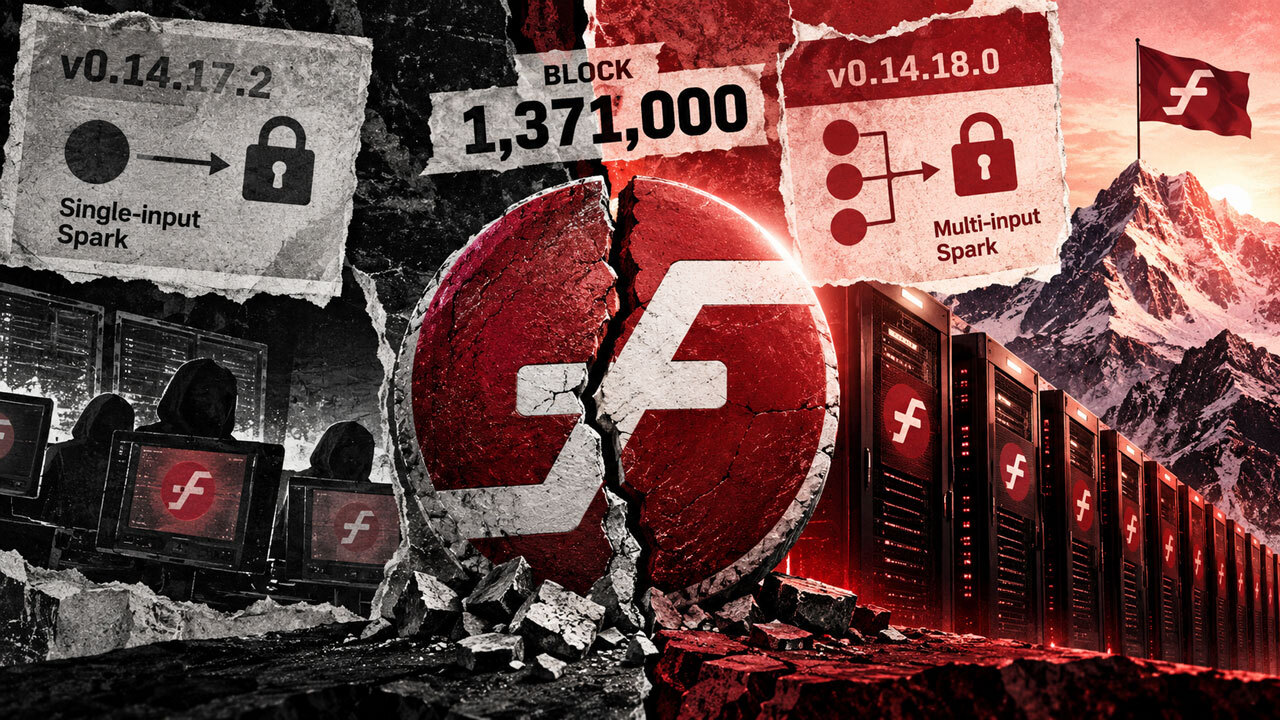
Firo node operators must update their software to version 0.14.18.0 before the network reaches block 1,371,000 to prevent a critical security flaw that could allow for the unauthorized, infinite creation of new tokens. This mandatory update is a consensus-breaking change, meaning that any nodes running older software versions will become incompatible with the main blockchain once the specified block height is reached. The fix specifically restores the ability to conduct multi-input private spending, a feature that was previously restricted to mitigate risks while the development team finalized the security patch.
The vulnerability was identified within the coin's core privacy protocol, which could have been exploited to bypass supply limits—a catastrophic scenario for any digital asset aiming to maintain scarcity. By implementing v0.14.18.0, the Firo development team effectively closes the loophole and secures the network’s private transaction framework. The tight deadline, measured in hours for many operators, highlights the severity of the issue; unpatched nodes risk being left on an insecure or fragmented version of the chain that lacks the necessary security validations.
In the broader regulatory landscape, privacy-focused assets like Firo, Monero, and Dash are already under intense scrutiny from US agencies, including the SEC and FinCEN. While regulators primarily focus on the "untraceability" of these coins for anti-money laundering (AML) compliance, technical flaws that allow for infinite inflation add a layer of financial instability risk. For US-based investors and institutional stakeholders, a project's ability to swiftly resolve protocol-level bugs is a critical metric for assessing long-term viability, especially as exchanges face pressure to delist privacy-centric tokens.
Market participants should watch for potential volatility in FIRO prices as the network approaches the block deadline. While a successful transition is a positive sign for network health, the initial discovery of an inflation-risk flaw can temporarily shake investor confidence in the underlying code. Readers should monitor social channels and block explorers to ensure the majority of node operators have complied with the update to ensure a smooth transition and unified network state.