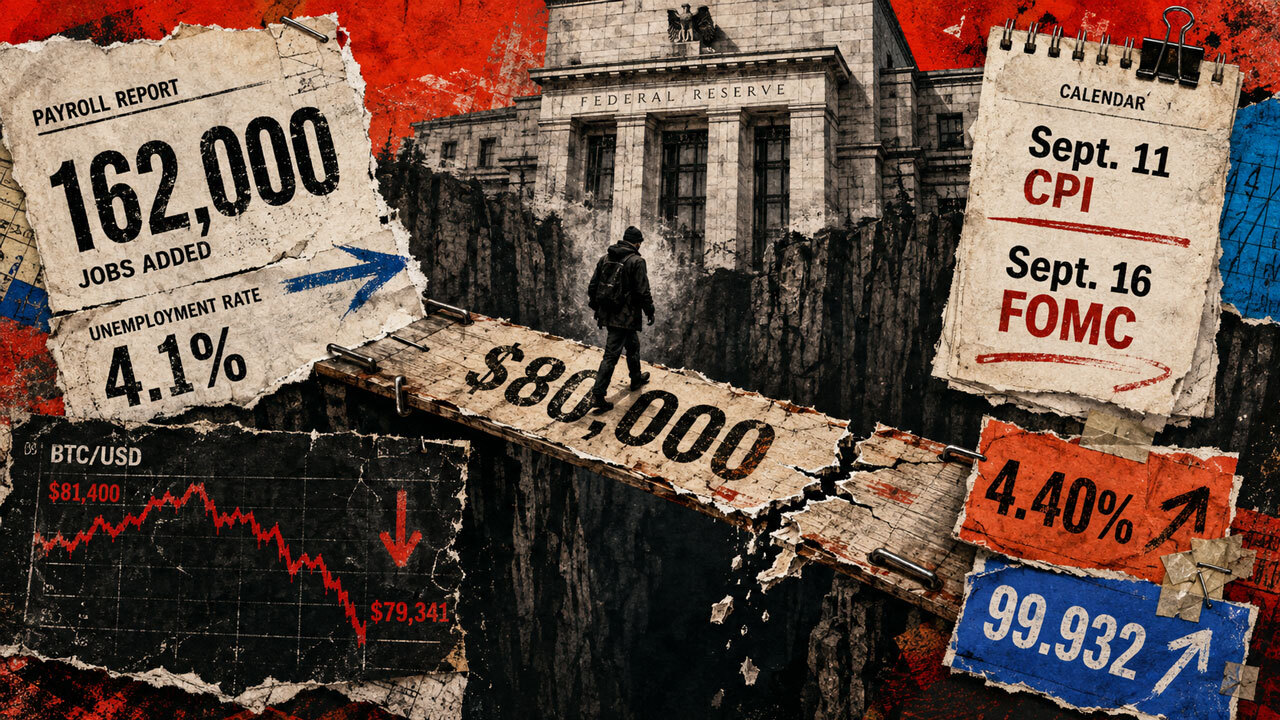
Bitcoin's dip below the $80,000 level was primarily driven by the release of U.S. payroll data showing a gain of 162,000 jobs, which suggested the labor market remains hotter than previously anticipated. This stronger-than-expected economic performance immediately boosted the US dollar and Treasury yields, creating a challenging environment for non-yielding assets like Bitcoin. The data essentially signaled to the market that the Federal Reserve might need to keep interest rates higher for longer, or potentially consider further hikes, to cool the economy.
The market reaction was swift but uneven. While the initial selloff pushed Bitcoin under the critical $80,000 psychological barrier, the broader impact across the financial sector showed some signs of stabilization after the first wave of selling. However, for the cryptocurrency market, which has recently benefited from 'risk-on' sentiment, the prospect of a more aggressive Federal Reserve serves as a significant headwind.
From a regulatory and geopolitical perspective, these economic indicators put more pressure on the Fed to balance employment with inflation control. For US-based crypto investors, this highlights that Bitcoin remains highly sensitive to traditional macro-economic triggers despite its 'digital gold' narrative. The inverse correlation between a strong U.S. dollar and a cooling crypto market was clearly on display during this volatility.
Looking ahead, traders should focus on upcoming Consumer Price Index (CPI) reports and upcoming statements from Federal Open Market Committee (FOMC) members. If subsequent data confirms a resilient labor market alongside persistent inflation, Bitcoin could face sustained resistance as the 'higher-for-longer' interest rate narrative regains momentum. Monitoring the DXY (US Dollar Index) will be crucial for predicting Bitcoin's next major move.