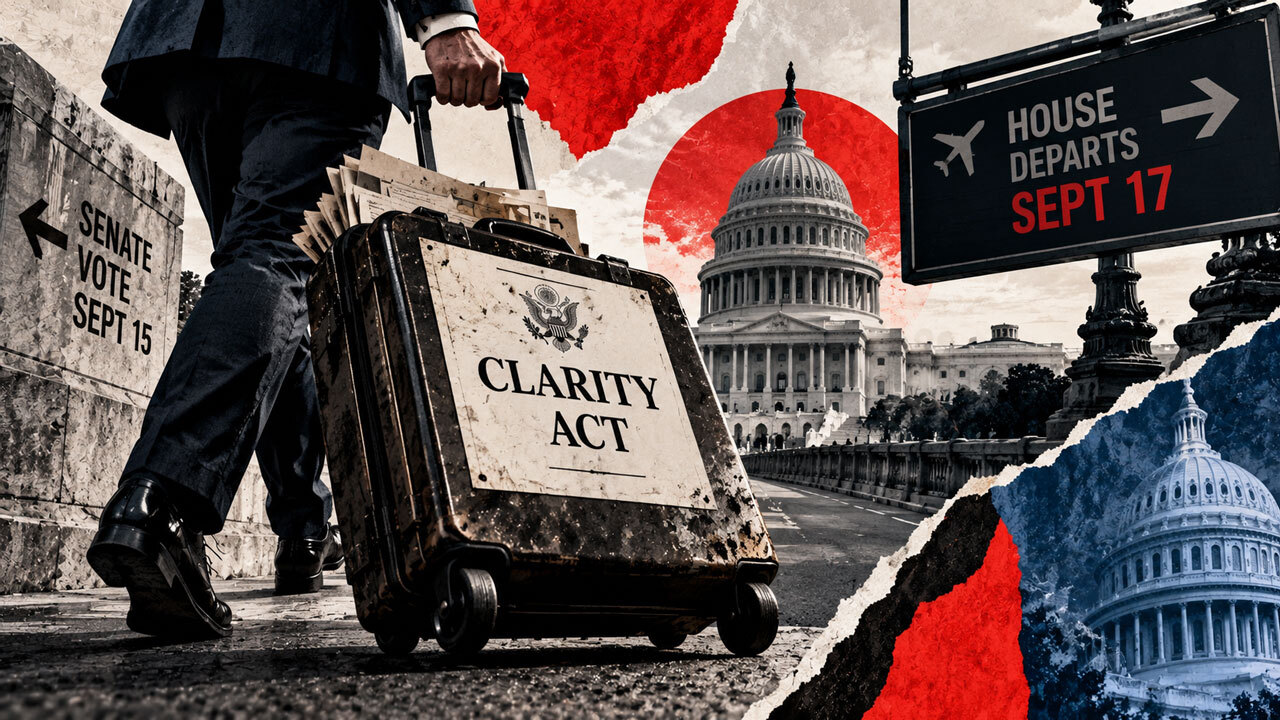
The CLARITY Act is unlikely to pass the US House of Representatives before the 2024 election, with the bill now expected to be pushed into the 'lame duck' session. This delay follows a decision by House Republicans to slash the legislative calendar, effectively cutting the time available for floor debate. Because a critical Senate procedural step is not scheduled until September 15—just two days before the House’s new departure date of September 17—the window for immediate passage has essentially closed.
The Creating Legal Accountability for Rogue Innovators and Transgressors Yesterday (CLARITY) Act is designed to restrict federal agencies from using blockchain technology developed by foreign adversaries, most notably China. While the bill has garnered bipartisan support due to national security concerns, it has struggled to find a spot on the floor as lawmakers prioritize budget resolutions and campaign efforts ahead of November. The shift to the lame duck session means the bill's fate will depend on the post-election political climate and its potential inclusion in larger end-of-year omnibus packages.
For the crypto industry and federal contractors, this delay provides a temporary reprieve from compliance changes but maintains a cloud of regulatory uncertainty. The bill's focus on 'adversary' blockchains could impact companies with ties to the Chinese Blockchain-based Service Network (BSN) or other foreign-linked protocols. However, the lack of immediate action suggests that other major crypto market structure legislations may also face similar scheduling hurdles as the 118th Congress winds down.
Investors and stakeholders should closely monitor the Senate’s procedural moves on September 15. While a House vote is improbable in that specific two-day window, the Senate's actions will set the stage for how aggressively the bill is pushed in December. Additionally, watch for any shifts in geopolitical rhetoric regarding China, as renewed tensions could accelerate the bill’s progress once Congress returns to session after the elections.