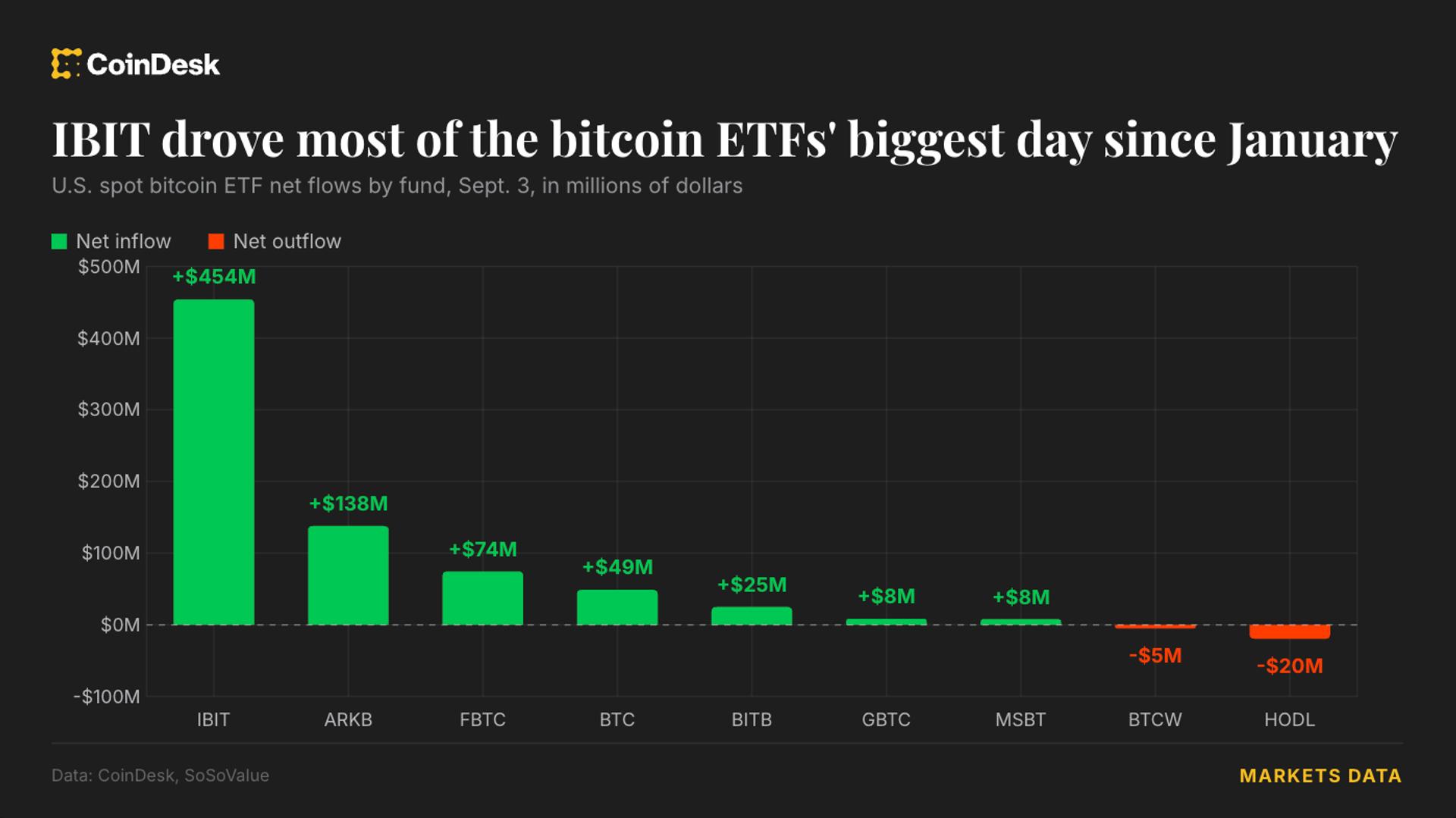
Spot Bitcoin ETFs in the United States hit a major milestone on Thursday, recording $731 million in net inflows, the highest single-day total since the funds launched in January. This surge in capital pushed the total net assets across the entire Bitcoin ETF complex to over $103 billion for the first time. The performance was consistent across the board, with every fund in the sector rising nearly 6% as institutional appetite for the leading cryptocurrency reached new heights.
BlackRock’s iShares Bitcoin Trust (IBIT) was the primary driver of this growth, capturing well over half of the daily inflows. The dominance of IBIT highlights the ongoing trend of traditional finance giants capturing the lion's share of crypto market liquidity. As investors move away from riskier direct holdings toward regulated vehicles, BlackRock’s infrastructure has become the preferred gateway for large-scale capital entering the space.
This record-breaking activity occurs against a backdrop of increasing U.S. regulatory clarity and a favorable political climate for digital assets. The $100 billion asset threshold represents a significant psychological and financial benchmark, placing Bitcoin ETFs among the most successful commodity fund launches in history. For US investors, this liquidity provides a more stable foundation for price discovery compared to the volatile retail-driven cycles of previous years.
Looking ahead, market participants should watch the $100,000 price level for Bitcoin, as sustained ETF inflows of this magnitude often act as a supply-side catalyst. Investors should also monitor whether other issuers can compete with BlackRock's current dominance or if the market will continue to consolidate around a few major players. The continued strength of these inflows suggests that the current market cycle is being fueled by durable institutional participation rather than short-term speculation.