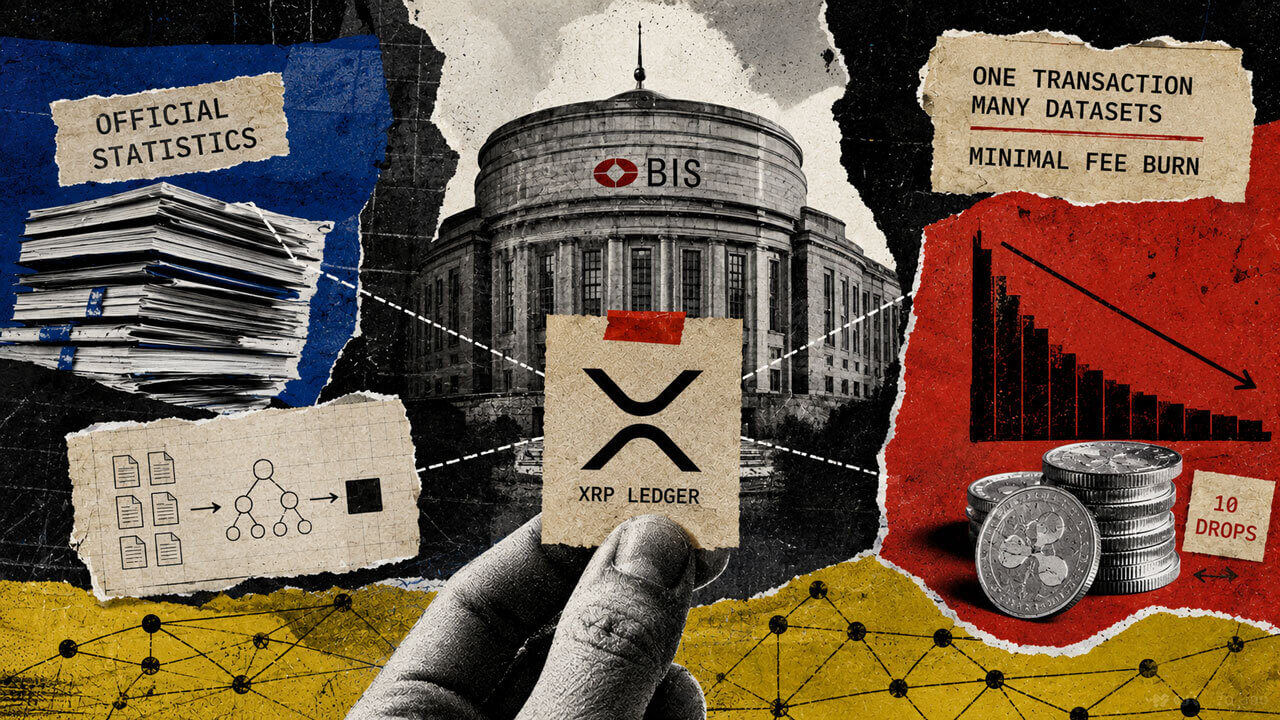
Research highlighted by the Bank for International Settlements (BIS) indicates that the "supply squeeze" many XRP investors anticipate from institutional adoption is unlikely to materialize through transaction fee burning. While the XRP Ledger (XRPL) destroys a small amount of XRP for every transaction to prevent spam, its high technical efficiency allows a single transaction to authenticate thousands of disparate datasets. This means that even as global financial institutions scale their operations on the network, the total volume of XRP burned will remain negligible relative to the total circulating supply.
The misconception among retail holders often stems from the belief that increased institutional volume would lead to exponential fee burning, similar to the burn mechanisms seen on networks like Ethereum. However, the XRPL is architected for extreme high-throughput efficiency. By bundling data, institutions can process massive workloads with minimal on-chain footprints. While this efficiency makes the XRPL an attractive platform for enterprise use, it serves as a limiting factor for those betting on a deflationary price pump driven purely by transaction costs.
For US-based investors and the broader crypto market, this research highlights a critical distinction between network utility and token value accrual. While Ripple continues to court central banks and financial institutions for cross-border settlements and CBDC projects, the BIS data underscores that ledger adoption does not automatically trigger a supply shock. This clarifies the fundamental value proposition of XRP as a bridge currency and liquidity tool rather than a purely deflationary store-of-value asset.
Moving forward, market participants should shift their focus from fee-burn metrics to the growth of the XRP Ledger's ecosystem, including sidechains and Automated Market Maker (AMM) implementations. These features may offer alternative paths for demand and liquidity. While the BIS report dampens the "supply burn" narrative, the long-term price driver for XRP remains its successful integration into real-time gross settlement (RTGS) systems and its regulatory standing in the United States.