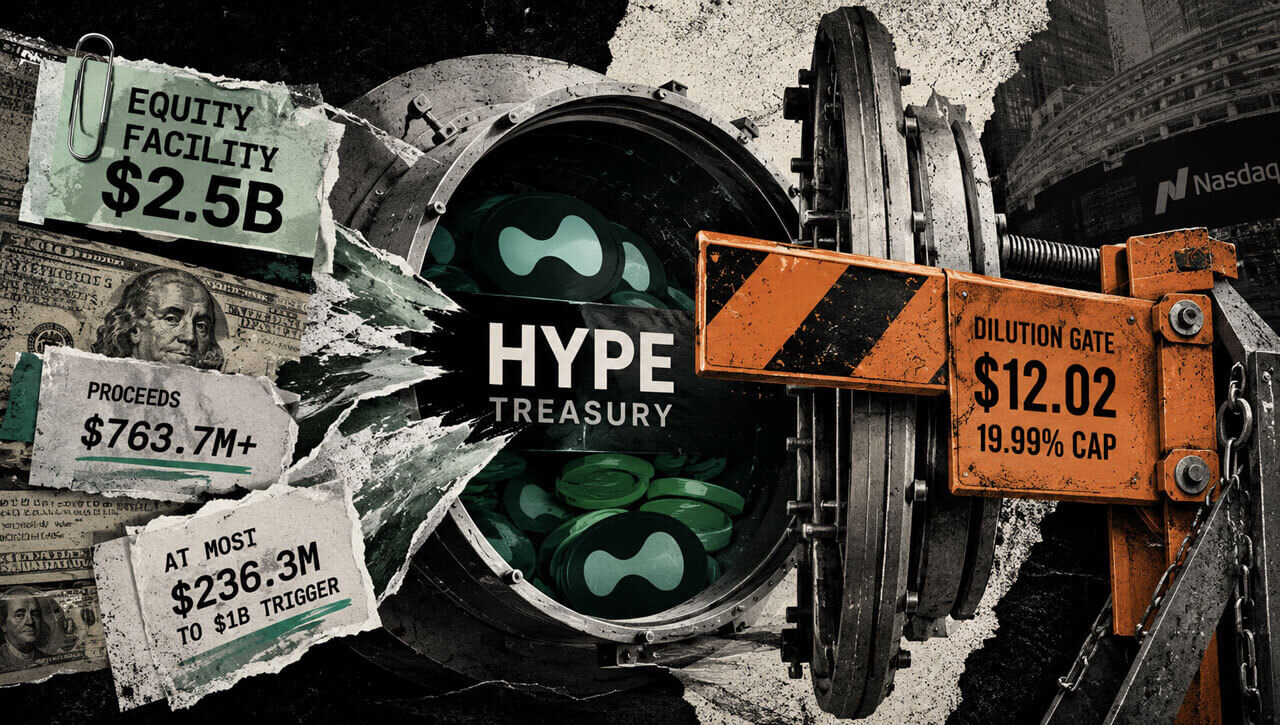
Hyperliquid's ambitious strategy to build a $2.5 billion crypto treasury is facing a significant hurdle as the company exhausts its authorized share issuance under Nasdaq regulations. According to recent filings, the company has successfully raised $763.7 million through discounted share sales, leaving a maximum of $236.3 million available before it hits a mandatory Nasdaq cap. This cap is designed to protect existing shareholders by limiting how much equity a company can issue at a discount without seeking further formal approval, effectively slowing Hyperliquid's ability to capitalize on market opportunities using its current equity-to-token pipeline.
The situation highlights a growing trend of corporate entities leveraging traditional equity markets to fund aggressive digital asset reserves. By selling shares to institutional investors and immediately rotating that capital into tokens, Hyperliquid is mirroring a treasury model popularized by firms like MicroStrategy. However, the Nasdaq '20% rule' acts as a regulatory speed bump, ensuring that rapid-fire fundraising does not unfairly dilute current stockholders. For the US market, this means Hyperliquid may need to pivot to alternative financing methods, such as convertible debt or premium equity offerings, to reach its $2.5 billion goal.
From a market perspective, this development signals a temporary bottleneck in corporate-driven crypto demand from this specific player. Investors are closely watching how Hyperliquid manages the remaining $236.3 million of its current allocation and whether it will file for an increase in authorized shares or a new shelf registration. This move would require a shareholder vote, which could serve as a barometer for how traditional equity investors feel about high-exposure crypto treasury strategies in the current economic climate.
Looking forward, the focus shifts to Hyperliquid’s next SEC filings and its ability to secure new funding channels. If the company successfully navigates the Nasdaq cap, it could set a precedent for other mid-cap firms looking to institutionalize their crypto holdings. However, any delay in fundraising could result in a slowdown of their token purchasing velocity, potentially impacting the short-term price action of the assets they are targeting for their treasury.