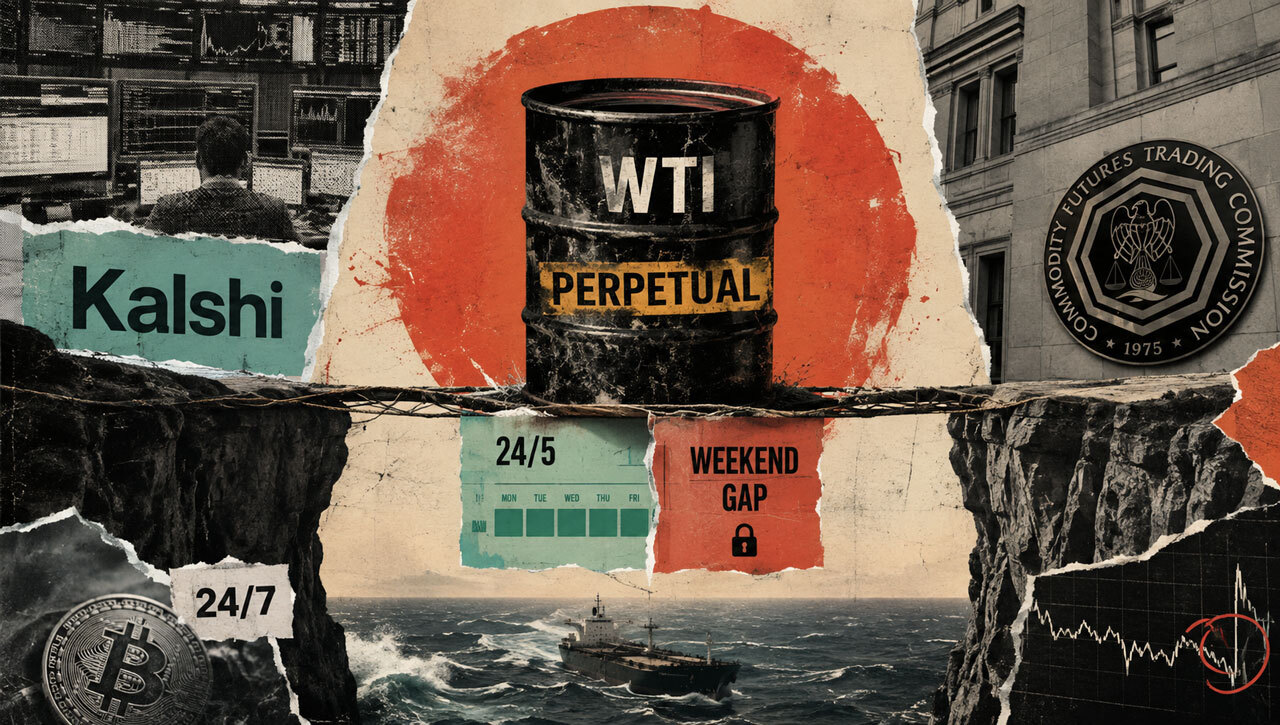
The primary risk of Kalshi’s 24/7 oil contracts is the disconnect between the platform’s round-the-clock trading and the traditional hours of the West Texas Intermediate (WTI) market. While Kalshi allows traders to maintain positions over the weekend, the underlying physical oil market stops trading on Friday afternoon and does not reopen until Sunday evening. This creates a 'blind spot' where significant geopolitical events or economic shifts can occur without a corresponding price update in the primary market, leading to extreme volatility and 'price gaps' when global trading resumes.
Kalshi recently introduced these contracts to provide non-stop exposure, appealing to a retail audience accustomed to the 24/7 nature of cryptocurrency markets. By removing traditional expiry dates, the platform aims to simplify commodity speculation. However, because the settlement of these contracts is ultimately tied to data from traditional exchanges like the CME, the 'non-stop' feature is technically limited by the liquidity and price discovery of the legacy financial system.
For US-based traders, this development highlights a growing friction between decentralized-style trading platforms and centralized market infrastructure. In the crypto sector, assets like Bitcoin trade 24/7, ensuring that news is priced in immediately. Kalshi’s oil contracts attempt to mimic this experience, but without a 24/7 underlying asset, traders may find themselves unable to exit positions or hedge against weekend news cycles, potentially leading to forced liquidations or massive losses at the Sunday open.
Looking ahead, market participants should watch for how Kalshi manages liquidity during these weekend 'gap' periods and whether the Commodity Futures Trading Commission (CFTC) will intervene. As prediction markets gain traction in the US, the regulatory focus on consumer protection and market stability will likely intensify. Traders should remain cautious of holding high-leverage positions in these contracts during periods of global instability, as the lack of weekend price discovery in the physical oil market remains a major structural vulnerability.