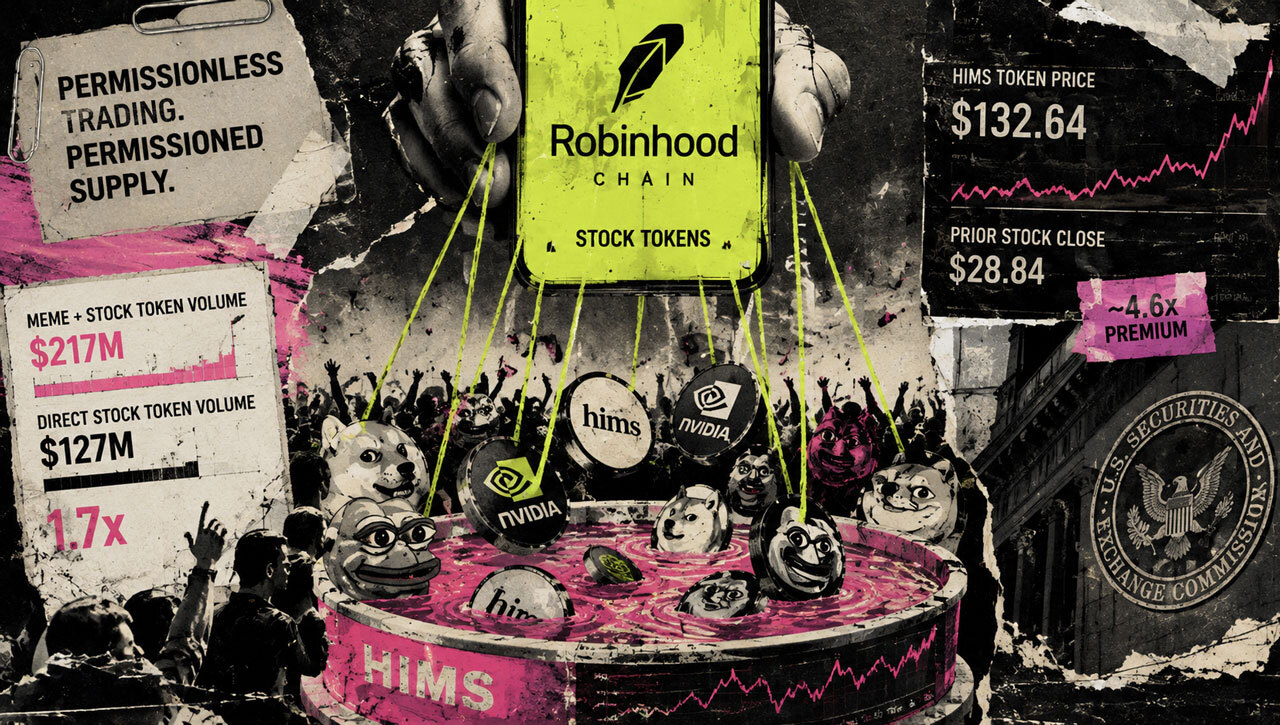
Memecoin traders are currently stress-testing the utility of Robinhood’s permissionless blockchain by pairing speculative tokens against tokenized versions of major U.S. equities. On September 2, these memecoin-stock pairs generated $217 million in trading volume, according to data from on-chain researcher Adam Tehc. This activity notably outpaced the $127 million generated by direct tokenized stock markets on the same day, signaling that traders are more interested in using tokenized stocks as liquidity pairs than as standalone investments.
This trend highlights a significant shift in the decentralized finance (DeFi) landscape, where traditional assets like Nvidia shares are being brought on-chain to provide 24/7 liquidity and new trading pairs. By utilizing a permissionless blockchain, Robinhood allows for a level of composability that traditional brokerages cannot match, enabling users to swap volatile memecoins directly for synthetic or tokenized representations of blue-chip stocks outside of standard NYSE or Nasdaq trading hours.
From a regulatory and geopolitical perspective, this development is likely to draw intense scrutiny from U.S. regulators, particularly the SEC. While the underlying technology is decentralized, the assets being tokenized are regulated securities. The emergence of "permissionless" stock trading through memecoin pairs challenges existing market structure rules regarding how equities are cleared, settled, and traded by retail participants in the United States.
For investors, this surge in volume represents a double-edged sword. While it proves the technical viability and demand for tokenized Real World Assets (RWAs) on-chain, it also introduces significant platform risk if regulators move to shut down these synthetic pools. Market participants should watch for upcoming statements from Robinhood regarding the compliance of these permissionless pools and monitor whether other major fintech players attempt to replicate this tokenization model.
Ultimately, the success of this "stress test" suggests that the future of DeFi may rely heavily on the integration of traditional equity markets. However, the long-term sustainability of trading memecoins against tokenized Nvidia shares depends on whether the infrastructure can withstand both technical volatility and the inevitable legal challenges surrounding tokenized securities in the U.S. market.