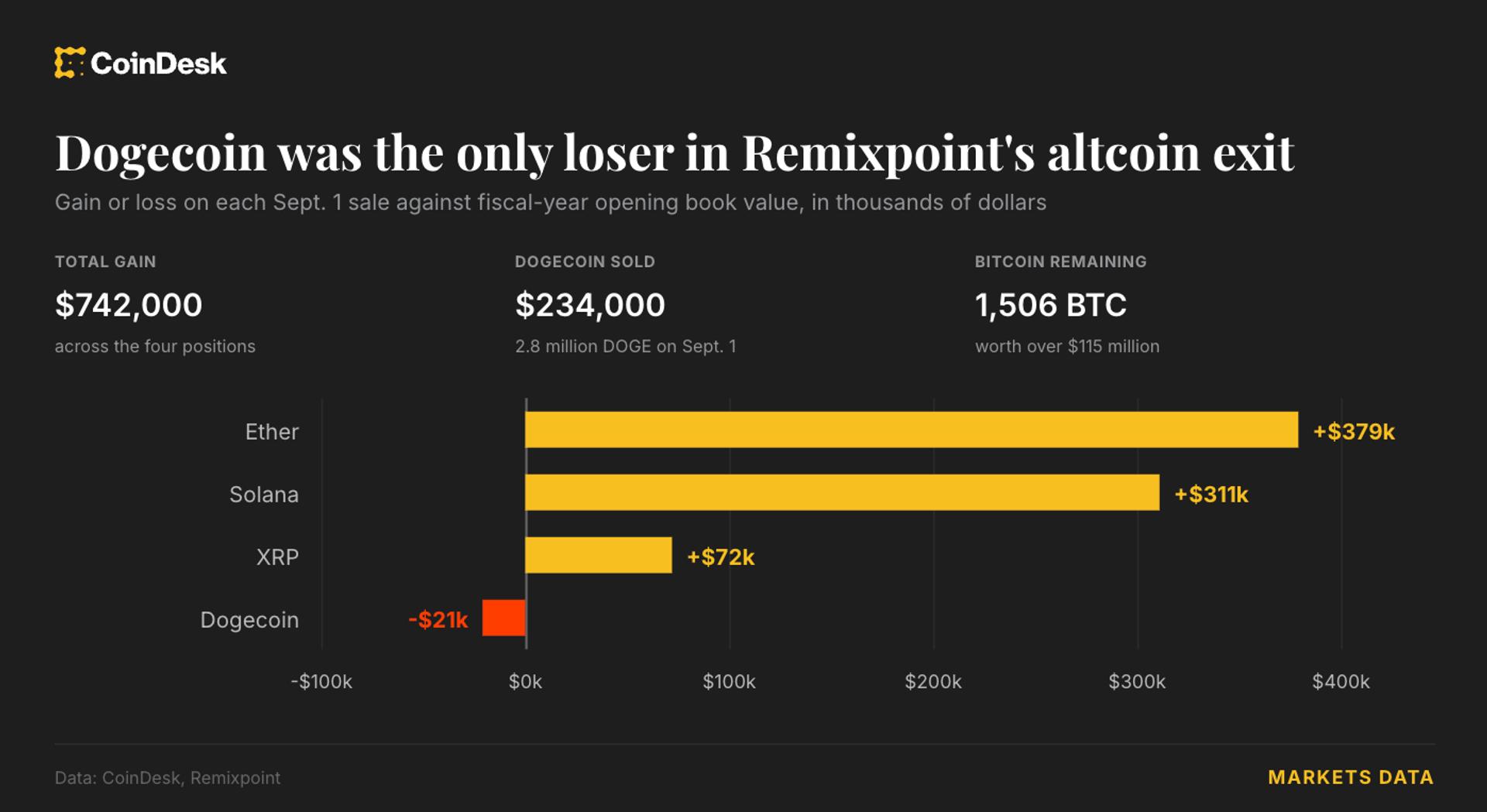
Tokyo-listed firm Remixpoint has restructured its digital asset portfolio by selling off its altcoin holdings, including Ether (ETH), Solana (SOL), XRP, and Dogecoin (DOGE), to increase its Bitcoin (BTC) reserves. According to recent disclosures, Dogecoin was the only asset in the group sold for less than its fiscal-year opening value, making it a 'losing bet' for the firm’s treasury. In contrast, the company successfully booked gains on its positions in ETH, SOL, and XRP before moving the proceeds into its primary Bitcoin cache.
This move reflects a growing trend among publicly traded companies to adopt a 'Bitcoin-first' or 'Bitcoin-only' treasury strategy, similar to the model pioneered by MicroStrategy in the United States. By liquidating more speculative assets like Dogecoin—even at a loss—Remixpoint is signaling a shift away from high-volatility meme coins in favor of the market's most established digital reserve asset. The consolidation is intended to reduce the complexity of managing multiple altcoin positions while focusing on Bitcoin’s potential as a hedge against currency fluctuation.
For the broader market, this highlights a significant divide in institutional sentiment between Bitcoin and the rest of the altcoin market. While Solana and Ether provided profitable exit points for Remixpoint, the company’s decision to move that capital into Bitcoin suggests a lack of confidence in the long-term relative performance of altcoins compared to the 'king of crypto.' This strategy may influence other Japanese or Asian-listed firms to reconsider their diversified crypto portfolios in favor of concentrated Bitcoin holdings.
Investors should watch for whether this reallocation triggers similar moves by other medium-sized public companies seeking to strengthen their balance sheets. The immediate impact is a minor sell-side pressure on the liquidated altcoins, particularly DOGE, while providing a steady stream of institutional buy-side support for Bitcoin. As global regulatory environments for crypto clarify, the trend of corporate 'Bitcoinization' is likely to continue among firms looking for digital alternatives to traditional cash reserves.