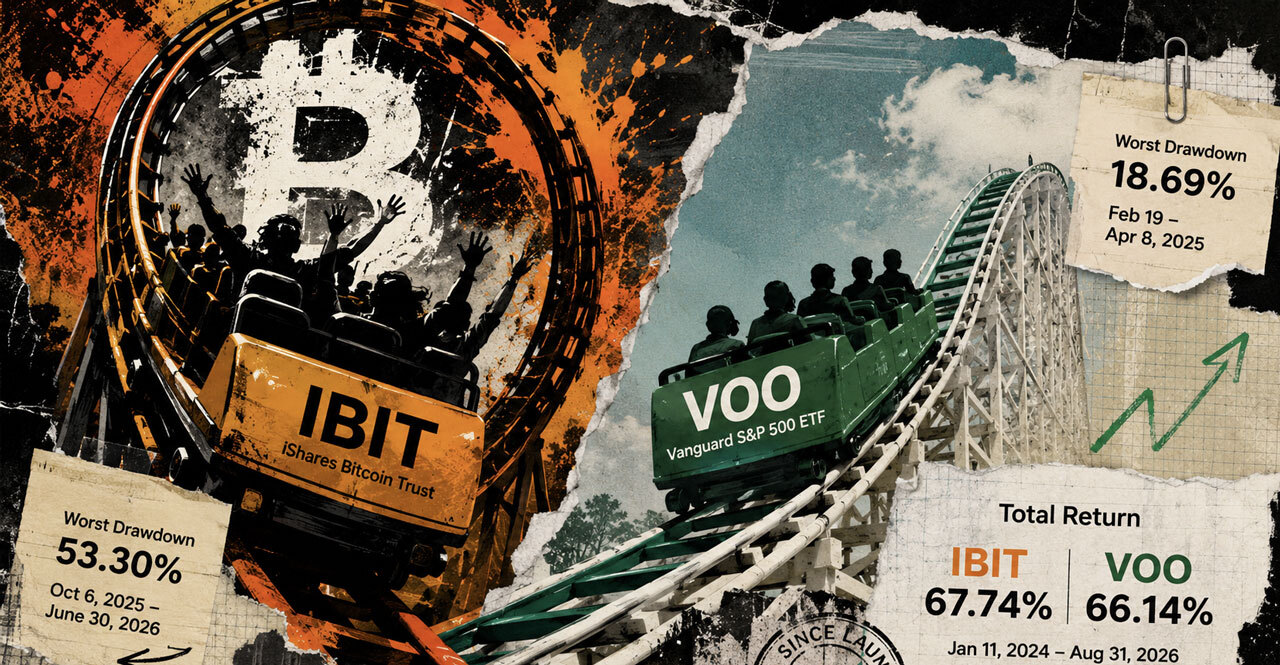
BlackRock’s iShares Bitcoin Trust (IBIT) managed to edge out the S&P 500 in recent performance metrics, finishing with a slim 1.60-point lead. However, this marginal outperformance came at a significant cost of volatility, as IBIT investors had to endure a maximum decline of 53%. In contrast, the S&P 500 fund experienced a maximum drawdown that was nearly three times shallower, illustrating the stark difference in risk-adjusted returns between crypto-backed products and traditional equity benchmarks.
The data underscores the "rollercoaster" nature of institutional crypto investment vehicles. While the introduction of spot Bitcoin ETFs was intended to bridge the gap between digital assets and Wall Street, the underlying asset’s characteristic price swings remain unchanged. The 53% drop represents a major test of investor conviction, particularly for retail participants and institutional portfolio managers who are accustomed to the relatively steadier growth trajectory of the U.S. large-cap equity market.
For US-based investors, these figures raise questions about portfolio allocation and risk tolerance. A 1.6-point lead over a diversified index like the S&P 500 may not be viewed as sufficient compensation for a drawdown exceeding 50%. This performance gap suggests that while Bitcoin ETFs are effective tools for capturing upside, they require a specific strategy to manage the intense downside risk that traditional indices currently do not face.
Moving forward, market participants should watch the correlation between IBIT and broader equity markets, especially as macroeconomic factors like Federal Reserve interest rate decisions continue to influence both sectors. Investors should also monitor risk-adjusted metrics, such as the Sharpe ratio, to determine if the potential for outsized gains in Bitcoin ETFs continues to justify the extreme volatility compared to the S&P 500.