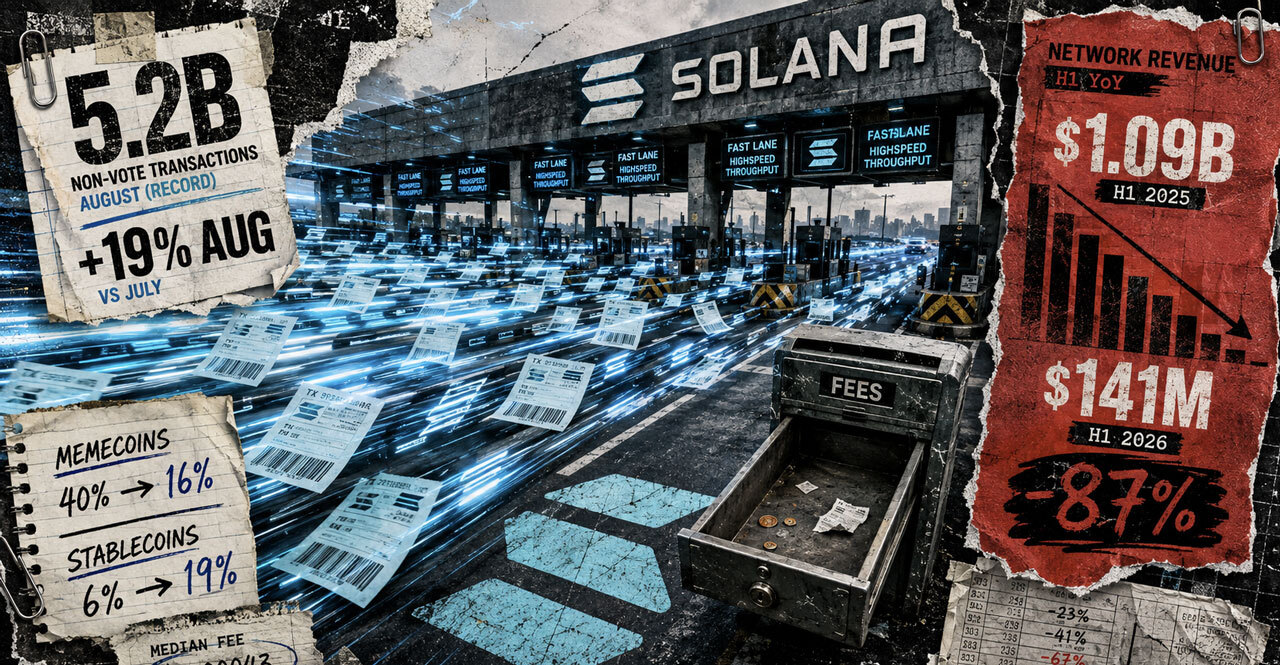
Solana reached a new milestone in August 2024 by processing 5.2 billion transactions, even as its network revenue suffered a staggering 87% decline compared to the previous year. This discrepancy is primarily due to the fading of the speculative memecoin boom, which had previously inflated fee revenue through high-priority gas wars. While the total number of actions on the blockchain reached an all-time high, the average cost per transaction has stabilized, leading to lower total earnings for the protocol despite the surge in raw activity.
The 87% revenue collapse marks a significant shift in Solana's economic landscape. A year ago, the network's revenue was bolstered by intense competition for block space, driven by the rapid launch and trading of high-risk assets on platforms like Pump.fun. As the "fee boom" subsided, the network's organic activity—represented by decentralized finance (DeFi) swaps, NFT interactions, and infrastructure pings—took center stage. This transition demonstrates Solana's capacity to handle massive scale without the prohibitive congestion fees often seen on competing networks like Ethereum during peak demand.
For US-based investors and institutional players, these metrics present a dual narrative. On one hand, the drop in revenue could signal a cooling of retail enthusiasm, which often correlates with short-term price volatility. On the other hand, the record-breaking transaction count underscores Solana's growing role as a leader in blockchain throughput. This high utility is a key selling point for developers building consumer-facing applications that require low latency and predictable costs, reinforcing the network's value proposition as a "state machine."
Looking forward, the crypto market will be watching whether Solana can translate this high volume into a sustainable long-term revenue model as the Firedancer upgrade approaches. Additionally, the shift from speculative fee spikes to high-volume utility may influence how US regulators view the network's decentralization and stability. Investors should monitor whether a new wave of utility-driven fees, rather than speculative hype, can eventually offset the loss of revenue while maintaining the low-cost environment that has attracted billions of transactions.