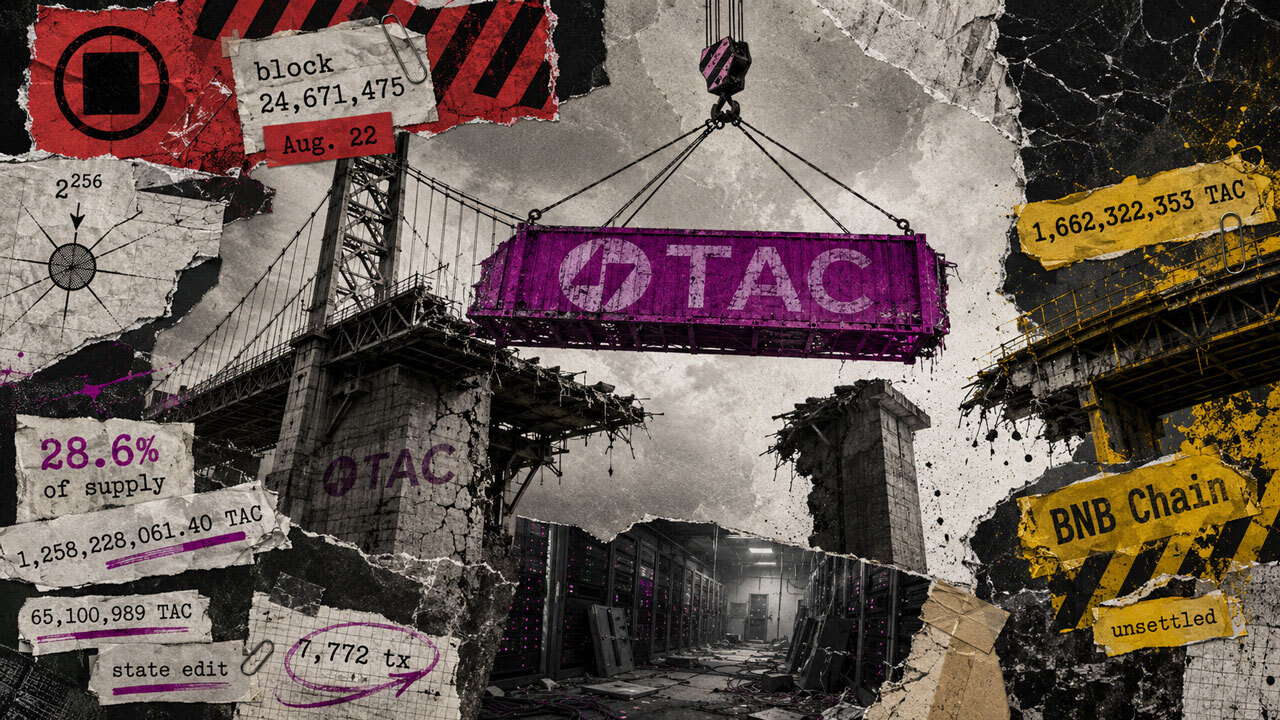
The TAC blockchain has remained in a frozen state for over 10 days following a catastrophic security exploit that saw a single transaction drain 28.6% of the supply from the network's bonded pool. This prolonged halt was implemented as a defensive measure to prevent the attacker from liquidating stolen assets or further compromising the ecosystem. Despite a massive 1.26 billion token bailout intended to stabilize the project, the network cannot safely resume operations while the exploiter still controls approximately 1.66 billion TAC tokens.
The exploit highlights a growing concern for US-based DeFi investors regarding the security of emerging Layer 1 and Layer 2 protocols. The attacker managed to bypass security protocols to empty a significant portion of the bonded pool, which serves as a critical liquidity and security layer for the TAC network. The subsequent decision to issue a 1.26 billion token bailout suggests a centralized intervention that, while intended to protect users, raises questions about the protocol's decentralization and long-term economic viability.
From a regulatory and market perspective, the TAC incident serves as a stark reminder of the risks associated with 'halt switches' in blockchain technology. While the freeze prevents immediate market dumping, the lack of transparency regarding the timeline for a restart has left investors in limbo. For US users, this event emphasizes the importance of due diligence on liquidity pool mechanics and the emergency powers held by protocol developers.
Moving forward, the crypto community should watch for a formal post-mortem from the TAC development team and a clear strategy for neutralizing the 1.66 billion tokens still in the attacker's wallet. The success or failure of the 1.26 billion token bailout will likely determine whether the project can regain investor trust or if it will face a permanent decline in liquidity and user adoption. Until the network is unfrozen, the value of TAC remains effectively speculative and illiquid.