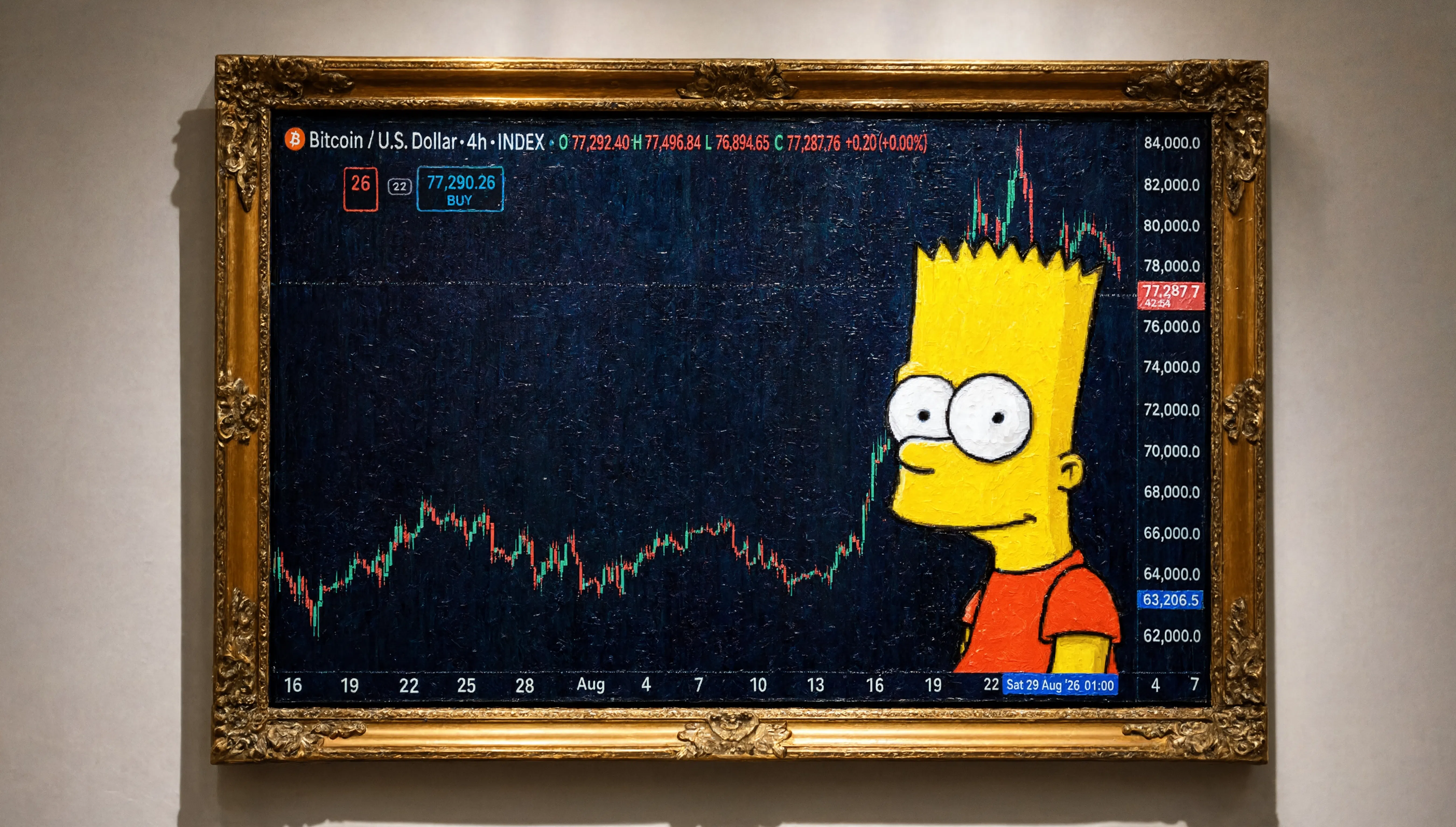
The recent 'spike-and-fade' price action in Bitcoin, often nicknamed the Bart Simpson pattern due to its flat-topped 'hairline' appearance, does not inherently signal a flash crash. While the pattern indicates a period of rapid consolidation followed by a sharp reversal, a true flash crash is characterized by a systemic lack of liquidity and near-instantaneous price collapses. In contrast, analysts view the August activity as a volatile correction where the market is retesting support levels rather than suffering a total breakdown of the order book.
Traders use the 'Bart' label to describe a specific market dynamic where prices are pumped, held steady to trap late-joining long positions, and then dumped back to the original starting point. In the US market, this often occurs during periods of low liquidity or around major economic data releases, such as CPI reports or Federal Reserve announcements, when algorithmic trading bots dominate price action. These patterns are typically driven by liquidations in the derivatives market rather than a change in Bitcoin's fundamental value.
For US-based investors, these patterns highlight the ongoing challenges regarding market depth on regulated exchanges like Coinbase or Kraken. Regulatory bodies like the SEC and CFTC closely monitor these sharp movements to determine if price manipulation or 'wash trading' is influencing Bitcoin’s spot price. The prevalence of such patterns can influence the regulatory sentiment surrounding the stability of crypto-linked financial products and the broader adoption of digital assets in traditional portfolios.
Moving forward, readers should monitor Bitcoin’s ability to hold key support levels established at the base of the 'Bart' formation. It is essential to watch for an increase in spot trading volume relative to leveraged perpetual swaps, as a shift toward spot buying typically signals a healthier, more sustainable recovery. If Bitcoin fails to maintain these support levels amidst broader macroeconomic uncertainty, the risk of a liquidity-driven flash crash could increase, making risk management paramount.