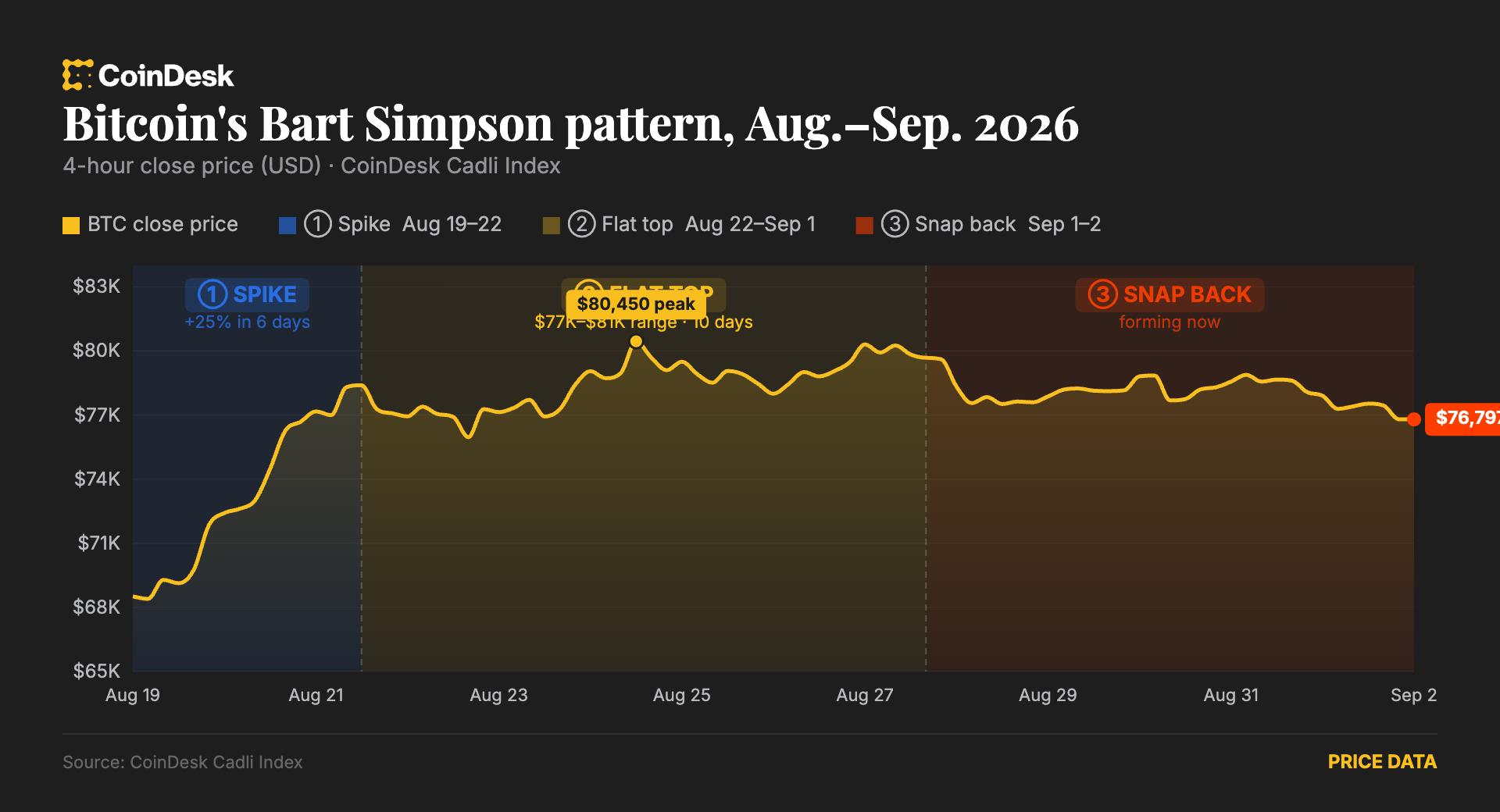
The Bart Simpson chart pattern is currently impacting Bitcoin and XRP by triggering sharp, symmetrical price retracements that erase recent short-term gains. This technical phenomenon occurs when a cryptocurrency's price surges rapidly, consolidates in a jagged sideways range resembling the cartoon character’s hair, and then plunges back to its original starting point. For U.S. investors, the appearance of this pattern suggests that the market is experiencing high levels of volatility and 'stop-hunting,' where prices are pushed to specific levels to trigger liquidations before reversing course.
In recent trading sessions, both Bitcoin and XRP have seen their price action 'wilt' after failing to sustain higher valuation ceilings. Analysts observe that these patterns often emerge in environments with thin liquidity or when traders are reacting to indecisive macroeconomic signals. For XRP specifically, the pattern serves as a reminder of the asset's sensitivity to broader market sentiment despite specific ecosystem developments. The sudden drop following the 'head' of the pattern indicates that sell-side pressure remains dominant once initial exhaustion sets in.
This trend is particularly relevant for retail traders who may be caught entering positions during the flat 'scalp' phase of the pattern, only to face losses during the inevitable 'drop' phase. The recurrence of this pattern highlights the current fragility of the crypto market, where leveraged positions can lead to cascading sell orders. It also reflects a cautious stance among institutional players who are waiting for clearer regulatory or economic catalysts before committing to a sustained directional move.
Moving forward, market participants should closely monitor whether Bitcoin and XRP can establish firm support levels below the current 'Bart' formations. If these assets fail to hold their pre-pump support zones, it could signal a deeper bearish trend throughout the quarter. Investors should watch for a rise in trading volume alongside price stability as a sign that the market is moving away from manipulative volatility toward more organic, news-driven price discovery.