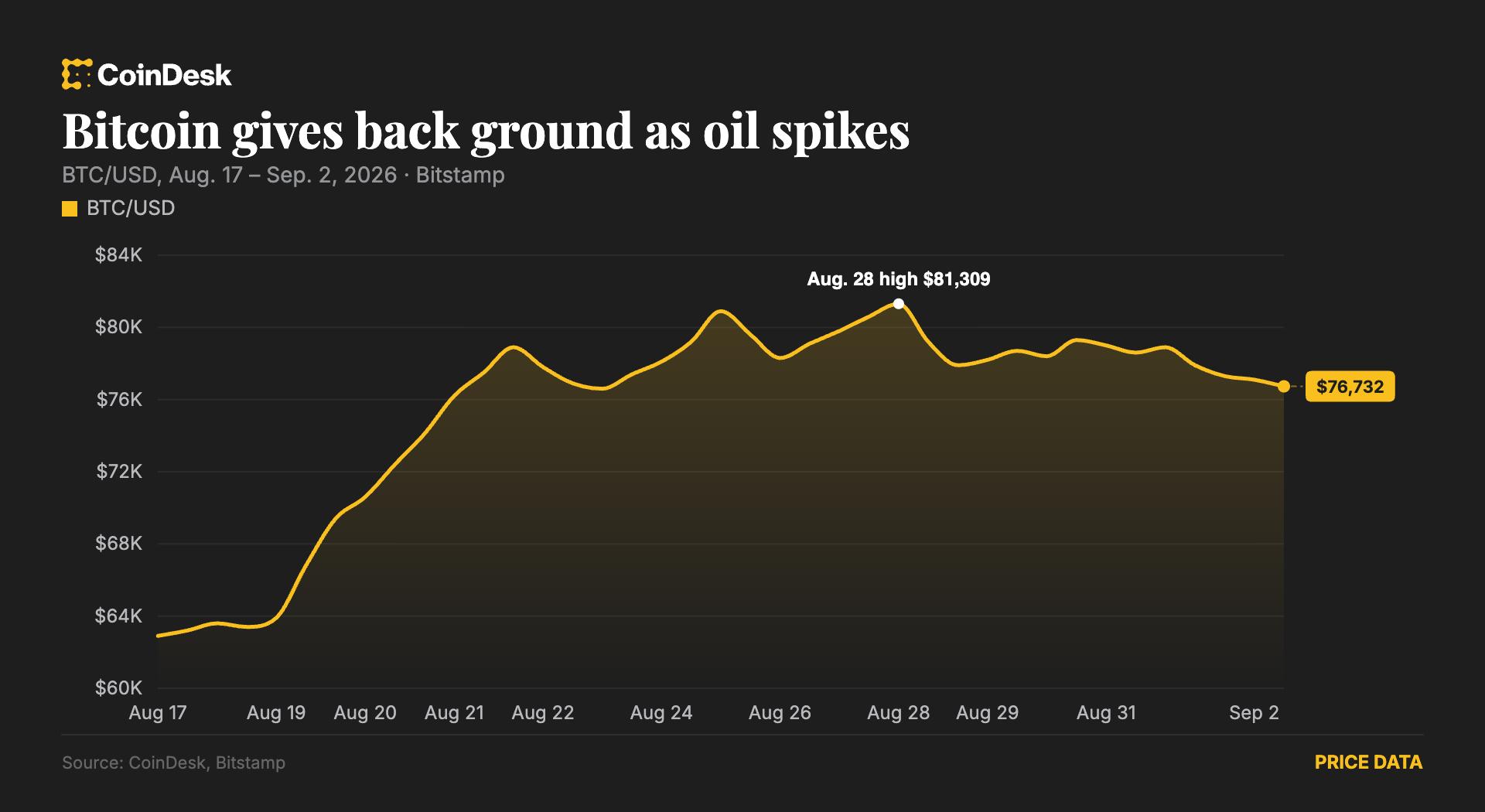
Bitcoin (BTC) experienced a 1% decline, falling below the $76,500 threshold, as global markets reacted to U.S. military strikes on Iranian targets. This geopolitical friction caused Brent crude oil to jump past $93 per barrel, while the yield on 10-year Treasury notes climbed toward 4.8%. The simultaneous rise in energy costs and bond yields created a dual headwind for the cryptocurrency market, leading to a localized sell-off as liquidity tightened.
The immediate cause of the price slip is the market's reaction to rising energy costs, which often fuels inflation concerns. When oil prices spike due to conflict, investors frequently anticipate that the Federal Reserve may maintain higher interest rates for longer to combat potential inflationary pressures. For Bitcoin, which has recently traded in close correlation with traditional risk assets, this environment discourages aggressive buying and prompts short-term profit-taking.
Furthermore, the climb in Treasury yields to 4.8% makes 'risk-free' government debt more attractive compared to high-volatility assets. As institutional investors rebalance portfolios to account for higher yields and geopolitical uncertainty, Bitcoin often sees temporary outflows. This price action suggests that, despite its 'digital gold' narrative, Bitcoin is currently sensitive to traditional macroeconomic stressors and energy market fluctuations.
Investors should keep a close watch on the $75,000 support level for Bitcoin and the potential for Brent crude to test the $100 mark. Further escalation in the Middle East could lead to more volatility in the crypto sector. Additionally, the next set of U.S. inflation data will be critical in determining whether the rise in oil prices is translating into a long-term bearish trend for crypto through sustained high interest rates.