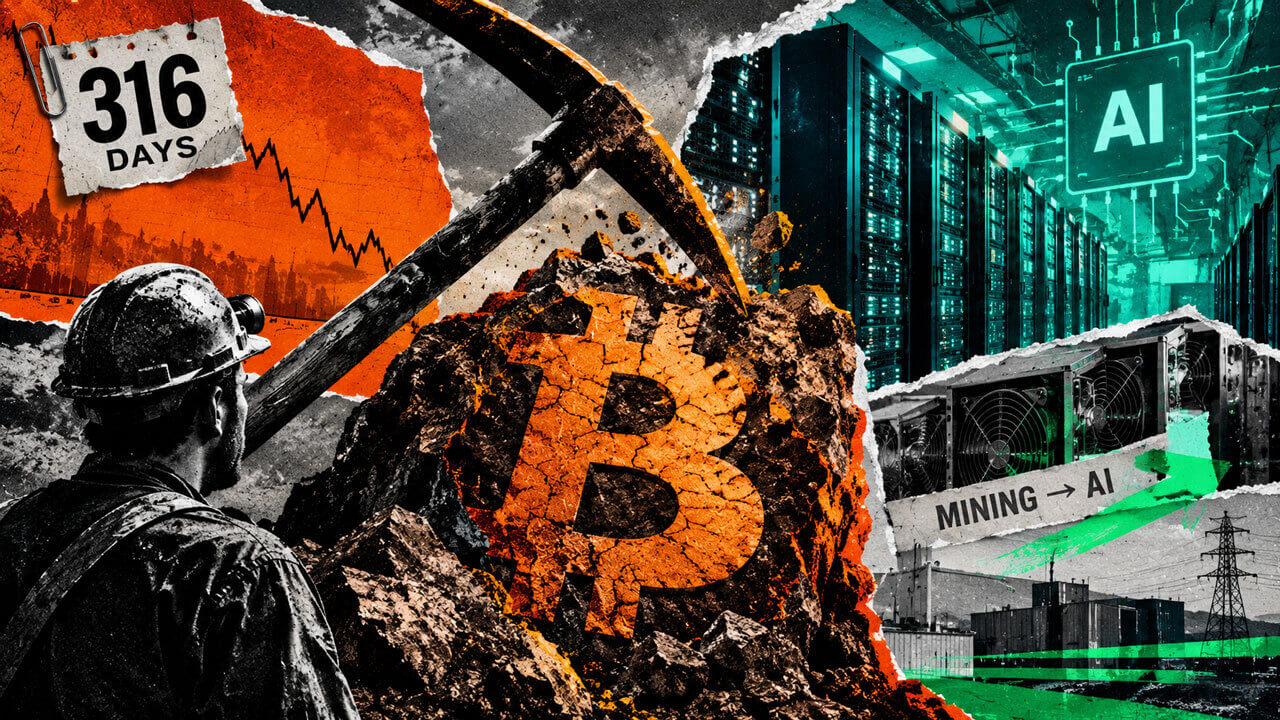
The prolonged 316-day slump in Bitcoin hashrate is driven by a fundamental shift in how global energy infrastructure is utilized, with mining sites pivoting toward Artificial Intelligence (AI) and High-Performance Computing (HPC) loads. While Bitcoin’s automatic difficulty adjustments typically clear the way for capacity to return after a downturn, this current cycle is different. As power-hungry facilities switch to servicing the booming AI sector, the electricity capacity traditionally used to secure the Bitcoin network is being permanently redirected toward more predictable data center contracts.
This trend is particularly visible in the United States, where the post-halving environment has severely squeezed profit margins for traditional miners. These operators now face a strategic choice: continue competing for volatile block rewards or lease their massive power footprints to tech giants hungry for AI processing power. This 'AI pivot' represents a significant economic reallocation of power resources, as domestic energy providers and investors increasingly favor the 'mission-critical' status and steady cash flows associated with AI infrastructure over the speculative nature of crypto mining.
For the Bitcoin market, this suggests a 'new normal' where hashrate growth may remain stagnant or sluggish compared to previous cycles. While the network remains highly secure, the era of rapid, unchecked expansion in hashing power may be hitting a wall. If capacity continues to bleed into the AI sector, the cost of production for BTC could remain elevated, potentially establishing a higher price floor as the supply of newly minted coins becomes more expensive to generate under these constrained conditions.
Readers should closely monitor the quarterly filings of major US-listed mining firms like Riot Platforms and Marathon Digital to see what percentage of their energy pipeline is being diverted to HPC operations. Furthermore, watch for US energy policy shifts that might prioritize AI as a 'strategic industry,' which could further price Bitcoin miners out of the grid. If the AI demand continues to outpace energy grid expansion, the traditional mining recovery cycle may be broken for good.