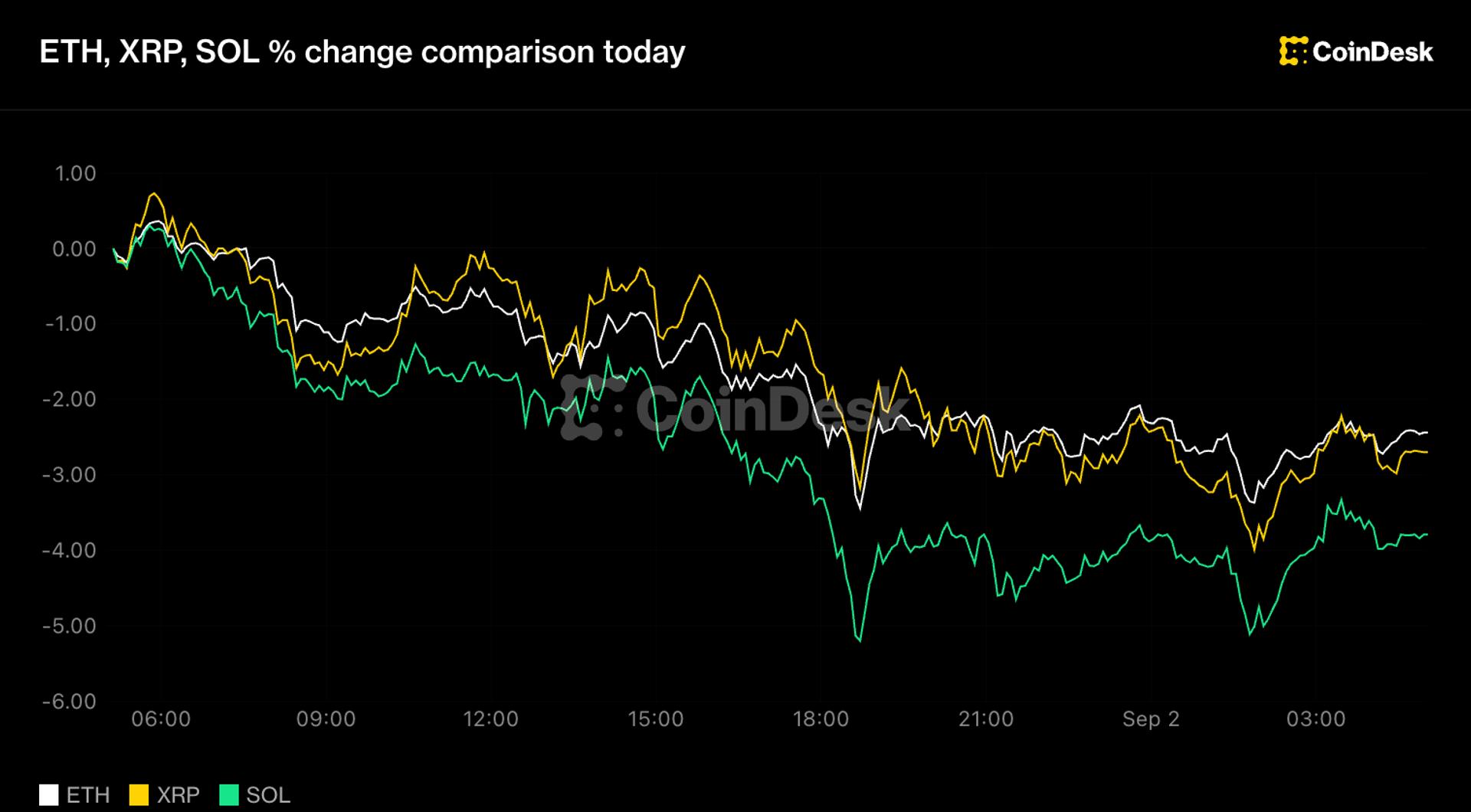
Solana (SOL), Ether (ETH), and XRP led a sharp decline among large-cap cryptocurrencies over the last 24 hours as geopolitical tensions in the Middle East triggered a global flight from risk. While Bitcoin saw a notable drawdown, these high-beta majors gave up approximately triple the percentage that Bitcoin did. This price action confirms that during periods of intense geopolitical uncertainty, the market views altcoins as significantly higher-risk assets, leading to faster and deeper liquidations compared to Bitcoin.
The primary catalyst for this broad selloff was Iran’s military strikes, which sparked immediate fears of a wider regional conflict and a disruption to global markets. As the news broke, traditional risk assets and digital currencies fell in tandem. The crypto market, which operates 24/7, served as a real-time barometer for investor fear, with liquidations hitting leveraged long positions across major altcoin ecosystems particularly hard.
For US-based investors, this volatility underscores the continued sensitivity of the digital asset market to macroeconomic and geopolitical shocks originating outside the domestic regulatory environment. Despite the growing institutional presence in the crypto space via ETFs, the 'flight to safety' remains a dominant theme. The outsized losses in SOL and ETH suggest that while these assets offer high upside during bullish periods, they remain the first to be offloaded when systemic risk enters the conversation.
Market participants should now monitor the potential for further military escalation and the subsequent reaction of the U.S. Dollar Index (DXY) and oil prices, which often move inversely to risk assets. If regional tensions stabilize, high-beta majors may see a rapid relief rally as liquidity flows back into the market. However, should the conflict intensify, traders should watch for further consolidation into Bitcoin or stablecoins as the market seeks a temporary bottom.