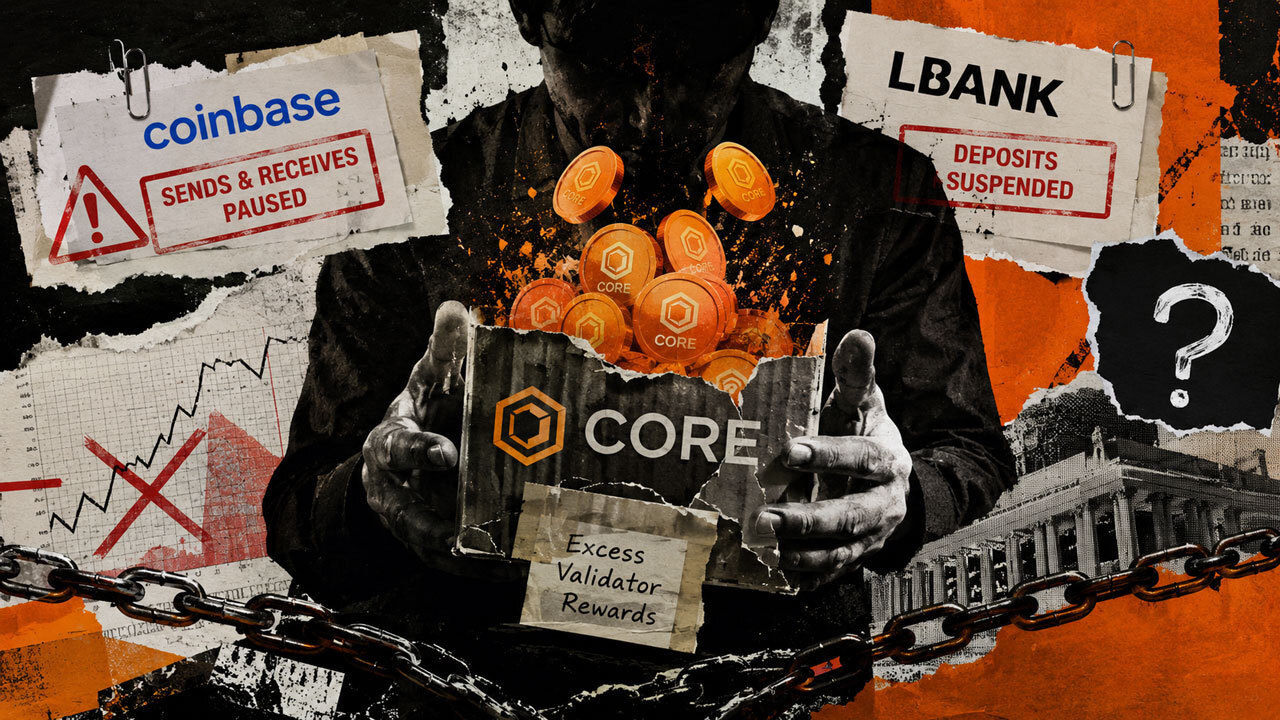
Coinbase and LBank suspended Core DAO (CORE) transfers and deposits because a critical failure in the network’s validator reward mechanism resulted in an unquantified issuance of excess tokens. The glitch in the protocol’s consensus layer—which integrates Bitcoin’s hash power with delegated proof-of-stake—led to concerns that the circulating supply could be compromised. Consequently, Coinbase paused all sends and receives for CORE, while LBank halted deposits to prevent the potential dumping of improperly minted rewards into the market.
While Core DAO has acknowledged the reward failure, the team has not yet released a definitive report quantifying the scale of the excess issuance. This lack of transparency has created a vacuum of information, leaving investors and exchanges in a state of caution. For US-based users on Coinbase, this means assets are effectively locked until the exchange receives confirmation that the network's supply integrity is secured and the bug is fully patched.
From a regulatory and market perspective, this incident highlights the inherent risks of hybrid blockchain architectures that attempt to balance multiple consensus mechanisms. For US investors, it serves as a reminder that protocol-level failures can lead to immediate 'de-platforming' by centralized exchanges seeking to comply with risk management standards. Such events often trigger localized price volatility and erode confidence in a project's long-term tokenomics.
Moving forward, stakeholders should closely monitor Core DAO’s official communication for a formal post-mortem and a strategy to address the excess supply, such as a potential token burn or protocol rollback. The lifting of the transfer blocks on Coinbase will be the most significant indicator that the technical crisis has been resolved. Until then, the CORE token remains at high risk for significant price fluctuations as the market digests the impact of the issuance anomaly.