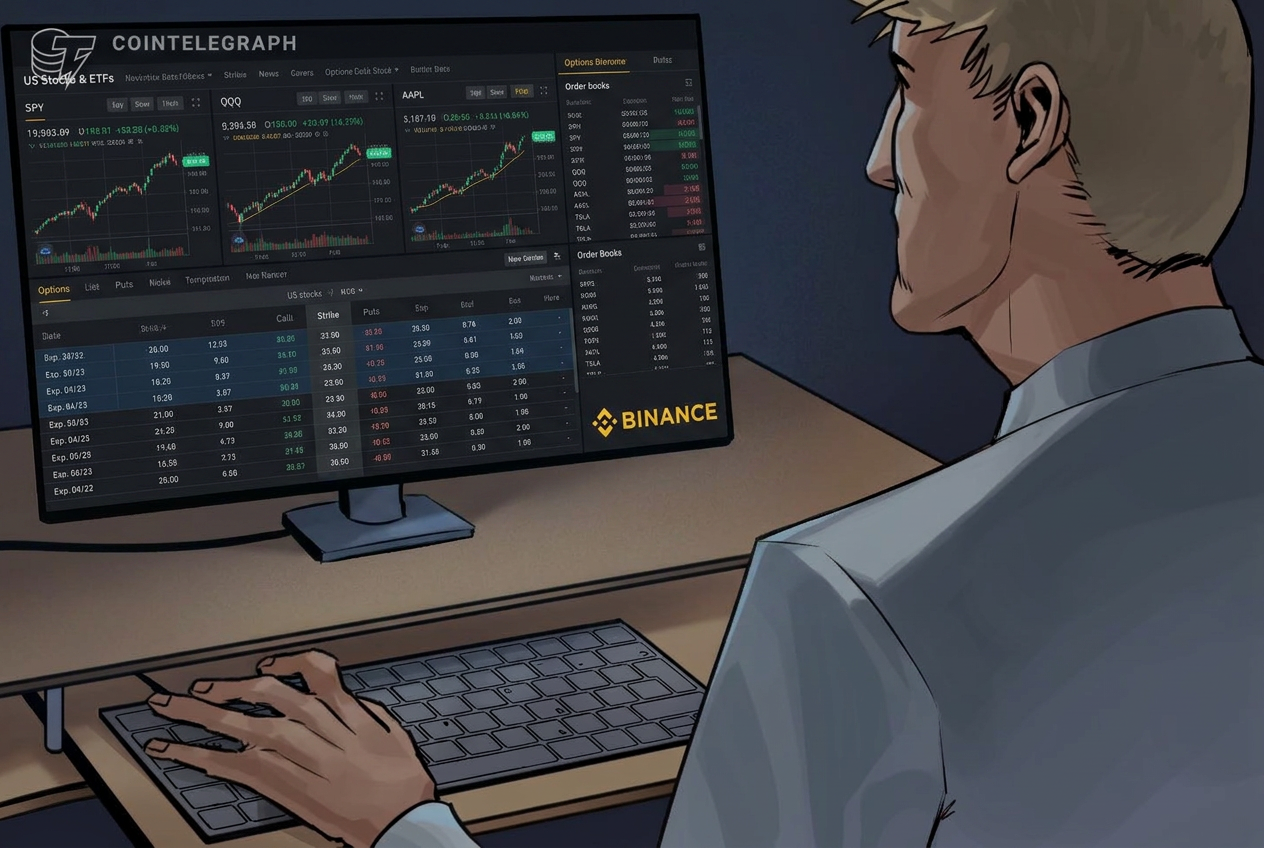
Binance has officially expanded its reach into traditional finance by launching physically settled options for more than 1,000 US stocks and Exchange-Traded Funds (ETFs), available exclusively to eligible non-US users. This new feature allows international traders to leverage their existing Binance accounts to gain exposure to major US companies and market indices without needing a separate brokerage account. By integrating these TradFi instruments, Binance is positioning itself as a comprehensive financial 'super-app' for the global market.
The initiative represents a significant move in the convergence of digital assets and legacy equity markets. Unlike cash-settled derivatives, these physically settled options provide a more direct link to the underlying assets, which include some of the most liquid stocks and ETFs in the world. This scale—covering over 1,000 different tickers—is designed to capture the growing demand among crypto-native investors for diversified portfolios that include traditional growth and value sectors.
From a regulatory and geopolitical perspective, the decision to exclude US-based users is a strategic move to avoid the stringent oversight of the US Securities and Exchange Commission (SEC) and the Commodity Futures Trading Commission (CFTC). While Binance continues to navigate its historical regulatory challenges in the United States, it is aggressively capturing market share in jurisdictions with more flexible derivative frameworks. This allows the exchange to test the limits of cross-asset integration while maintaining a clear boundary with US retail markets.
For the broader crypto market, this expansion underscores the increasing utility of exchange-native ecosystems. By providing access to US equities, Binance may see increased capital inflows and higher user retention, as traders no longer need to off-ramp to traditional banks to participate in stock market rallies. Investors should watch for how competitors like OKX or Bybit respond to this move, as well as any potential statements from US regulators regarding the synthetic or derivative representation of US-listed securities on offshore crypto platforms.