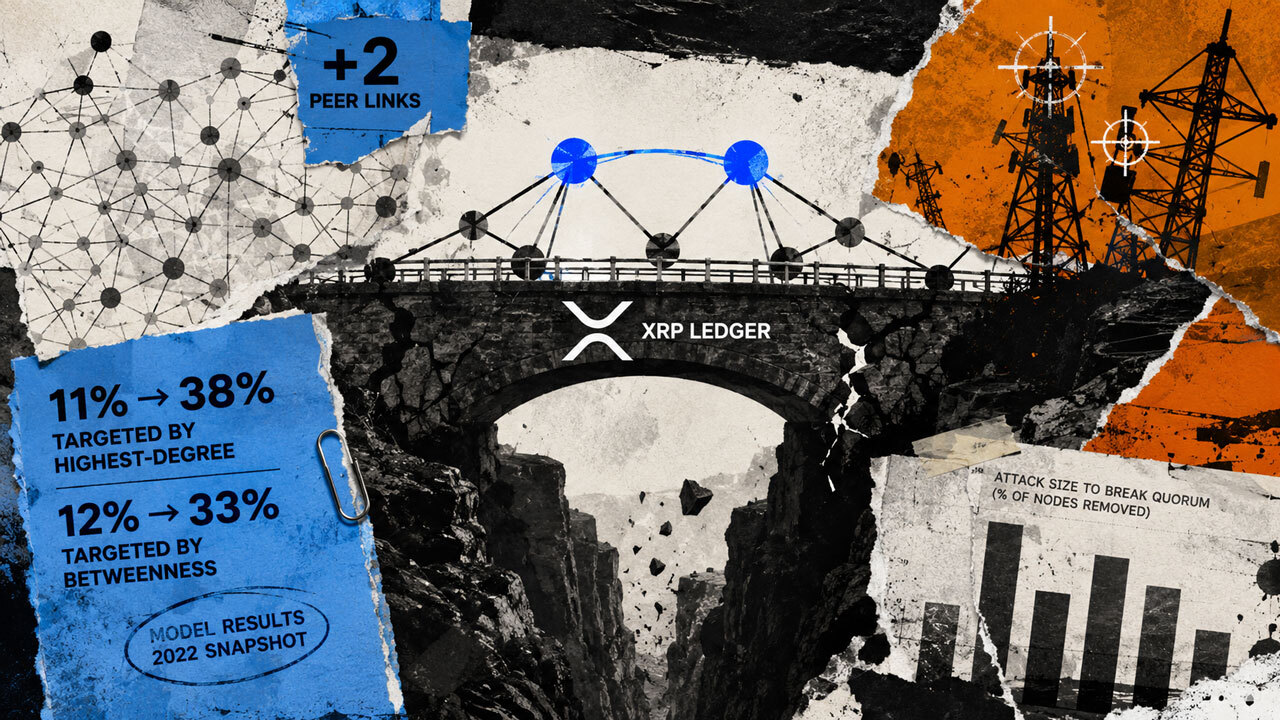
The XRP Ledger (XRPL) can prevent catastrophic consensus failure and network freezes by implementing a simple configuration tweak: adding just two random peer-to-peer links to its node connections. Recent simulations revealed that the XRPL is currently vulnerable to a 'quorum-failure,' where the removal of only 11% to 12% of central nodes can cause the entire system to stall. By integrating these two additional random links, the failure threshold at 60% participation triples, rising to a much safer 33% to 38% range.
This discovery highlights a critical technical nuance in how the XRPL handles its Unique Node List (UNL) and consensus mechanism. While the XRPL is designed for high speed and low cost, the current distribution of central nodes creates a potential bottleneck. The research suggests that the ledger's reliability depends heavily on a small subset of validators; if these central nodes are targeted or experience synchronized outages, the network's ability to validate new transactions could cease entirely.
For US-based institutional users and retail investors, this technical finding is significant for the long-term viability of Ripple’s ecosystem. Network stability is the top priority for financial institutions utilizing XRP for On-Demand Liquidity (ODL) and cross-border settlements. Any perception of fragility in the consensus mechanism could hinder adoption, particularly as Ripple continues its legal and regulatory navigation within the United States. Strengthening the network against such low-threshold failures is essential for maintaining trust in the ledger’s uptime.
Moving forward, the XRP community and validator operators should watch for potential software updates or best-practice recommendations that encourage the implementation of these random links. As the XRPL moves toward greater decentralization, the ability to withstand the loss of central nodes without a total freeze will be a key metric of its maturity. Analysts will be monitoring whether this 'simple tweak' becomes a standard requirement for nodes to ensure the ledger remains robust against both technical errors and malicious actors.