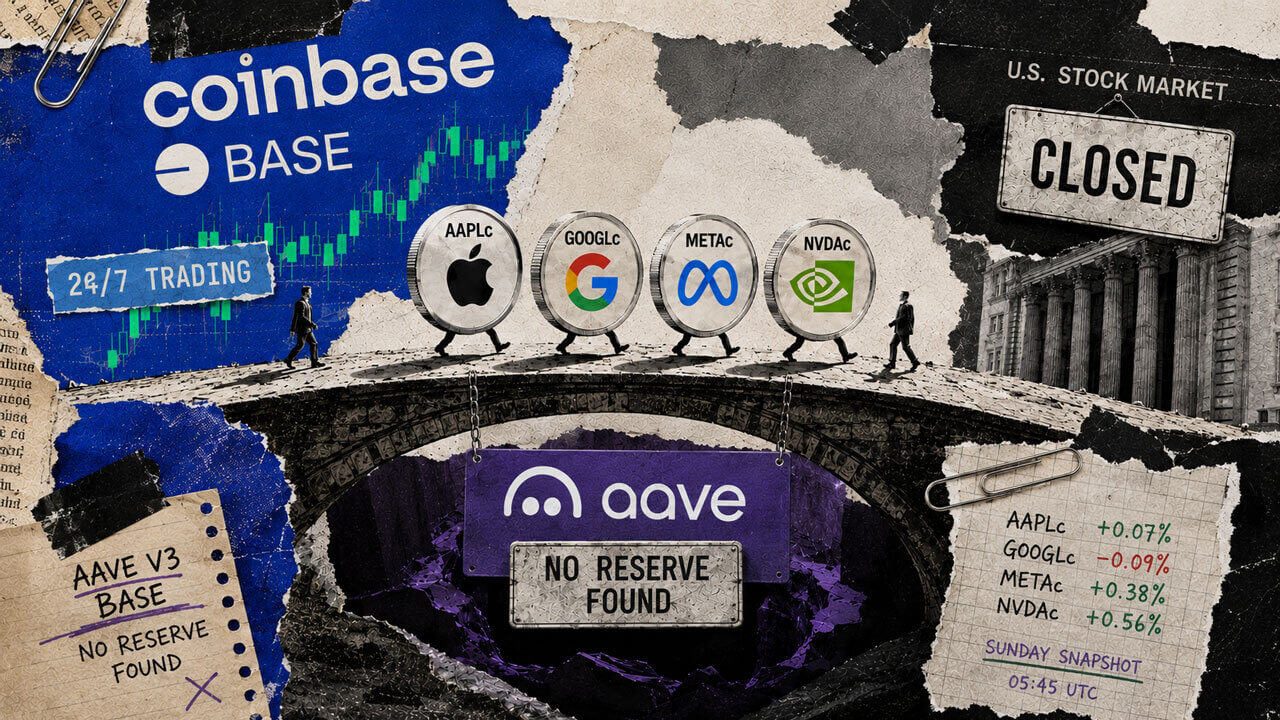
Tokenized stock prices often stagnate or show zero movement during the weekend because the liquidity and market-making mechanisms for these assets are still dependent on traditional financial hours. While decentralized finance (DeFi) platforms operate 24/7, the Real World Assets (RWAs) they host—such as the B20 assets found on Aerodrome—rely on price feeds and arbitrageurs that only operate when Wall Street is open. When traditional exchanges like the NYSE or NASDAQ go offline, the lack of active price discovery causes these on-chain markets to become virtually illiquid.
Recent data highlights this disparity, showing that while Aerodrome pools displayed approximately $6.07 million in liquidity for certain B20 assets, other major platforms like Aave V3 recorded no activity for those same assets during the weekend. This suggests that even when millions of dollars are technically 'locked' in a protocol, the absence of professional market makers and live external price data prevents actual trading from occurring. For US-based traders, this means that tokenized versions of stocks do not yet offer a true 24/7 alternative to traditional brokerage accounts.
The regulatory environment in the United States further complicates this issue, as most tokenized securities are designed to mirror regulated assets. Because these tokens are often backed 1:1 by actual shares held in custody, the movement of the token is legally and operationally restricted by the settlement cycles of the legacy financial system. This creates a 'hybrid' market that possesses the technical architecture of blockchain but remains bound by the time constraints of 20th-century finance.
For investors, this weekend illiquidity introduces 'gap risk,' where a major news event could occur on a Saturday, but the tokenized asset cannot be traded until the underlying market opens on Monday morning. As the RWA sector grows, market participants should watch for the development of synthetic assets or decentralized oracles that attempt to provide independent weekend pricing. Until then, the promise of 24/7 global markets for tokenized equities remains limited by the operating hours of traditional Wall Street institutions.