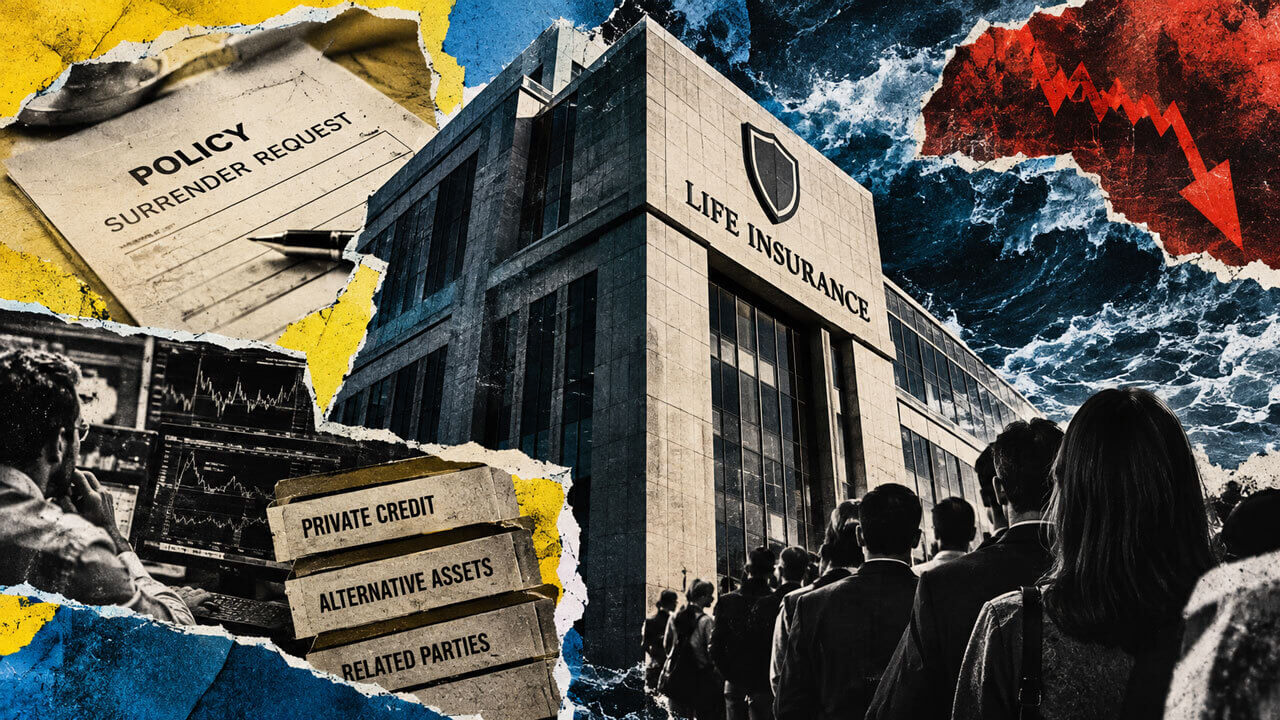
The sudden correction of balance sheets by major insurers like Delaware Life and Clear Spring Life has revealed a significant concentration of risk within the insurance sector. Delaware Life updated its filings to show that related-party holdings—investments made within their own business ecosystem—amounted to $17 billion, or 39% of their invested assets, a staggering leap from the $1.4 billion previously reported. These disclosures suggest that insurance companies are increasingly operating as 'shadow banks,' utilizing complex, opaque affiliate structures that could be vulnerable to sudden loss of confidence and liquidity drains.
This shift toward related-party investments is often driven by private equity-backed insurers seeking higher yields. By moving assets into affiliated platforms, these firms can bypass some of the stringent capital requirements placed on traditional banks. However, this creates a 'circular' investment risk: if one part of the corporate ecosystem fails, it can drag down the entire insurance entity, potentially leaving policyholders at risk and forcing the liquidation of broader market assets to cover obligations.
For the cryptocurrency and broader financial markets, this development is a warning sign of systemic fragility. The crypto industry is intimately familiar with the dangers of related-party transactions, as seen in the collapses of Celsius and FTX, where internal leverage and lack of transparency led to total insolvency. If the insurance sector faces a similar reckoning, the resulting volatility could tighten global liquidity, impacting the flow of institutional capital into digital assets.
Investors should closely monitor the National Association of Insurance Commissioners (NAIC) and other US regulators for new disclosure mandates. As the 'shadow banking' narrative gains traction, any sign of a liquidity crunch in the insurance space could drive a flight to quality. While this may cause short-term pain for risk assets, it could eventually strengthen the case for Bitcoin as a decentralized hedge against the opacity and interconnectedness of the traditional financial system.