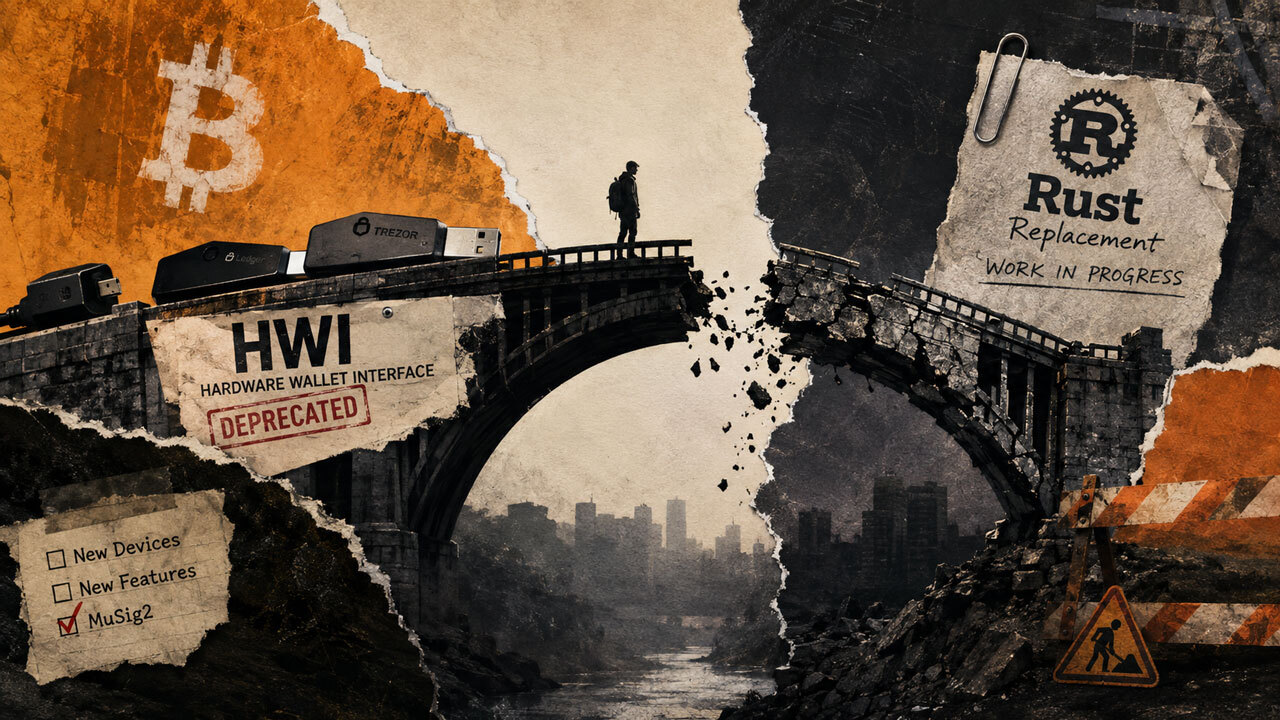
Bitcoin software wallets are facing a period of technical friction that could prevent them from supporting the latest hardware security devices. The issue stems from changes in how the Bitcoin Hardware Wallet Interface (HWI)—a critical security bridge that allows software to communicate with physical devices—is being maintained and integrated. While BHWI has published parity tests to ensure functionality, the 'downstream' wallet developers now face a substantial workload involving packaging, platform-specific adjustments, and complex integration tasks to keep their software compatible with new hardware releases.
For Bitcoin users in the United States, this development means that purchasing the newest hardware wallet model no longer guarantees immediate compatibility with popular third-party software like Electrum or Sparrow. The HWI serves as a standardized translation layer; without it being updated seamlessly by a central maintainer, each wallet team must manually verify and bridge new devices. This creates a fragmented ecosystem where security updates and device support may lag behind hardware innovation.
From a technical perspective, the risks are primarily related to user experience and the speed of security adoption. While existing hardware remains safe, the friction in supporting new devices could lead some users to stick with older, potentially less secure setups, or move toward proprietary, closed-source software provided by hardware manufacturers. This shift away from open-source interoperability is a concern for purists who value the ability to pair any hardware with any software.
Moving forward, Bitcoin investors and self-custody advocates should monitor updates from their preferred software wallet providers regarding HWI integration. The speed at which these development teams can clear the 'packaging and platform' backlog will determine how quickly the market can utilize next-generation hardware. Until then, users should verify hardware-software compatibility before investing in new security devices.