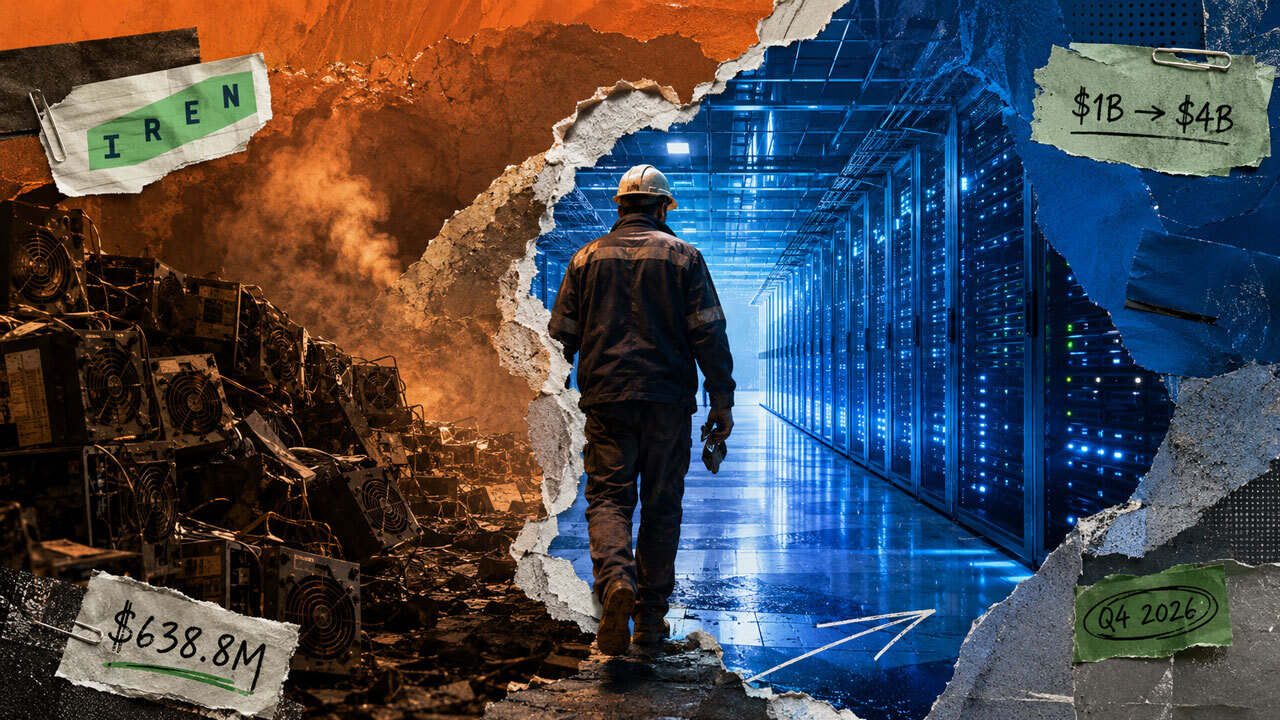
IREN, formerly known as Iris Energy, continues to derive 82% of its total revenue from Bitcoin mining, maintaining its position as a primary crypto infrastructure provider. Although the company has made significant headlines for clearing space for Microsoft’s AI cloud services, the actual financial transition is still in progress. The current revenue mix highlights that despite the hype surrounding AI diversification, the firm's immediate profitability is still heavily tethered to the price and network difficulty of Bitcoin.
To bridge the gap between mining and high-performance computing (HPC), IREN has set an ambitious $4 billion contracted AI run-rate target. This represents a fourfold increase from the $1 billion operating level measured on August 26. However, management has cautioned that the full recognition of this revenue is still gated by hardware delivery timelines and final customer acceptance. This pivot is part of a broader industry trend where North American miners are repurposing their power-dense facilities to meet the growing demand for AI training and inference.
From a market perspective, this shift reflects the dual-track strategy many publicly traded miners are adopting to mitigate the volatility of block rewards. By securing long-term contracts with tech giants like Microsoft, IREN aims to establish a more predictable revenue stream that is less sensitive to the four-year halving cycles. Nevertheless, the heavy capital expenditure required to build out AI-capable Tier 3 data centers remains a significant factor for investors to weigh against the current 82% reliance on mining income.
Moving forward, investors should watch for IREN's quarterly reports to see if the AI revenue share begins to cannibalize the mining segment or if the company can successfully grow both simultaneously. The speed at which the $4 billion contracted target translates into realized earnings will be the primary catalyst for the stock's performance. As the AI sector continues to demand more power, the success of IREN’s delivery and acceptance phase will serve as a bellwether for other miners attempting a similar transition.