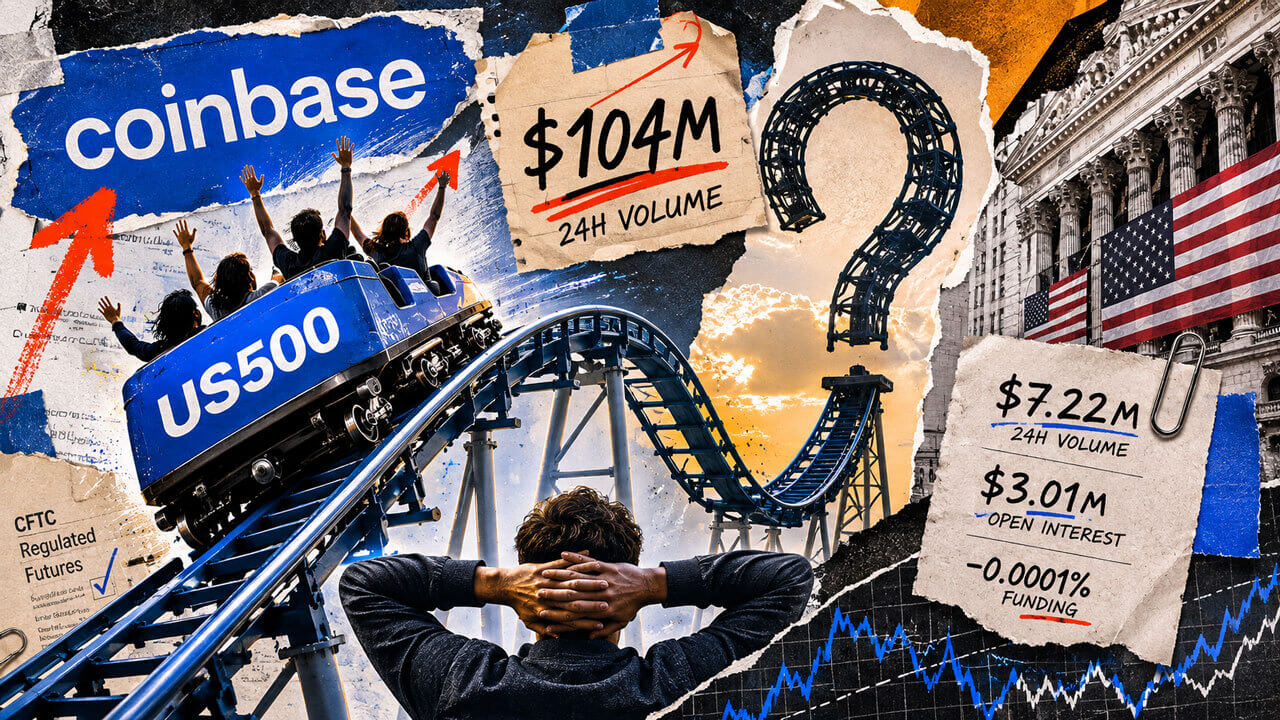
Coinbase’s recent foray into traditional equity indices via its International Exchange has hit a 'reality check' following a blockbuster debut. CEO Brian Armstrong initially shared data highlighting a $104 million turnover for the US500 perpetual futures—a derivative tracking the S&P 500—during its launch week. However, recent snapshots of the market suggest that this momentum has decelerated, with daily trading sessions failing to consistently replicate those early highs.
The US500 product represents a strategic bridge between the cryptocurrency market and traditional equities, allowing non-U.S. institutional traders to speculate on the American stock market using crypto-native infrastructure. The discrepancy between the launch-week spike and subsequent trading activity highlights the difference between initial novelty and the build-up of deep, persistent liquidity. For Coinbase, the goal is to convert this early turnover into stable open interest, which measures the total number of outstanding derivative contracts that have not been settled.
From a regulatory and geopolitical perspective, this product is part of Coinbase’s broader strategy to expand its footprint outside the United States. By offering derivatives on the S&P 500 through its Bermuda-regulated entity, Coinbase is bypassing the restrictive U.S. regulatory environment while targeting global traders who want exposure to U.S. markets without traditional brokerage hurdles. This move is a direct challenge to offshore giants like Binance and Bybit in the perpetuals space.
Market observers should watch whether Coinbase can stabilize its US500 volume in the coming months. If the exchange successfully attracts repeat trading sessions from institutional players, it could validate the demand for 'all-in-one' platforms that blur the lines between crypto and TradFi. However, if volumes continue to dwindle, it may suggest that crypto traders still prefer the high volatility of digital assets over the relatively steadier movements of traditional stock indices.