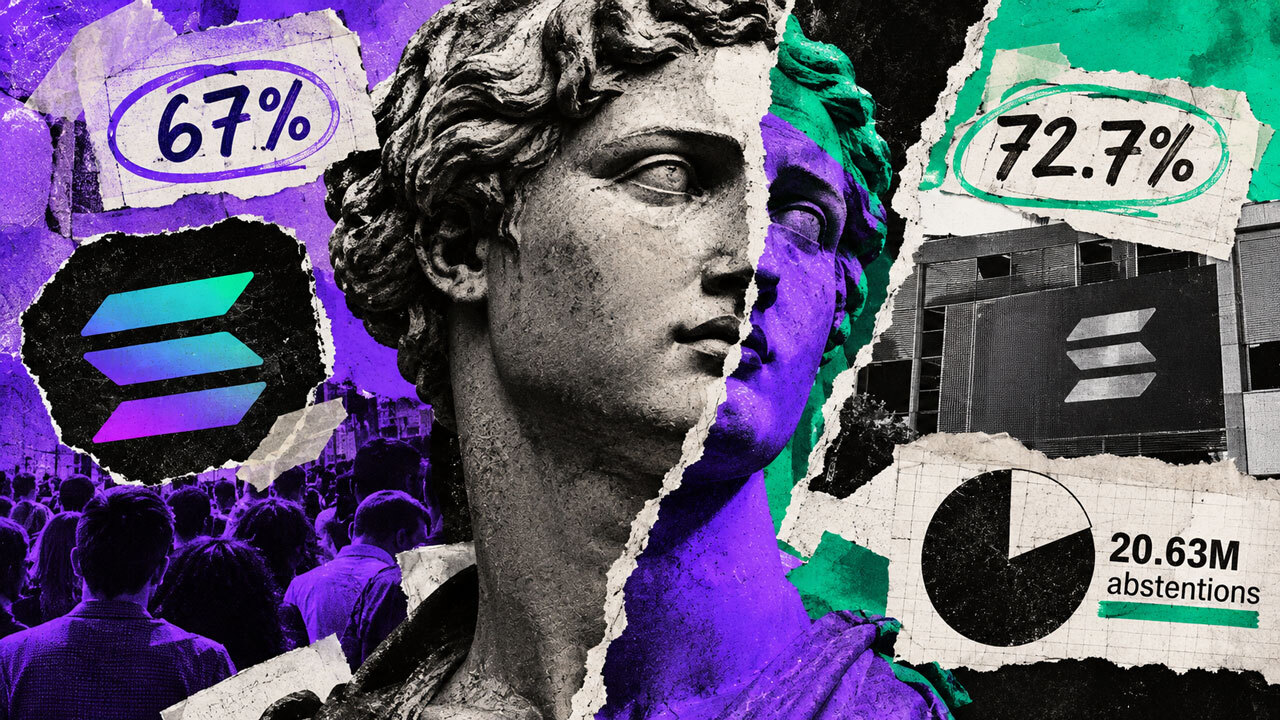
Solana's governance community has officially approved a significant reduction in the network's token supply, a move facilitated by late-stage support from institutional heavyweights Kraken and Galaxy Digital. While the vote saw a high number of abstentions, the shift by these two major validators provided the necessary margin to pass the proposal. The initiative focuses on tightening Solana’s economic model, specifically targeting a reduction in the issuance of new tokens to curb inflationary pressure on the ecosystem.
The late 'flip' by Kraken and Galaxy Digital proved decisive in a voting process that remained uncertain until the final hours. On-chain data indicates that while the public margin for approval was narrow due to the volume of abstentions, the participation of these large-scale infrastructure providers ensured the proposal met the required threshold. This governance action highlights the significant influence that institutional validators now wield over the technical and economic roadmaps of major Layer 1 blockchains.
For US-based investors and Solana participants, this supply cut represents a fundamental shift in the network's monetary policy. By reducing the rate at which new SOL enters circulation, the community aims to enhance the asset's scarcity and long-term value proposition. This move aligns Solana more closely with the 'sound money' narratives popular in the broader crypto market, similar to Ethereum’s post-Merge burning mechanisms, though the specific technical implementation differs.
Moving forward, market participants should closely monitor the on-chain finalization of this supply cut, which was still pending at the time of the latest check. The immediate impact will likely be felt in staking yield calculations, as a lower inflation rate typically leads to adjusted rewards for validators and delegators. Analysts will also be watching to see if this tighter supply helps SOL maintain its recent price momentum against competitors like Ethereum and BSC.