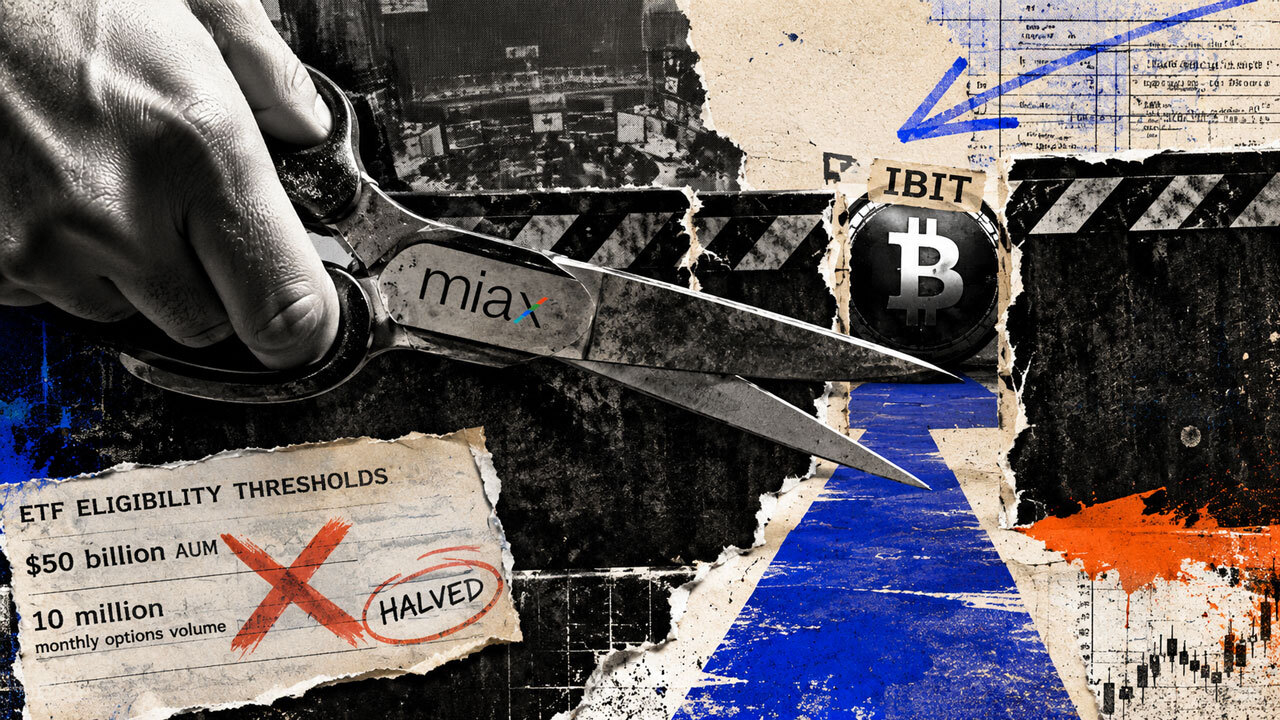
BlackRock’s iShares Bitcoin Trust (IBIT) has successfully regained its status for key weekly options expiries following a strategic overhaul of the Tier 2 listing framework. The updated rules lowered the qualifying gates for ETFs to an Asset Under Management (AUM) threshold of $25 billion and a monthly trading volume requirement of 5 million options sides. These revised benchmarks allowed IBIT to re-qualify for weekly expiries during the third quarter, rectifying a temporary absence from the short-term derivatives market.
The Tier 2 framework overhaul represents a significant shift in how exchange-traded products are categorized for derivative trading. Previously, stricter AUM and volume requirements often favored legacy equity ETFs, making it difficult for high-growth, newer assets like spot Bitcoin ETFs to maintain consistent weekly options cycles. By adjusting these gates, exchange operators and regulators are acknowledging the massive liquidity and rapid institutional adoption seen in the crypto ETF sector since its debut in early 2024.
For the broader market, the return of weekly expiries for IBIT is a bullish indicator of infrastructure maturity. Weekly options allow traders to execute more precise hedging strategies, manage short-term price volatility, and generate income through covered calls with higher frequency. This level of derivative sophistication is essential for attracting conservative institutional capital that requires robust risk-management tools to enter the digital asset space at scale.
Looking ahead, investors should monitor whether other major spot Bitcoin ETFs, such as Fidelity’s FBTC, will also qualify under these lowered Tier 2 gates. The expansion of the weekly options market for Bitcoin ETFs is likely to lead to deeper liquidity and potentially tighter bid-ask spreads for the underlying shares. Additionally, as the spot Ethereum ETF market matures, market participants will be watching to see if similar rule adjustments are applied to ETH-linked products to foster further institutional integration.