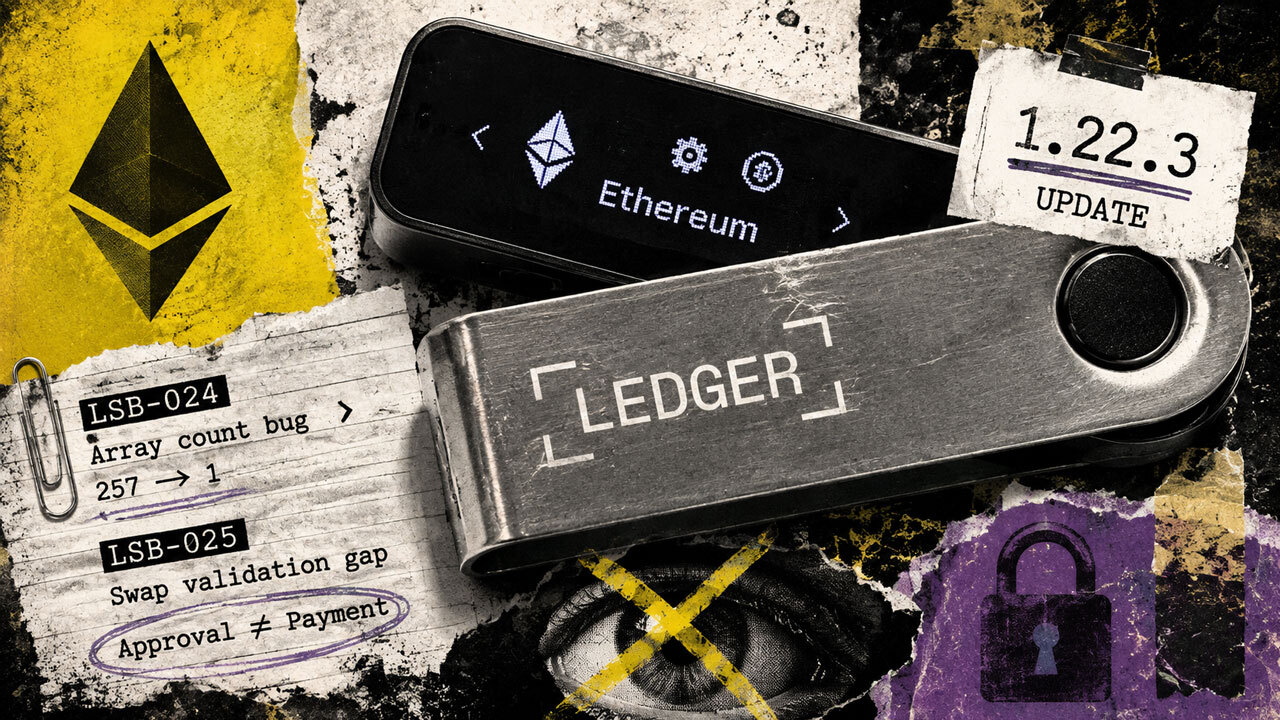
Ledger has released firmware version 1.22.3 to resolve two distinct security vulnerabilities: a 257-operation 'blind spot' and a bug involving limited swap approval substitutions. The first issue involved a technical limitation where users signing a high volume of consecutive transactions—specifically 257 or more—could encounter a display error that potentially obscured transaction details. The second fix addresses a vulnerability in the swap approval process that could have allowed a malicious actor to substitute a destination address under very specific conditions.
The update comes as Ledger responds to a viral video on social media that purported to show a new 'hack' on the hardware wallet. Ledger representatives clarified that the specific exploit shown in the viral content had already been patched in a prior update. However, the discovery and resolution of these two additional bugs highlight the ongoing cat-and-mouse game between hardware wallet manufacturers and security researchers seeking to harden self-custody solutions against sophisticated attacks.
For US-based crypto investors, these updates are a critical reminder of the responsibilities tied to self-custody. As the SEC and other regulatory bodies continue to scrutinize the safety of digital asset storage, Ledger's transparency regarding these bugs is aimed at maintaining consumer trust. Hardware wallets remain a cornerstone of the US DeFi ecosystem, and any perceived vulnerability can lead to temporary shifts in market sentiment or a migration to alternative cold-storage providers.
While no user funds were reported lost due to these specific vulnerabilities, the incident underscores the importance of keeping hardware wallet firmware and accompanying software, like Ledger Live, up to date. Market observers should note that security-related news often impacts the perceived risk profile of high-value assets stored off-exchange. Investors are encouraged to verify their current firmware version and perform updates only through official Ledger channels to avoid phishing attempts.
Moving forward, the industry will be watching to see if Ledger implements more frequent third-party security audits to preemptively catch such 'blind spots.' As hardware wallets evolve to support more complex DeFi interactions, the surface area for potential bugs increases, making proactive communication from manufacturers essential for the long-term stability of the retail crypto market.